
ArxBridge
Powder coating vs galvanising vs paint for steel
Powder coating vs galvanising for UK steel doors and gates: how each finish protects steel, when to specify a duplex system, and the cost drivers to compare.
- ✓Third-party test evidence with every product
- ✓Written specification you can issue to tender
- ✓Supplied and installed across the UK
Get a free project quote
Rating, written specification and budget range within one working day.
Confidential. No cost, no obligation.
Third-party tested
Evidence with every quote
UK manufactured
Made to your sizes
One accountable team
Specify, supply, install
Confidential handling
Details never shared
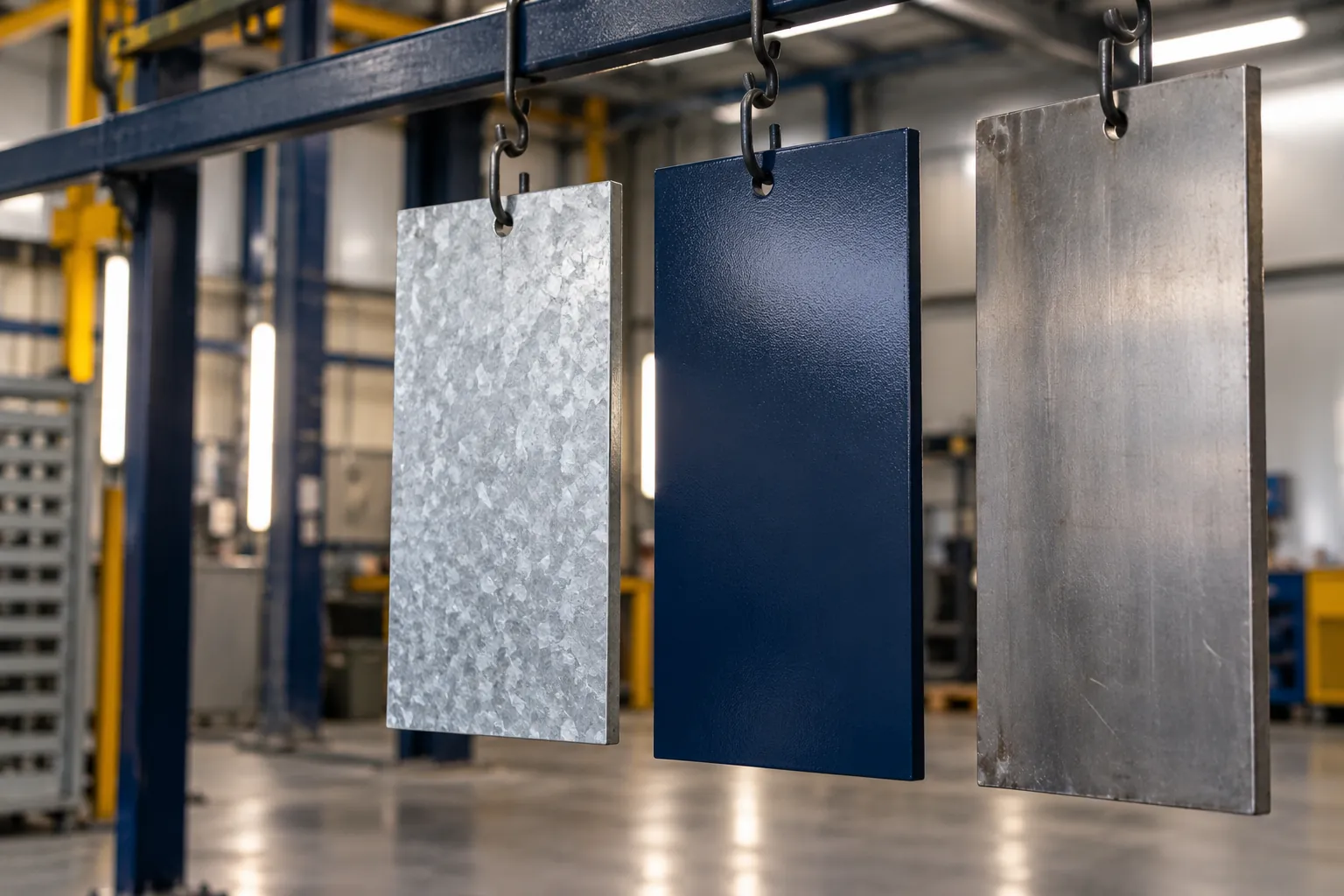
For outdoor steel in the UK, galvanising protects better and powder coating looks better, so most external doors and gates get both. Hot dip galvanising bonds zinc to the steel so it resists corrosion even when scratched. Powder coating adds the colour and a hard surface film. A duplex system, galvanised then powder coated, outlasts either finish alone.
- 450 degrees C zinc bathHot dip galvanising dips steel in molten zinc
- Cathodic protectionZinc corrodes first, shielding bare steel
- 60 to 100 micronsTypical powder coat thickness on steel
- BS EN ISO 1461The galvanising specification and test methods
How hot dip galvanising protects steel
Hot dip galvanising is a corrosion treatment, not a colour treatment. Cleaned steel is lowered into a bath of molten zinc at around 450 degrees C. The zinc reacts with the surface and forms zinc-iron alloy layers that are part of the metal itself, with pure zinc on top.
Protection works two ways. The zinc is a physical barrier against damp air, and it gives cathodic protection: zinc corrodes more readily than steel, so where the coating is scratched through, the surrounding zinc corrodes first and the bare steel stays protected. That self-sacrificing behaviour is why galvanised steel keeps working outdoors for decades, even on fixings, edges and corners that take knocks.
The reference is BS EN ISO 1461, Hot dip galvanized coatings on fabricated iron and steel articles: specifications and test methods. It sets minimum average coating thickness by steel section, from 85 microns on steel over 6 mm thick, plus inspection and repair rules. Ask for the certificate of compliance with the order.
The limits are honest. The finish is silver grey, bright and spangled when new, weathering to matt grey. You cannot choose a colour, and the bath size caps the size of a single component.
How powder coating protects steel
Powder coating is a dry paint process. A fine polyester powder is given an electrostatic charge and sprayed onto the steel, clinging evenly over surfaces, edges and corners. The part is cured in an oven at around 200 degrees C, melting the powder into one continuous hard skin.
The film is typically 60 to 100 microns thick, thicker and more even than most wet paint. It resists chipping from keys and trolleys and scratching in handling. The powder contains no solvents, so the process produces very little waste and no solvent fumes.
The weak point is damage. Powder coating is a surface film with no metallurgical bond, so a chip that reaches bare metal lets moisture in, rust starts, and corrosion creeps under the surrounding film. On outdoor steel powder coated over bare metal, this is the failure to plan against.
Colour is the strength. Powder is ordered against RAL or BS codes in matt, satin, gloss or textured finishes, matching branding or existing metalwork exactly. Our powder coating service covers the factory process, and the powder coating guide details preparation, masking and curing.
Where wet paint still wins
Wet paint is the oldest finish and still right in a few cases. Some assemblies cannot take a 200 degree oven cure or a zinc bath, because of size, seals, glazing or mixed materials. Paint goes on cold and fits any shape.
Paint also suits site work. Touching up powder or zinc on site is always a compromise, since factory conditions cannot be repeated outdoors. A wet paint system can be specified for site application from the start, with matching primer and topcoat, so repairs blend in.
The trade off is durability. Paint films are thinner, need more coats for the same cover, and need recoating sooner. On new steel that can go through the factory processes, paint is rarely the best lifetime value.
The duplex system: galvanise first, powder coat over
Duplex puts both factory finishes together: hot dip galvanise to BS EN ISO 1461, then powder coat over the zinc for colour and a second barrier. The zinc gives cathodic protection that survives scratches. The powder gives the colour, the gloss and a UV stable topcoat.
The pair outlasts either alone. The powder slows how fast weather consumes the zinc, and the zinc protects the steel wherever the powder is breached. For UK exposure this is the premium specification for external steelwork that must look right and last: security gates, railings, balustrades and external security doors.
Preparation between the stages matters. Powder does not grip fresh, bright zinc well, so the galvanised steel gets a light sweep blast or a suitable primer first. Our shot blasting page covers the cleaning stage that comes before the first finish.
Specify the system, not just the colour. Write hot dip galvanised to BS EN ISO 1461, then powder coated, on the order. A colour code alone can arrive as powder over bare steel, a much shorter lived product.
The edge, the weld and the hinge: where a finish fails first
A finish fails first where the coating is thinnest. The edge of a leaf, the weld at a joint and the knuckle of a hinge each hold less coating than a flat face, so the order should name how those parts are treated, not only how the flat face looks.
Hot dip galvanising coats the steel in zinc, inside and out, and the zinc guards the steel even where the coating is scratched, because the zinc gives itself up before the steel rusts. A scratch on a galvanised door is a mark, not a failure, so the door keeps its guard where a painted door would start to rust.
Powder coating lays a hard skin over the steel in any colour, and the skin resists knocks and weather, but a scratch that reaches the steel leaves the steel open, so the repair matters as much as the coat. A chip found on the inspection round should be cleaned and touched up before rust starts. How steel and aluminium take a finish is worked through in our steel versus aluminium security doors guide.
The duplex system puts powder over galvanising, so the zinc guards the steel and the powder guards the zinc. The two together outlast either one alone, and the order should name both layers, because a duplex order that names only the powder leaves the zinc off the list.
Wet paint still wins where the run is small or the colour must match an old door, because a spray shop can match a colour a powder line cannot. The paint needs a clean, dry steel face to hold, so the preparation belongs on the order beside the paint, and a coat laid on dirty steel peels where no one can see it coming.
Salt air, chemicals and the yard: the environment that sets the finish
The environment sets the finish. Salt air on a coast, chemicals in a plant room and grit in a yard each attack a finish in their own way, so the site should name the air the door will face, and the finish should follow the risk, not the catalogue. The doors on the buildings that face those yards are covered in our warehouse security doors guide.
A door near the sea takes a heavier zinc coat and a powder top coat, while a door in a dry store takes a lighter finish, because the finish follows the risk the door faces. The heavier coat costs more on the order and less over the life of the door. What each step up the scale adds to the build is worked through in our security door cost factors guide.
The inspection round should look at the edges and the welds first, because those are the parts where the finish fails first. Each fault goes on the record the day it is found, and the touch-up follows it, so the finish is kept alive by the round, not by the coat alone. The checks each round should make are set out in our security door maintenance checklist.
Ask for the finish on the order beside the rating, with the zinc coat, the powder coat and the colour named on the same line, so the door that arrives is the door that was ordered. A finish named only as galvanised or powder coated leaves the coat to the supplier.
| Finish | Where it suits | What it guards | What to check |
|---|---|---|---|
| Galvanising | Outdoors, yards | Steel under zinc | Edges, welds |
| Powder coating | Shopfronts, offices | Colour and skin | Chips, scratches |
| Duplex | Coast, plant rooms | Both layers | Both coats named |
| Wet paint | Small runs, repairs | Touch-up | Match, adhesion |
Put the finish, the environment and the repair on one schedule line, so whoever reads the file next can see what was ordered and what keeps it alive.
Which finish suits which environment
Match the finish to the exposure. Dry indoor steel needs little: powder coating over a prepared substrate gives colour and hardness, and galvanising would add cost for protection the building never asks for. Plant rooms, corridors and internal doors sit here.
Urban outdoor steel faces rain, traffic film and daily knocks. Duplex is the safe specification for doors and gates here. Galvanising alone also works for less money, but the silver grey suits utility sites better than frontages.
Coastal and industrial sites are the hardest test. Salt and chemical fallout consume zinc faster and attack breaches sooner, so duplex with a heavier zinc coating and an exterior grade powder is close to essential. State the environment on the enquiry.
The table below puts the four options side by side.
| Finish | How it protects the steel | Main strengths | Main limits |
|---|---|---|---|
| Hot dip galvanising | Zinc alloy bonded to the steel, plus cathodic protection | Longest life outdoors, still protects at scratches | Silver grey only, bath size limits part size |
| Powder coating | Hard polymer film cured over the surface | Any colour and gloss, tough surface | Rust starts wherever the film is breached |
| Wet paint | Barrier film applied cold, in coats | Suits any shape, site application possible | Thinner films, needs recoating sooner |
| Duplex: galvanise then powder coat | Zinc cathodic protection plus colour topcoat | Longest life with a chosen colour | Highest upfront cost, needs correct preparation |
Appearance, colour and gloss choices
Galvanised steel looks industrial: bright silver with a spangled pattern when new, weathering to matt grey. The spangle and shade vary between batches, so galvanising alone is never a colour match exercise, which is why the duplex route exists for front of house work.
Powder coating gives full control. RAL is the common language for architectural metalwork, BS 4800 covers traditional shades. Matt hides minor marks, satin is the middle ground for doors and frames, gloss looks sharp but shows scuffs, and textured powders hide fingerprints on handrails and push plates.
Judge colour from a physical sample in daylight, not a screen. For duplex work, ask for the sample on a galvanised substrate, since the zinc can shift how some colours read.
Repairs, maintenance and cost drivers
Every finish needs a damage plan, because damage is certain on working doors and gates. Powder repairs mean cleaning back to sound coating, feathering edges and touching up with matching repair paint. Small chips suit site work; large failures are better stripped and recoated in the factory.
Galvanised steel needs less. Small damage takes zinc rich paint to the repair rules in BS EN ISO 1461, while the surrounding zinc keeps protecting the steel. That is the payoff of cathodic protection: a scratched galvanised gate keeps working while a scratched powder coated gate needs attention before rust spreads.
Routine care is simple for all three: wash exterior metalwork with mild detergent, inspect edges and fixings yearly, touch up damage early, and keep the RAL code on file. A planned maintenance routine covers the finish alongside the hardware.
Compare quotes on cost drivers, not headline price. What moves the number: fabrication size and complexity, the degrease, blast and prime sequence, coating thickness, powder colour and gloss grade, the specified environment, and duplex versus single finish. The same approach runs through our security door cost factors guide, and steel vs aluminium security doors covers the substrate beneath the finish. Start wider reading at the guides hub or the standards pages, and see frontage finish choices in the public spaces sector notes.
Can you powder coat over galvanised steel?
Yes, the combination is called a duplex system. The zinc needs preparation first, usually a light sweep blast or primer, since powder does not grip fresh zinc well. Done right, duplex outlasts either finish alone.
How long does hot dip galvanising last outdoors?
It depends on environment and zinc thickness. UK trade guidance puts galvanising at 20 to 50 years in suburban settings before significant maintenance, against 10 to 15 years for a quality powder coat. Coastal and industrial sites consume zinc faster, so specify heavier there.
Does powder coating stop rust on its own?
Only while the film is intact. It is a barrier with no cathodic protection, so a chip to bare steel lets rust start and spread underneath. Outdoor powder coating is normally specified over galvanising, not bare steel.
What does BS EN ISO 1461 cover?
The specification and test methods for hot dip galvanised coatings on fabricated iron and steel articles: minimum thicknesses by section, inspection and acceptance rules, and how damaged areas may be repaired. Ask the galvaniser for the certificate of compliance.
Which finish suits a coastal site?
Duplex with a heavier zinc coating and an exterior grade powder. Salt spray attacks both the zinc and any breach in the topcoat, so cathodic protection below and a sealed colour film above give the longest life.
Can damaged galvanising be repaired on site?
Small areas can, with zinc rich paint to the repair rules in BS EN ISO 1461 after cleaning back to sound zinc. It will not match the surrounding spangle exactly, but the nearby zinc keeps protecting the steel.
Get a free quote
Related
More in guides for specifiers
Products
One supplier for the whole building envelope
Ready to specify your project?
Free assessment, written specification and test evidence. Reply within one working day.