
Blast · ISO 16933 EXV45 to EXV10
Blast protection
Blast protection for UK buildings: ISO 16933 rated doors, windows, glass and facades from EXV45 to EXV10. Supply and installation for high-risk sites.
- ✓Third-party test evidence with every product
- ✓Written specification you can issue to tender
- ✓Supplied and installed across the UK
Get a free project quote
Rating, written specification and budget range within one working day.
Confidential. No cost, no obligation.
Third-party tested
Evidence with every quote
UK manufactured
Made to your sizes
One accountable team
Specify, supply, install
Confidential handling
Details never shared
The range
Explore blast protection
Blast protection window film
Blast protection window film fitted to existing glazing to hold fragments in place. A retrofit option for occupied UK buildings.… View details →
Blast rated curtain walling
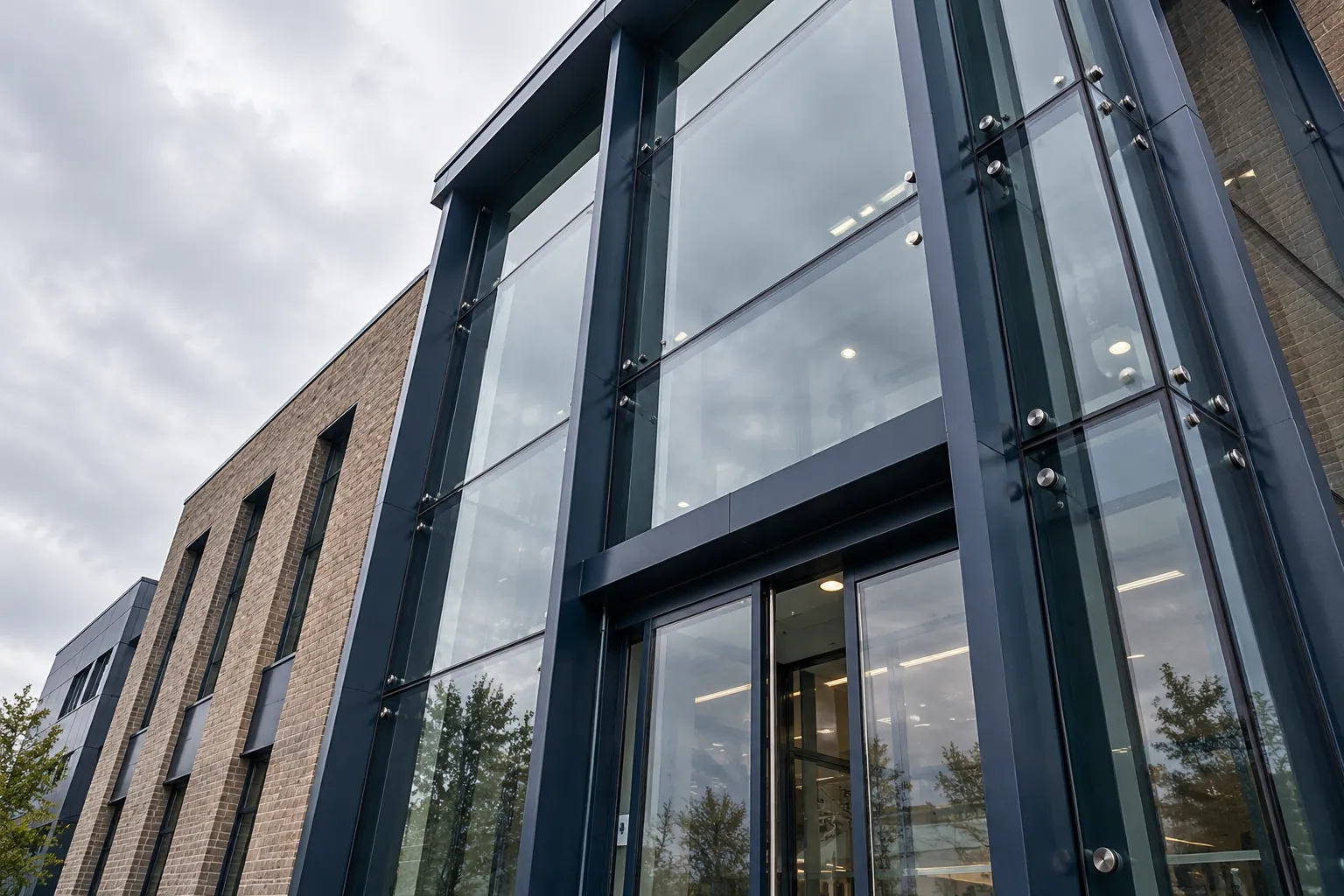
Blast rated curtain walling: glazed facades tested to ISO 16933 from EXV45 to EXV10. Supplied and installed for UK commercial… View details →
Blast resistant doors
Blast resistant steel doors tested to ISO 16933, from EXV45 to EXV10. Supplied and installed across the UK for government,… View details →
Blast resistant glass
Blast resistant laminated glass matched to its tested frame, rated to ISO 16933 with hazard ratings A to F. Supply… View details →
Blast resistant louvred doors
Blast resistant louvred doors that ventilate plant rooms and still hold an EXV rating. ISO 16933 tested steel doors supplied… View details →
Blast resistant windows
Blast resistant windows: framed systems tested to ISO 16933 with hazard ratings A to F. Supplied and installed for UK… View details →
Residential blast protection
Blast protection for high-risk UK homes: rated doors, windows and retrofit film. Specified with a security consultant and installed by… View details →
Blast protection keeps the people inside a building safe when an explosion happens close to it. ArxBridge supplies and installs blast rated doors, windows, glass and glazed facades across the UK. Architects and security consultants specify it for government buildings, transport hubs and other sites where a vehicle bomb is a recognised threat.
- EXV45 to EXV10ISO 16933 vehicle bomb classes
- 100 kg TNTReference charge behind every EXV test
- A to FHazard ratings for blast fragments
- SB classesRatings for hand-carried charges
How blast ratings work
ISO 16933 is the international standard for blast resistant glazing and glazed systems. It is published by ISO. Each EXV class describes a vehicle bomb of 100 kg TNT equivalent detonated at a set stand-off distance from the target. The number in the class name is that distance in metres.
EXV45 is tested at 45 metres. EXV10 is tested at 10 metres. A shorter distance means a far more severe test, so EXV10 is the most severe of the seven classes. The full set runs EXV45, EXV33, EXV25, EXV19, EXV15, EXV12 and EXV10. SB classes sit alongside the EXV set and cover hand-carried satchel charges rather than vehicle bombs.
Every test result also carries a hazard rating from A to F. This describes what the glazing does after the blast: whether it stays in the frame, whether fragments are thrown, and how far they travel. A means no break. F means a high hazard from flying fragments. A specifier should always ask for both the EXV class and the hazard rating, because a window can hold a high EXV class and still earn a poor hazard rating.
Doors, windows and shutters can also be rated under the European standards EN 13123 and EN 13124. These use EPR1 to EPR4 for shock tube tests and EXR1 to EXR5 for range tests. Where a project follows European test evidence, the blast ratings guide explains how the two systems line up.
Check the pair. An EXV class without a hazard rating tells only half the story. Ask for both before you specify.
Choosing the right blast product
Start from the threat assessment, not the product. The security consultant sets the charge size and the stand-off distance the site can achieve. That fixes the EXV class. The product then follows from the opening: doors for entrances, windows for occupied rooms, film where the frame must stay, curtain walling for glazed frontages.
| Product | What it is | Specified where |
|---|---|---|
| Blast resistant doors | Steel doorsets tested to ISO 16933 | Staff entrances and plant rooms |
| Blast resistant louvred doors | Ventilation doors that hold a blast rating | Plant rooms that need airflow |
| Blast resistant windows | Framed window systems with hazard ratings | Offices and control rooms |
| Blast resistant glass | Laminated glazing matched to its frame | Glazing upgrades in rated frames |
| Blast protection window film | Retrofit film that holds fragments | Occupied buildings without a refit |
| Blast rated curtain walling | Glazed facades tested to ISO 16933 | Atria and glazed frontages |
| Residential blast protection | Blast protection for high-risk homes | Private residences at risk |
Who specifies blast protection
Security consultants write the threat assessment and set the EXV class. Architects turn that into drawings and opening schedules. Main contractors procure the doorsets and facades and manage the installation sequence. Facilities teams inherit the upkeep: hinges, seals and locks on a blast door need the same planned attention as any safety system.
Blast protection appears most in government and defence estates, transport hubs, data centres and public spaces with crowded frontages. It is often specified alongside forced entry resistance from the Security range or ballistic protection from the Ballistic range, and the full product set sits under Products.
What does EXV10 mean?
EXV10 is the most severe vehicle bomb class in ISO 16933. It means the system was tested against 100 kg of TNT equivalent at a stand-off distance of 10 metres. A lower number means a closer, harder test: EXV45 is tested at 45 metres and is the least severe.
Does the glass have to match the frame?
Yes. Blast performance belongs to the whole tested assembly, not to the glass alone. Laminated glass that passes in one frame can fail in another. Always ask for test evidence that names the exact frame, glass and fixing method you are buying.
Can blast protection be added to an existing building?
Sometimes. Blast protection window film can be fitted to existing glazing to cut the fragment hazard. Where the threat needs a full EXV rating, the existing windows usually have to be replaced with tested systems, because the frame and its fixing to the structure matter as much as the glass.
Get a free quote
Ready to specify your project?
Free assessment, written specification and test evidence. Reply within one working day.