
ArxBridge
Blast protection window film: what it does and what it cannot do
Blast protection window film holds shattered glass together but cannot stop a blast wave. Learn what film does, its limits, and when to replace glazing.
- ✓Third-party test evidence with every product
- ✓Written specification you can issue to tender
- ✓Supplied and installed across the UK
Get a free project quote
Rating, written specification and budget range within one working day.
Confidential. No cost, no obligation.
Third-party tested
Evidence with every quote
UK manufactured
Made to your sizes
One accountable team
Specify, supply, install
Confidential handling
Details never shared
Blast protection window film is a polyester film bonded to existing glass to hold fragments together in an explosion. It reduces the danger from flying glass but it does not stop the blast wave, strengthen the frame or turn ordinary glass into blast-rated glazing. Whether it is enough depends on the threat and the frame.
- PurposeHolds glass fragments together in a blast
- Film typePolyester film in heavier blast grades
- AnchoringWet glaze silicone or mechanical battens
- Key limitDoes not stop the blast wave itself
What the film is for
Blast protection window film is a polyester film bonded to the inside face of existing glass. When the glass breaks, the film holds the fragments together in a single sheet instead of letting them fly across the room. Its job is fragment retention: reducing the injury risk from flying glass, which is one of the main causes of harm in an explosion near a building. See our blast protection window film product page for how the systems are supplied.
Film is a retrofit measure. It upgrades glass that is already in the frame, which makes it attractive where replacing the glazing is difficult: listed buildings, occupied offices that cannot close for works, or estates with hundreds of windows and a limited budget.
How film and frame work as one system
Film on its own only holds the glass together. What happens next depends on the frame. If the filmed glass stays in the frame, the room is protected from fragments. If the frame fails or the whole sheet is blown out of the opening, the film goes with it and the protection is lost.
That is why the edge fixing matters more than the film thickness. A heavy film with a weak edge fixing performs worse than a standard film that is properly tied into the frame. Blast ratings always describe a tested assembly, never a film on its own.
Wet glaze vs mechanical attachment
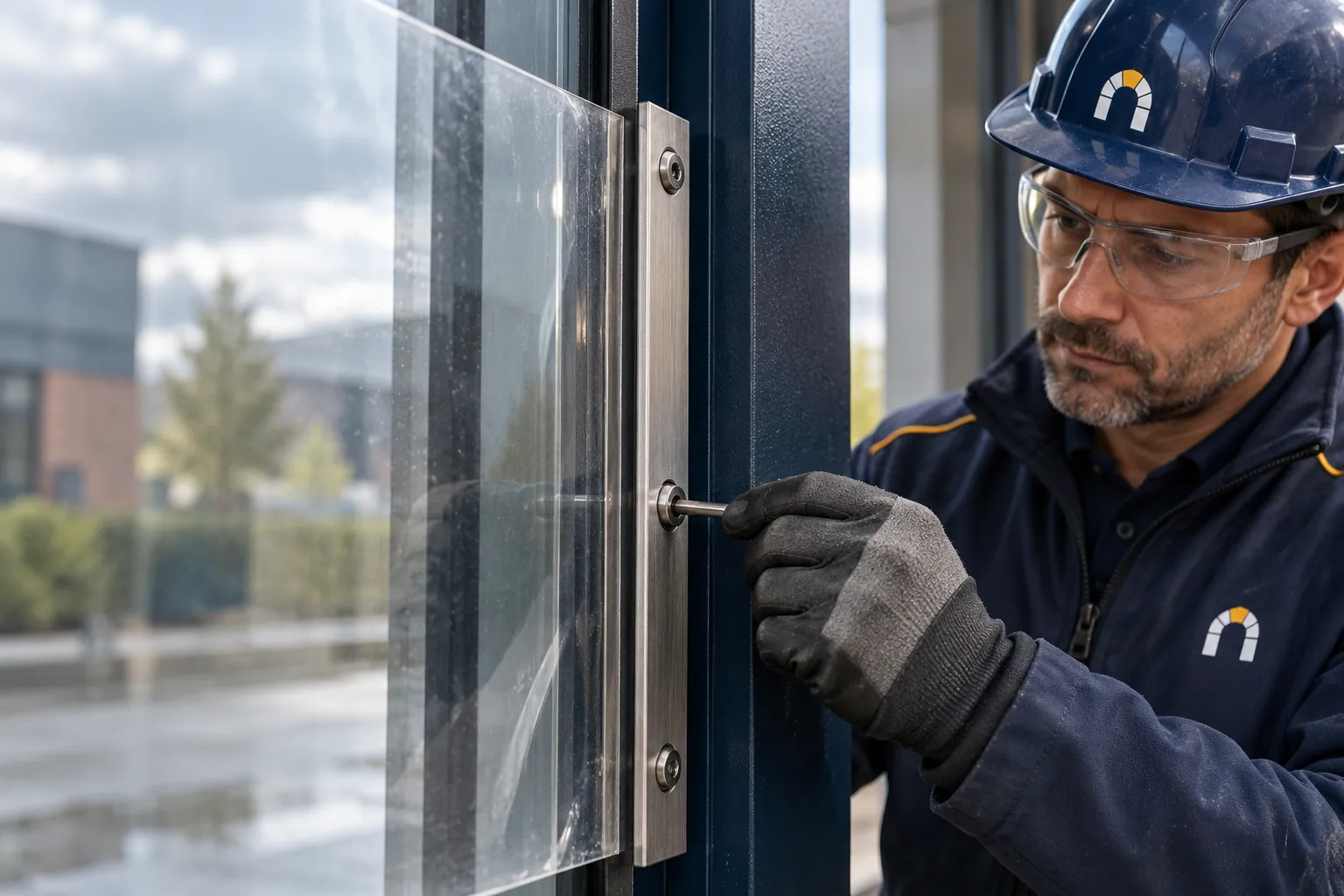
There are two standard ways to anchor the film edge to the frame. Wet glaze replaces the glazing gasket with a bead of structural silicone that bonds the film to the frame. Mechanical attachment fixes a metal batten or plate over the film edge and screws it into the frame.
| Method | How it works | Strengths | Drawbacks |
|---|---|---|---|
| Wet glaze | Structural silicone bead bonds the film edge to the frame. | Neat finish; suits many frame types and heritage windows. | Very installer-sensitive; needs the correct bead size and overlap. |
| Mechanical | Metal batten screwed through the film into the frame. | Strongest hold; a positive mechanical fixing. | Visible batten; needs a frame that accepts screws. |
Wet glaze is the most common choice because it suits frames that cannot take screws, including many heritage windows. Mechanical attachment gives the strongest hold where the frame allows it. Either way, the fixing must be designed for blast loads: ordinary site silicone will not do the job. Blast resistant glass in a new frame avoids this question entirely, because the whole unit is tested as one.
What film cannot do
Film does not stop the blast wave. The pressure still strikes the building, the frame and the people inside; the film only controls what the glass does when it breaks. It does not strengthen a weak frame, and it does not seal the opening against the pressure that follows the glass failure.
It also cannot earn an EXV or SB classification by itself. ISO 16933 classes describe tested glazing assemblies, and a film applied to ordinary glass is not a tested assembly. Anyone quoting an EXV class for a film-only retrofit should be asked for the test report covering the exact build.
Film without anchoring is a weak system. An unanchored film holds the glass together but the sheet can still leave the frame as one piece. The anchoring detail is what makes fragment retention work.
When film is an acceptable choice
Film fits lower-threat situations where the main risk is flying glass from a distant blast and the frames are sound. It is often chosen for offices, retail frontages and public buildings that need a quick, low-disruption improvement without replacing every window.
It also fits where replacement is blocked: listed facades, conservation areas, or landlord-controlled glazing. In those cases a properly anchored film is far better than untreated glass, even though it is not the equal of rated replacement glazing.
Film and listed buildings
Listed buildings are where film earns its place most often. The facade cannot change, the frames are often original timber or steel, and replacement with modern blast glazing would need consent that may never come. A clear film with a wet glaze fixing improves safety without altering the appearance that the listing protects.
Survey these windows carefully before quoting. Old putty, rotten beads and loose glass all undermine the system, because the film can only be as good as the glass it bonds to and the frame it anchors to. Remedial joinery comes first; film comes second. Security consultancy at survey stage stops the wrong specification reaching site.
Where consent does allow intervention, secondary glazing behind the historic window often beats film. It adds a tested layer without touching the listed fabric, and it sidesteps the anchoring limits of fragile original frames.
When replacement or secondary glazing is needed
Choose replacement glazing when the threat assessment calls for a defined class, when frames are weak or corroded, or when the stand-off is short. Blast resistant windows and security windows are tested as complete units, so the classification covers glass, frame and fixings together.
Secondary glazing is the middle route: a separate rated pane fitted inside the existing window. It keeps the original facade untouched while adding a tested layer behind it. If your premises fall under Martyn’s Law, discuss the threat level with your assessor before choosing between film, secondary glazing and replacement. Our ISO 16933 guide explains the classes, and you can browse all ArxBridge guides for more.
How to specify film for a project
A film specification has four parts: the film, the anchoring, the glass it goes on, and the person installing it. Miss one and the system underperforms.
Start with the film itself. Thickness is stated in microns, and thicker films hold larger fragments. The product data sheet should state the tensile strength and elongation at break, because those numbers decide how the film behaves when the glass behind it cracks. Tinted and solar-control versions exist, but the blast performance comes from the clear safety film layer, so check that any combined product still carries its fragment-retention test data.
Next, the anchoring system. As the earlier section explains, wet glaze suits many frames and mechanical attachment gives the most positive hold. The specification should name which one applies to each window type, the bead size or batten profile, and how the anchoring ties into the frame. A film edge left floating is the most common installation fault.
Then the glass. Film bonds to the inner face of the existing pane, so the survey must confirm the glass type, its condition and the edge cover in the frame. Laminated glass already retains fragments better than toughened, which changes what the film needs to add. Damaged or delaminating panes should be replaced before film goes on.
Ask for this. The film’s test data, the anchoring detail for your frame type, and the installer’s method statement. If any of the three is missing, the specification is incomplete.
Finally, the installer. Wet glaze application looks simple and is easy to get wrong: contamination under the film, short edge cover and uncured beads all show up later. Ask how the installer trains its teams and what aftercare the warranty needs. Most manufacturers want the film cleaned with specified products only, and abrasive cleaning can void the warranty.
Does thicker film stop a bigger blast?
Thicker film holds fragments better, but the blast wave still passes through. Thickness helps with fragment retention; it does not raise the blast resistance of the window.
Can film be fitted without an anchoring system?
It can be bonded to the glass, but without edge anchoring the filmed sheet can be blown out of the frame as one piece. Anchoring is what makes the system work.
Is wet glaze as strong as mechanical fixing?
A correctly installed wet glaze is strong and is the right choice for many frames, but mechanical attachment gives the most positive hold. The frame type usually decides.
Will film change how the windows look?
The film itself is clear and hard to notice. Mechanical battens show as a slim trim around the glass; wet glaze looks like a neat silicone bead.
How disruptive is the installation?
Most windows are treated in a day per elevation without removing the glass, which is why film suits occupied buildings. We confirm timings at survey.
Get a free quote
Related
More in guides for specifiers
Products
One supplier for the whole building envelope
Ready to specify your project?
Free assessment, written specification and test evidence. Reply within one working day.