
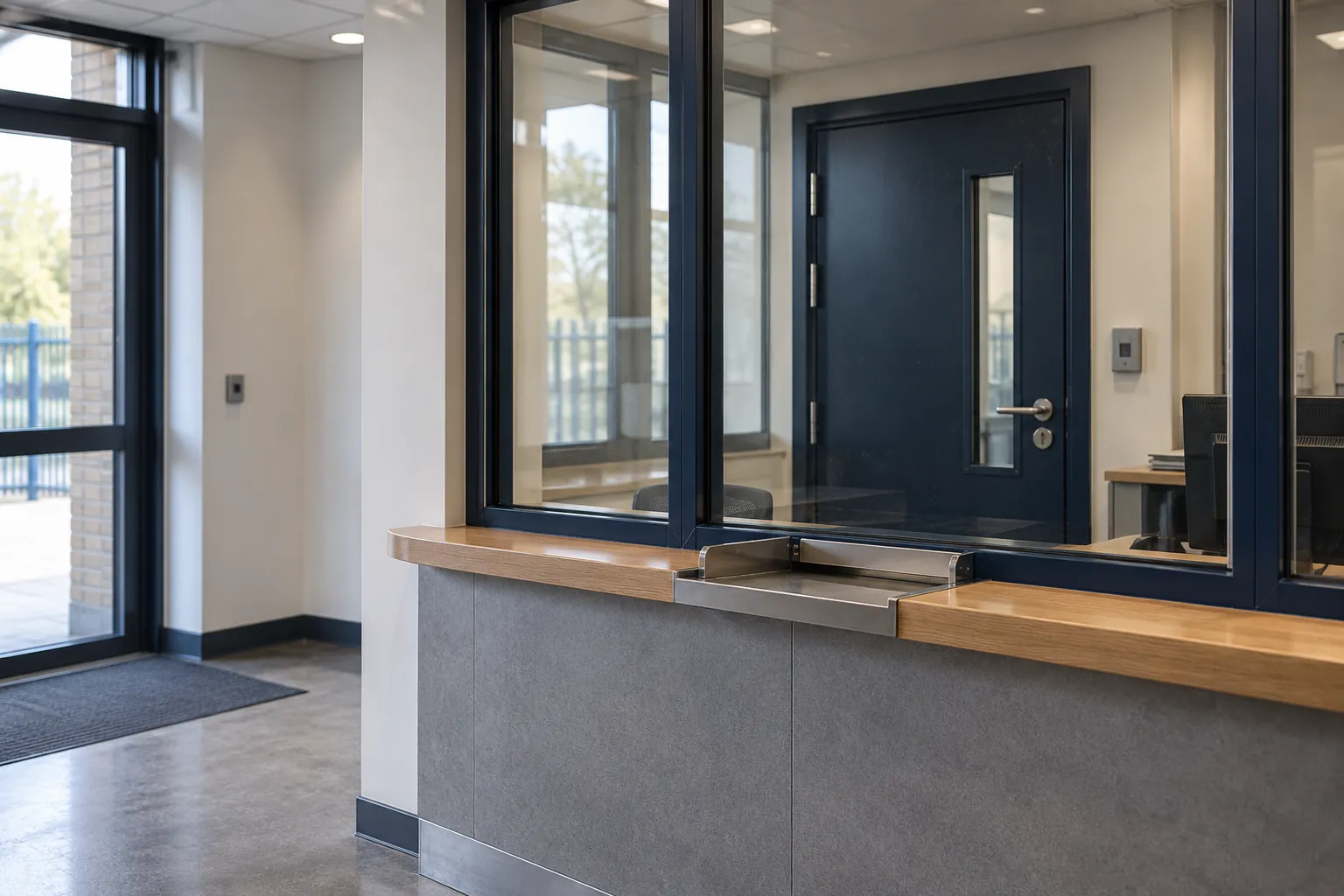
Ballistic · EN 1522 FB2 to FB7
Bullet resistant glass
Bullet resistant glass to EN 1063, BR1 to BR7, in spall and no-spall builds. For rated frames, facades and counters. Supplied UK-wide by ArxBridge.
- ✓Third-party test evidence with every product
- ✓Written specification you can issue to tender
- ✓Supplied and installed across the UK
Get a free project quote
Rating, written specification and budget range within one working day.
Confidential. No cost, no obligation.
Third-party tested
Evidence with every quote
UK manufactured
Made to your sizes
One accountable team
Specify, supply, install
Confidential handling
Details never shared
Bullet resistant glass is laminated glazing tested to EN 1063 from BR1 to BR7, in spall and no-spall builds, with shotgun grades available. It only protects when set in a rated frame. ArxBridge supplies it cut to size across the UK.
- BR1 to BR7Ballistic glass classes to EN 1063
- Spall and no-spallS and NS options
- Shotgun gradesSG1 and SG2 available
- Cut to sizeMade for your frames
What is bullet resistant glass?
It is a glazing product: multiple layers of glass bonded with tough interlayers, built so the layers share the energy of an impact. EN 1063 classifies the glass from BR1 to BR7 against the same weapon scale used for doors and windows, plus SG1 and SG2 for shotgun threats.
Glass is one part of a protective assembly. The rating on the pane means nothing until the pane sits in a frame tested to the same class, fixed into a structure that can hold it. We supply the glass for bullet resistant windows and ballistic curtain walling, and as replacement panes for existing rated frames.
Glass is not a system. A BR7 pane in an unrated frame does not make a BR7 window. Pair every pane with a frame tested to the same class, and keep the test evidence for both.
Which BR rating does your glass need
EN 1063 mirrors the EN 1522 weapon scale for glass. Choose from the threat assessment.
| Class | Test threat | Notes |
|---|---|---|
| BR1 | .22 LR | Lowest rated class |
| BR2 | 9 mm handgun | Handgun threat |
| BR3 | .357 Magnum | Magnum handgun |
| BR4 | .357 and .44 Magnum | Higher handgun threat |
| BR5 | 5.56 x 45 rifle | Rifle threat |
| BR6 | 5.56 x 45 plus 7.62 x 51 rifle fire | High rifle threat |
| BR7 | 7.62 x 51 hard core, armour piercing | Highest rifle class |
| SG1 / SG2 | Shotgun | Separate shotgun grades |
The S suffix means splinters may leave the rear face; NS (no splinters) means the inner face stays intact. For counters, guard posts and any occupied room, specify NS. The full scale is explained in our ballistic ratings guide.
How bullet resistant glass works
When a projectile strikes, the outer glass layers fracture and spread the load across the interlayers. The interlayers stretch and hold the fragments, absorbing energy that would otherwise pass through. Each step up the BR scale adds layers, so the pane grows thicker and heavier.
No-spall builds add a protective inner layer that keeps the rear face whole, shielding the people behind the glass from fragments. Edges are the vulnerable zone of any laminate, so panes are sized to sit deep in the frame rebate with the edges fully supported and sealed.
Polycarbonate layers can be included in the build where weight must be kept down, and the make-up is stated on every pane we supply so replacements match exactly.
Pairing bullet resistant glass with other ratings
Ballistic glass often shares its frame with other performance needs. It can sit in attack-rated framing alongside LPS 1270 security glazing requirements, and in double or triple glazed units where thermal performance matters; see high-security double glazing. Where blast is in the threat picture, laminated builds can be matched to blast resistant glass performance in the same facade.
Combined performance must be tested or assessed for the actual build-up. We will not claim a combination the evidence does not support.
Typical uses for bullet resistant glass
Banking and finance fits it at counters and cash centres. High-value retail uses it in stock rooms and service areas. Government and defence buildings glaze receptions and guard posts with it, transport hubs protect ticket offices, and residential and housing projects use it in safe rooms and protected windows.
For complete rated assemblies see the ballistic range.
What affects the cost and lead time of bullet resistant glass
We quote from sizes and the class required. The main factors:
- Ballistic class: each step up adds layers, thickness and weight.
- Panel size: large panes need thicker builds and careful handling.
- Weight: heavy panes need lifting gear and stronger supports.
- Quantity: repeated sizes bring the per-pane figure down.
- Edge work: polished or stepped edges add processing time.
- Special builds: curved panes or unusual shapes need longer lead times.
- Frame coordination: the rebate depth and bite must suit the pane thickness.
Specifying bullet resistant glass
- Set the class and spall requirement. Choose the BR class and S or NS from the threat assessment.
- Confirm the frame. Check the frame is tested to the same class with a rebate that suits the pane; see security consultancy.
- Fix sizes. Measure or take sizes from drawings, allowing for the correct edge cover.
- Approve the make-up. Review the layer build-up before we order the glass.
- Record everything. Keep the make-up on file so any replacement pane matches; see installation.
Frequently asked questions
Does the glass alone stop bullets?
The pane resists the rated threat, but protection only exists when the pane sits in a frame tested to the same class. Glass on its own is a component, not a protective assembly.
What is the difference between spall and no-spall?
Spall means fragments can leave the rear face of the glass on the protected side. No-spall (NS) keeps the inner face intact. Specify NS wherever people sit or stand behind the glazing.
Can it be used in double glazed units?
Yes. The ballistic laminate forms one pane of the unit, with a cavity and a second pane for thermal and acoustic performance. The unit is built to keep the ballistic layer on the attack side.
How long does bullet resistant glass last?
The laminate is stable over a long service life when edges are sealed and the glass is maintained. We recommend periodic inspection of seals and edges, and replacement of any pane that has been attacked or damaged.
What happens when a pane is hit?
The pane is designed to stop the rated threat, but an attacked pane must be replaced. Keep the recorded make-up so the replacement matches the original exactly.
Get a free quote
Related
More in ballistic protection
Ready to specify your project?
Free assessment, written specification and test evidence. Reply within one working day.