
ArxBridge
PAS 24 requirements for doors and windows explained
PAS 24 requirements explained for UK doors and windows: what the BSI standard tests, how Approved Document Q uses it, and how to check a product is certified.
- ✓Third-party test evidence with every product
- ✓Written specification you can issue to tender
- ✓Supplied and installed across the UK
Get a free project quote
Rating, written specification and budget range within one working day.
Confidential. No cost, no obligation.
Third-party tested
Evidence with every quote
UK manufactured
Made to your sizes
One accountable team
Specify, supply, install
Confidential handling
Details never shared
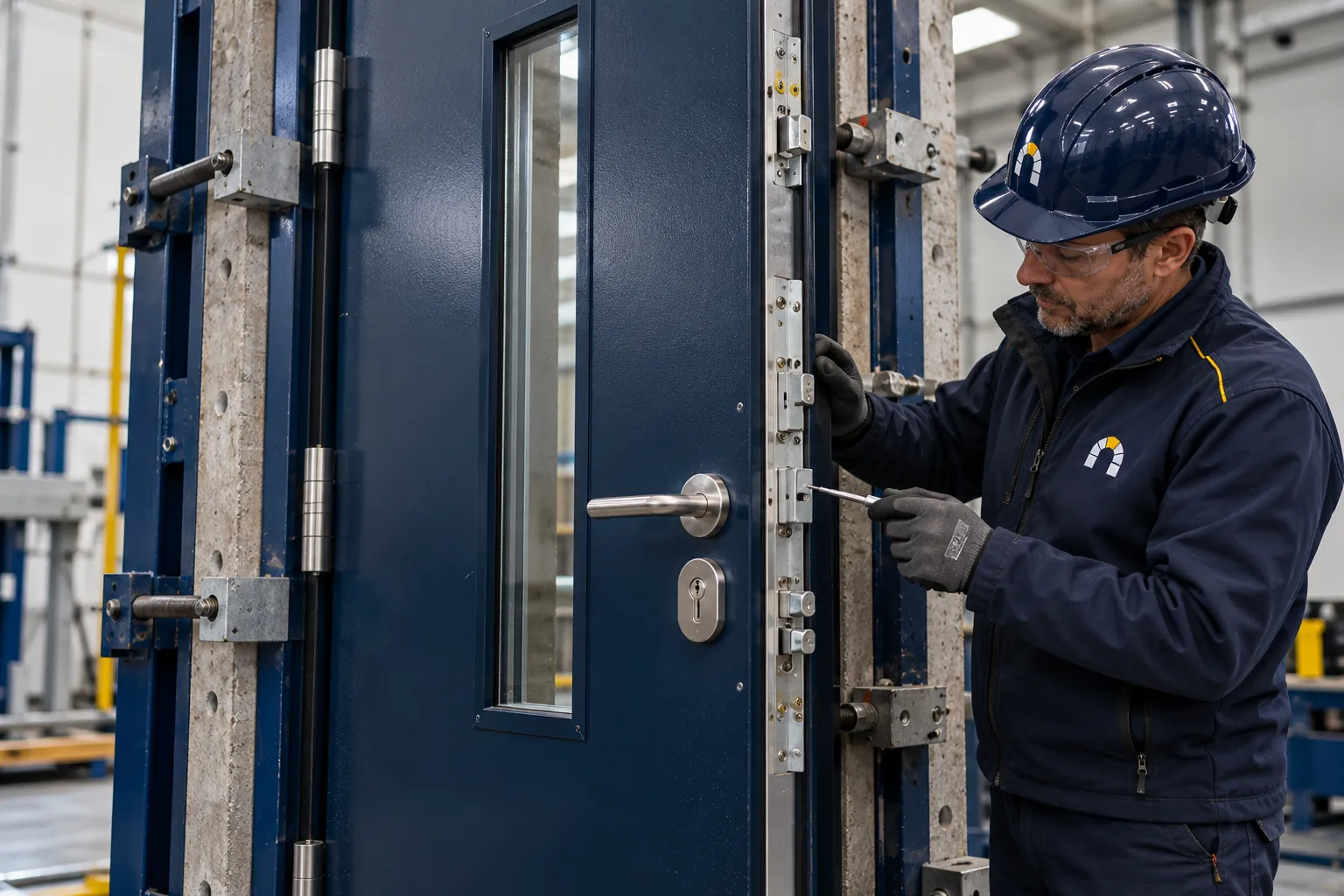
PAS 24 is a BSI standard that tests complete doorsets and windows against attacks by a casual or opportunistic burglar. Products pass only as a tested assembly: leaf, frame, glazing, locks and hardware together. In England, Approved Document Q points to PAS 24 as the route for doors and windows in new dwellings.
- Current editionPAS 24:2022+A1:2024, published 30 September 2024
- Threat levelAttacks by a casual or opportunistic burglar
- Tested asThe complete doorset or window, not parts
- Legal linkApproved Document Q for new dwellings
What PAS 24 is and who publishes it
PAS stands for Publicly Available Specification, a BSI format for standards written with industry. PAS 24 sets enhanced security performance requirements for doorsets and windows in the UK, for dwellings and other buildings exposed to comparable risk. The current edition is PAS 24:2022+A1:2024, published on 30 September 2024, and it supersedes PAS 24:2022. BSI amended it in 2024 to reflect changing criminal methods.
The standard specifies test methods and acceptance criteria. It applies to new doorsets and windows as manufactured, before installation. The scope covers hinged, sliding, pivot, folding sliding and stable doorsets, single or double leaf, with or without side panels and fanlights, and a wide list of window types from casements to tilt and turn and sliding sashes.
One point shapes everything else. The security performance requirements are not material specific, so timber, steel, aluminium and composite doorsets can all be tested to the same standard. BSI also states that the standard does not test component performance or installation. A PAS 24 result belongs to the complete product as it left the factory.
What the test checks
The tests mimic an opportunistic burglar, not a professional crew. In general terms the programme covers manual attacks on the doorset using common hand tools, manipulation of locks and locking hardware, mechanical loading that pushes and pulls the door or window to test structural strength, and the glazing tested as part of the whole unit. The product passes only if the complete assembly holds together. A strong lock in a weak frame fails.
Glazing matters because glass is the usual way in. In a PAS 24 doorset the glazing is tested in place, held by its beads and fixings. Fitting a different glazing unit afterwards changes the tested design, so the rating no longer applies to the changed door.
Approved Document Q: where the law points to PAS 24
Approved Document Q is the government’s security guidance for dwellings, in force for use in England since 1 October 2015. It supports requirement Q1 of the Building Regulations 2010, which applies to new dwellings and states that reasonable provision must be made to resist unauthorised access to any dwelling, and to any part of a building from which access can be gained to a flat within the building. Doors and windows that are easily accessible must resist physical attack by a casual or opportunist burglar by being strong enough to resist the attack and fitted with appropriate hardware.
For doorsets, the document’s route to compliance is a design shown by test to meet the security requirements of PAS 24. That link is why PAS 24 appears in almost every specification for a new build home. It also explains why the standard matters beyond the letter of the law: planners, funders and insurers all recognise the same test.
Scotland handles security through its own route. BSI notes that PAS 24 features in section 4.13 of the Scottish building regulations, so the same product evidence works north of the border through a different regulatory path.
Certificates and third-party certification
A claim of PAS 24 on a brochure is not evidence. BSI notes that certification bodies operate accredited product certification schemes to give assurance that doorsets and windows meet the standard. The certificate or schedule names the exact product, the edition tested and the configurations covered.
Check three things. First, that the certificate names the doorset or window you are buying, not a similar one. Second, that it covers the hardware, glazing and any side panels in your specification, because all of these were part of the tested unit. Third, that the certification body is accredited and the certificate is current. If the supplier cannot produce the paperwork, treat the claim as unproven.
The whole-unit rule. A PAS 24 certificate covers the exact tested assembly. Change the lock, the glass, the hinges or the frame and you are outside the certificate, even if every part looks the same.
Glazing in PAS 24 doorsets
Windows and glazed doors get close attention in the test because glass is the usual point of attack. The standard’s window scope is wide: casements, tilt and turn, sliding, reversible and pivot windows all sit inside it. Each is tested as a complete unit, frame, beads, glazing and hardware together.
This has a practical consequence for replacements and upgrades. A window certified with one glazing unit is not automatically covered if a different unit is fitted later. The same applies to letterplates and viewers on doors: if they were not in the tested design, they are not in the certificate. Our security windows range is built around this whole-unit principle.
PAS 24 versus LPS 1175 in one paragraph
PAS 24 tests against the casual or opportunistic burglar, while LPS 1175 rates forced entry resistance from A1 (SR1) up to H20 (SR8) against determined attackers using defined tool sets for set attack times, so PAS 24 is the lower threat level of the two and suits new dwellings, whereas LPS 1175 suits sites where the risk assessment expects a planned attack. The full comparison, including when to specify each, is in our LPS 1175 vs PAS 24 guide.
What to ask a supplier before you order
Use these questions on every enquiry. They take five minutes and they separate tested products from marketing claims.
- Which edition was tested? Ask for PAS 24:2022+A1:2024 and the certificate to prove it.
- Does the certificate name this exact product? Check the leaf, frame, size range, glazing and hardware against your specification.
- Who certified it? The certification body should run an accredited scheme. Ask for its name.
- What about installation? PAS 24 covers the product as manufactured, so ask separately how the installer fixes and seals the unit.
- Is it also Secured by Design? PAS 24 certification is one route into the police Secured by Design scheme, which some developments require. See our Secured by Design guide.
Put the answers in the order. A supplier with genuine certification answers these questions without hesitation. Our guide to specifying security doors shows how to turn the answers into a written specification, and our residential security doors and security doors ranges are supplied with third-party test evidence.
Certified, compliant or claimed: reading the wording
Three words appear on brochures and only one of them means the product was tested. Certified means the exact doorset or window passed the full PAS 24 test programme at an independent laboratory working under an accredited scheme, and a certificate names the product, the edition and the configurations covered. That certificate is the evidence a checker asks for, and it is the only wording that proves the claim.
Compliant means the product was built to the design the standard describes, without the finished product going through the full test. A compliant product may be well made, but no certificate stands behind the claim, and a checker who asks for evidence will not accept the word alone. Where the specification needs proof, for building control, an insurer or a funder, compliant is not enough.
Claimed means a brochure or a sales call says PAS 24 and nothing more. Treat it as unproven until the certificate arrives, and treat a certificate that names a different product as no certificate at all. The edition matters as much as the word: the current edition is PAS 24:2022+A1:2024, published on 30 September 2024, and a certificate to an older edition may describe an older product, so ask which edition was tested and check the certificate date.
PAS 24 certification is one route into the police Secured by Design scheme, which some developments require. The scheme decision is separate from the test result: the PAS 24 certificate is the evidence underneath it, and the scheme name on its own proves nothing about which edition was tested. For what the scheme covers and what it does not, see the Secured by Design guide.
Ask for the certificate before the order, not after the doors arrive. A certificate produced after delivery cannot change what was built, and a product that fails the check at that stage means delay while a replacement is made and evidenced.
Specifier mistakes that weaken a PAS 24 order
Most PAS 24 orders fail on paper before anything is built. The six checks below catch the errors that appear most often in tender returns.
- Ordering “PAS 24” with no edition named, so bidders price to different editions.
- Accepting “compliant” as if it meant “certified”, and finding no certificate when the checker asks.
- Forgetting side panels, fanlights, letterplates and viewers in the certificate scope, so the fitted door sits outside the tested design.
- Swapping a lock, hinge or glazing unit after testing, which puts the doorset outside its certificate.
- Leaving installation out of the order, when PAS 24 covers the product as manufactured and not the fixing and sealing on site.
- Specifying PAS 24 where the threat needs LPS 1175, and discovering the gap only after the doors are fitted.
Each of these is easy to catch at specification stage and costly to fix after the order is placed. A specification that names the edition, the word certified, and the full tested assembly leaves nothing to interpret. For which reference fits which threat, see the LPS 1175 vs PAS 24 guide, and for turning the answers into a written specification, see how to specify security doors.
Where PAS 24 is not enough
PAS 24 is a residential standard for an opportunistic threat, and it is honest to say so. It does not rate resistance against a determined attacker with power tools or a planned method, and it does not cover what happens after the product leaves the factory. Sites with a higher threat, unmanned premises or valuable contents need a rated forced entry standard instead. The LPS 1175 ratings start where PAS 24 stops, and the residential sector page shows where each level fits. Browse the wider guides library for the related standards.
| Question | What PAS 24 gives you | What it does not give you |
|---|---|---|
| The product | A tested complete doorset or window, as manufactured | A rating for parts: lock, glass or frame alone |
| The threat | Resistance to a casual or opportunistic burglar | Resistance to a determined, equipped attacker |
| The site work | Evidence the design passed the test programme | Any check on installation, fixing or sealing |
| The materials | Any material can be tested: timber, steel, aluminium, composite | A preference for one material over another |
Is PAS 24 a legal requirement?
PAS 24 itself is a standard, not a law. The legal requirement sits in the Building Regulations: Approved Document Q requires reasonable security for new dwellings in England, and it points to PAS 24 as the way to show that doors and windows meet it.
Does Approved Document Q apply to replacement windows?
The document supports requirement Q1, which applies to new dwellings. Even so, many specifications for replacements, refurbishments and social housing still ask for PAS 24, because it is the recognised evidence of a tested product.
Can a door be PAS 24 if only the lock was tested?
No. The standard tests the complete doorset as manufactured. A tested lock in an untested door is not a PAS 24 doorset, and no certificate will say it is.
How do I check a PAS 24 certificate is genuine?
Ask for the certificate or schedule from an accredited certification body. Check that it names the exact product and edition you are buying, and confirm the body is accredited if anything looks doubtful.
Does PAS 24 cover how the door is installed?
No. BSI states the standard applies to new doorsets and windows as manufactured, before installation, and does not test installation. Fixing, sealing and adjustment are separate matters to agree with the installer.
Is a PAS 24 door also a fire door?
Not automatically. Fire performance is a separate test to EN 1634-1 with its own classification. Only a doorset tested and certified to both standards carries both ratings.
Get a free quote
Related
More in guides for specifiers
Products
One supplier for the whole building envelope
Ready to specify your project?
Free assessment, written specification and test evidence. Reply within one working day.