
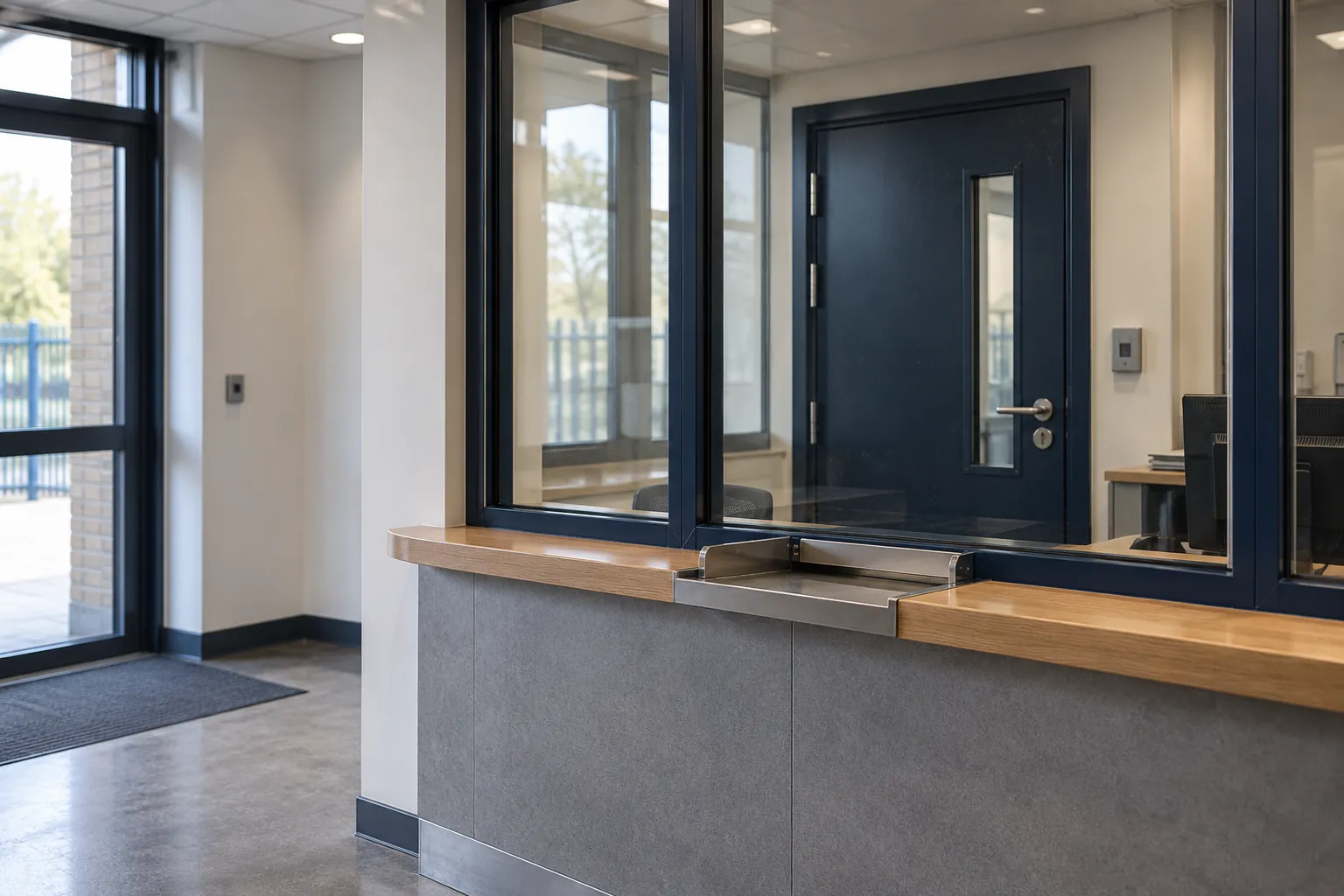
Ballistic · EN 1522 FB2 to FB7
Bullet resistant windows
Bullet resistant windows rated FB4 to FB7 to EN 1522: framed systems with tested glazing, frames and fixings. Supplied and installed UK-wide by ArxBridge.
- ✓Third-party test evidence with every product
- ✓Written specification you can issue to tender
- ✓Supplied and installed across the UK
Get a free project quote
Rating, written specification and budget range within one working day.
Confidential. No cost, no obligation.
Third-party tested
Evidence with every quote
UK manufactured
Made to your sizes
One accountable team
Specify, supply, install
Confidential handling
Details never shared
Bullet resistant windows are framed window systems tested to EN 1522 from FB4 to FB7. Glazing, frame and fixings are rated as one assembly, so there is no weak link at the edge of the glass. ArxBridge supplies and installs them across the UK.
- FB4 to FB7EN 1522 ballistic ratings
- Tested as a systemGlazing, frame and fixings together
- No-spall glazingNS option protects the inside
- Fixed or openableLights to suit the operation
What is a bullet resistant window?
It is a complete framed window, not a pane of glass on its own. The glazing resists the projectile, the frame resists the same threat around the perimeter, and the fixings hold the whole unit in the structure. All three are tested together to EN 1522.
They are specified for guard posts, cash handling counters, control rooms, reception screens and ticket offices: anywhere staff sit behind glass within reach of the threat. Because the rating covers the assembly, you can compare options honestly instead of guessing which part fails first. The ballistic ratings guide sets out the classes in full.
The frame is half the rating. Glazing to EN 1063 only performs when it sits in a frame tested with it. Always specify glazing and framing as one tested system, never as separate items.
Which rating do your windows need
Match the class to the assessed threat. Most commercial applications sit at FB4 or FB5; higher classes suit sites with a defined rifle threat.
| Class | Test threat | Where it is specified |
|---|---|---|
| FB4 | .357 and .44 Magnum handguns | Cash handling, guard posts |
| FB5 | 5.56 x 45 rifle | Elevated threat sites |
| FB6 | Rifle rounds: 5.56 x 45 and 7.62 x 51 | High-risk facilities |
| FB7 | 7.62 x 51 hard core, armour piercing | Maximum threat locations |
For occupied rooms, add the NS suffix so the inner face is rated no-spall: no fragments leave the back of the glass toward the people it protects. The glass itself is classified to EN 1063; see bullet resistant glass for the BR scale.
Inside bullet resistant windows
The glazing is a multi-layer laminate of glass and polycarbonate, bonded so the layers share the impact energy. Thickness and weight rise steeply with class, which is why the structural opening and the support beneath the sill matter as much as the window itself.
Frames are steel or aluminium with ballistic infill in the profiles, so the sight lines stay slim while the section resists the rated threat. Glazing beads, gaskets and fixings are part of the tested assembly. Units are anchored into the structure, sealed, and finished to match the surrounding facade.
Openable lights are available where ventilation or pass-through is needed, with the opening gear protected within the rated frame. Fixed lights give the slimmest sections and the lowest cost for a given class.
Combining bullet resistant windows with other ratings
Windows often need more than ballistic resistance. Ground-floor units can add LPS 1175 forced-entry rating in the same frame; see security windows. Where blast is part of the threat picture, the glazing and frame can be rated to ISO 16933 as well; see blast resistant windows. Thermally broken profiles keep U-values in check on heated buildings; see thermally broken doors for the approach we take to thermal performance.
As with every product, each added rating is tested in the same construction. We do not infer a combination that has not been tested.
Where bullet resistant windows are used
Banking and finance uses them at counters, dealing floors and cash centres. Government and defence estates fit them in guard posts and control rooms. Transport hubs protect ticket offices and operations rooms, high-value retail protects stock rooms and service counters, and data centres secure their control and reception areas.
Pair them with bullet resistant doors for protected entrances, and see the full ballistic range for facades and homes.
Cost and lead time factors for bullet resistant windows
We quote from drawings or a survey. What moves the figure:
- Ballistic class: weight and thickness climb with each step up the FB scale.
- Glass thickness and weight: heavy units need stronger supports and lifting gear.
- Opening size: large panes need thicker laminates and stiffer frames.
- Quantity: repeated units bring the per-unit figure down.
- Frame finish: standard powder coat against special colours or anodised finishes.
- Integration: intercoms, pass-through trays and access control add design time.
- Site access: restricted routes or upper floors complicate delivery of heavy glass.
How to specify bullet resistant windows
- Define the threat. Set the EN 1522 class and the NS requirement with your security consultant.
- Survey the openings. Check structure, sill support and fixing zones; see security consultancy.
- Choose fixed or openable. Decide which lights must open and how they will be secured.
- Approve the design. Review drawings and the glazing specification; see design.
- Plan the lift. Agree delivery, storage and lifting for heavy units before manufacture ends.
- Install and record. Fit, seal and file the test evidence; see installation.
Frequently asked questions
Can bullet resistant windows open?
Yes. Openable lights are available with the opening gear protected inside the rated frame. Fixed lights are slimmer and cheaper for the same class, so use them wherever ventilation is not needed.
Is the frame as strong as the glass?
In a properly specified window, yes. The frame, glazing and fixings are tested together to the same EN 1522 class, so the assembly has no rated weak point. Ask for test evidence covering the whole unit.
What does no-spall mean?
Spall is fragments leaving the back of the glass on the protected side. No-spall (NS) glazing is built so the inner face stays intact, which matters wherever people sit close behind the window.
How thick is the glass?
It depends on the class: each step up the FB scale adds layers, thickness and weight. Your specification will state the make-up, and we confirm the structural support it needs at survey.
How do we clean and maintain them?
Clean the glass as normal glazing and check seals, fixings and opening gear on a planned schedule. Damaged panes must be replaced like for like; we record the exact make-up at handover so replacements match.
Get a free quote
Related
More in ballistic protection
Ready to specify your project?
Free assessment, written specification and test evidence. Reply within one working day.