
ArxBridge
Security shutters vs high performance roller doors
Roller shutter vs roller door: how UK buyers choose between them, the LPS 1175 security ratings each can carry, and the cost drivers that set every quote.
- ✓Third-party test evidence with every product
- ✓Written specification you can issue to tender
- ✓Supplied and installed across the UK
Get a free project quote
Rating, written specification and budget range within one working day.
Confidential. No cost, no obligation.
Third-party tested
Evidence with every quote
UK manufactured
Made to your sizes
One accountable team
Specify, supply, install
Confidential handling
Details never shared
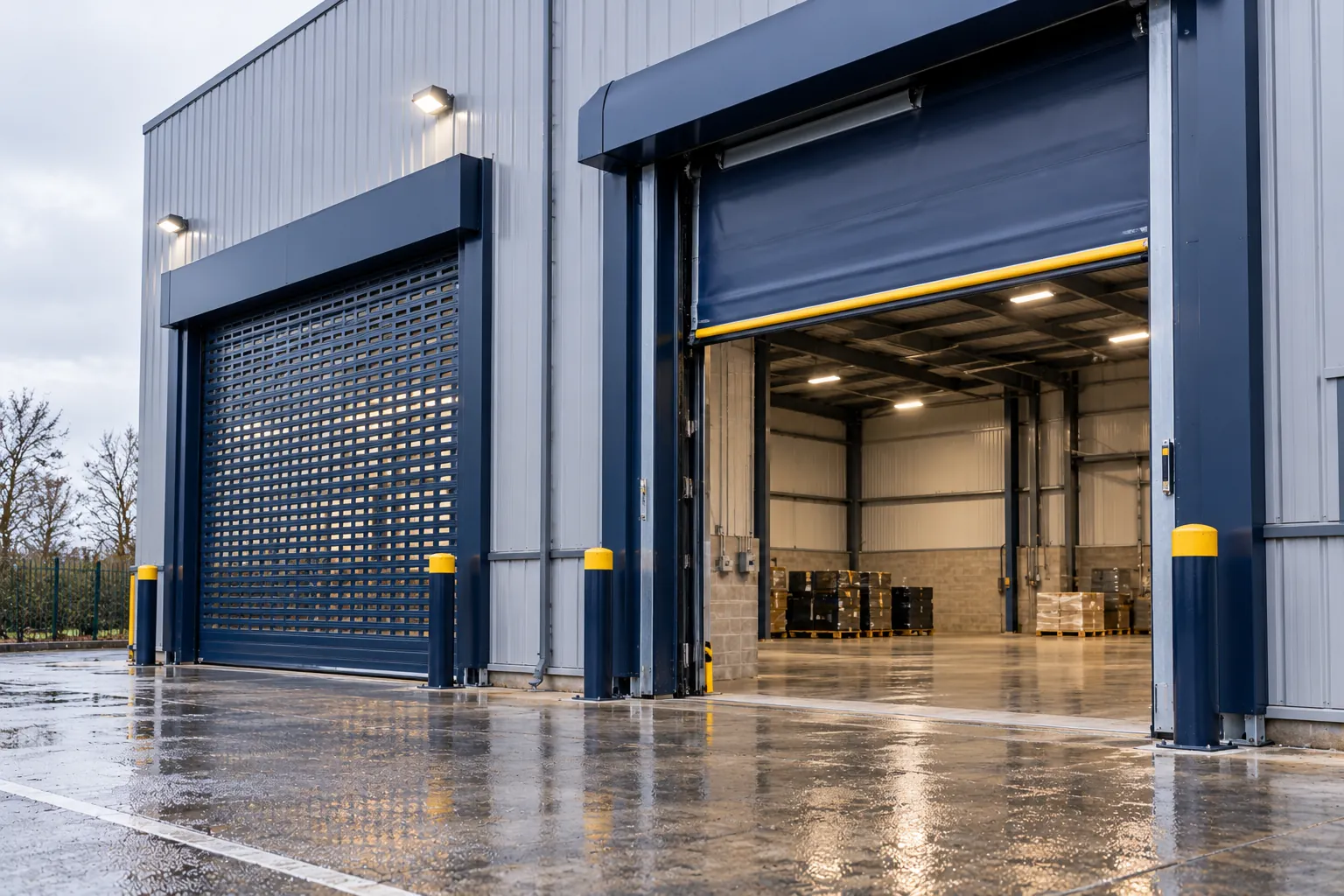
A security shutter is a protection system first: interlocking slats that resist attack, and it can carry a tested LPS 1175 forced entry rating. A high performance roller door is an access system first: a fast, insulated curtain for openings used all day. Choose the shutter where security matters most, the roller door where speed and insulation do.
- ShutterInterlocking steel or aluminium slats
- Roller doorContinuous insulated curtain on a drum
- RatingsBoth can carry LPS 1175 SR2 to SR4
- Best fitSecurity at night, speed by day
A security shutter: built to resist attack
A security shutter closes an opening with a curtain of interlocking slats, usually steel or aluminium, that runs in reinforced guides and locks into the floor or wall. Each slat hooks into the next, so the curtain behaves as one surface when someone tries to lift, bend or lever it. That is why shutters protect shop windows, service hatches and back doors after hours.
Shutters come in solid, perforated and grille versions. Solid slats block sight of the goods inside. Perforated slats let light and air through while keeping the opening covered. A retractable security grille is the lightest option: it keeps the shopfront visible, but it is not a shutter and answers a different question. Our shutters versus grilles guide compares the two directly.
Where the shutter sits matters as much as what it is made of. Fitted outside, it is the most visible deterrent, but it may need planning approval from the local authority, especially on high streets and in conservation areas. Fitted inside, it avoids that question and stays out of the weather, at the cost of internal headroom. Ask the planner before you order, not after.
A high performance roller door: built for speed and insulation
High performance roller doors use a continuous insulated curtain, not interlocking slats: a double skinned panel filled with foam insulation that coils onto a drum above the opening. It opens and closes quickly and keeps heat in and weather out. Warehouses, loading bays and distribution depots use them where vehicles and people pass through all day.
Speed is the defining feature. A high performance door opens far faster than a standard shutter, which cuts the time a heated building spends open to the cold. Sensors and remote controls trigger it automatically, so drivers do not wait and the doorway is never left gaping. It is not a security device with a fast motor bolted on; it is an access device engineered around cycle times.
The insulation is real, not a claim. The foam filled curtain gives the door a measurable thermal performance, which matters on temperature controlled buildings and on retail or industrial units where heating bills are watched. Seals around the edges close the gaps that would leak air. If the building is not heated and the door is rarely used, that insulation buys nothing.
Speed, duty cycle and how often the opening is used
Count the cycles before you choose. A shop shutter opens twice a day. A warehouse roller door can cycle fifty or a hundred times a day. Each product is designed around a different duty cycle, and using one outside it shortens its life. A shutter asked to cycle like a roller door will wear its slats, guides and motor early.
Speed needs safety devices. A fast moving curtain must stop safely if something is in the way, so high performance doors carry safety edges and detection that add cost and maintenance. A slow shutter on a back door needs none of that, and its simplicity is a kind of reliability.
Count the cycles first. Under ten cycles a day, a shutter usually wins. Over thirty, a high performance roller door pays back through speed and energy saved. Between those, the security rating decides.
Security ratings: what each can carry
Both products can be tested to LPS 1175, and the rating belongs to the complete tested doorset. An SR2 rating (B3) means 3 minutes of attack with tools such as screwdrivers, pliers and hand saws. SR3 (C5) means 5 minutes with crowbars, drills and chisels. SR4 (D10) means 10 minutes with sledgehammers, disc cutters and jigsaws. A rated product must be supplied with third party test evidence naming that exact construction.
The natural ratings differ. Shutters are the classic rated product: their guides, bottom bars and locking hold the curtain during an attack, and most certified security shutters sit at SR2 or SR3. Roller doors can also be rated, usually where the door is the perimeter line of a building that also needs speed, such as a distribution hub with a theft problem. Check the certificate, not the brochure: a fast door described as heavy duty without a test certificate has no rating at all.
Forced entry is only one threat. Neither product is a fire door unless specifically tested as one. If the opening sits on a fire compartment line, the fire rating must be proven on the same tested assembly, as our roller shutter regulations guide explains.
Insulation, weather sealing and noise
Heat moves through gaps, and gaps are what these products do differently. A high performance roller door is sealed all round: brush and rubber seals on the sides, a bottom seal on the floor, and a foam filled curtain between. A standard shutter has slats that meet but do not seal, and guides that leave air paths, so it leaks heat by design. On a heated building with a busy opening, that difference shows up in the energy bill within a winter.
Weather exposure decides the material. Steel suits most sites but needs its finish maintained where rain sits on it. Aluminium resists corrosion and suits coastal sites, at the cost of lower strength per slat. Powder coated finishes protect either metal and match the building.
Noise cuts both ways. A shutter rattles in wind and clatters when it runs, which neighbours notice on residential streets. A foam filled roller door runs quieter and seals better against outside noise. If the opening faces flats or a hotel, noise alone can settle the choice.
Shopfront appearance, grilles and planning
On a shopfront the shutter is part of the brand. A solid shutter turns a window display into a steel wall at night, which some retailers dislike and some planners forbid. Perforated or grille shutters keep the display visible and still lock the opening. The local planning authority may have a view, so check before you commit to a design.
Where the opening needs visibility and airflow, neither a solid shutter nor a roller door is right. That is where a grille fits instead: a retractable grille keeps the frontage open to light while denying entry. Where the opening is a pedestrian entrance rather than a goods entrance, the answer is not a shutter at all but a proper entrance product, covered in our guides hub.
Power, manual override and maintenance
Both products are usually powered, and power brings obligations. A powered shutter or roller door must stop safely on obstruction: safety edges, photo cells or both, fitted and tested. If the power fails, a manual override, usually a chain or crank, lets staff close or open the curtain. Check how the override works before you buy, because on some doors it is a slow job one person cannot manage.
Maintenance is not optional on either. Guides collect dirt, slats wear, springs lose tension, motors age and safety devices drift out of adjustment. A planned maintenance visit once or twice a year keeps the door safe and the warranty valid. Skipped maintenance shows up as a door stuck halfway on a Friday night.
Installation quality decides how long the door lasts. Guides must be plumb and parallel, the drum level, and the fixings into sound structure. A well made door fitted badly will jam, drag and fail early, and no warranty covers a fixing into crumbling brick.
Shutter or roller door: comparison and cost drivers
| Point | Security shutter | High performance roller door |
|---|---|---|
| Primary job | Protect the opening when closed | Open and close quickly, all day |
| Curtain | Interlocking slats, steel or aluminium | Continuous foam filled insulated curtain |
| Typical cycles | Up to about 10 per day | 30 to 100 or more per day |
| Security ratings | Commonly SR2 (B3) or SR3 (C5) to LPS 1175 | Available, check the certificate |
| Insulation | Low, slats do not seal | High, sealed all round |
| Noise | Rattles in wind, clatters in use | Quieter, sealed |
| Shopfront look | Solid, perforated or grille options | Plain insulated panel |
| Safety devices | Standard motor and locks | Safety edges and detection as standard |
Many buildings need both: a roller door on the loading bay that runs all day, and a rated security shutter on the shopfront that locks the building at night. The two products solve different halves of the same building.
Nobody can quote from a table, but the cost drivers are the same on every job. Size and height set the material and the motor. The rating level sets the construction: an SR3 shutter costs more than an unrated one because every part is heavier and the evidence costs money. Speed and automation add sensors, controls and safety devices. Insulation, finish and colour each carry a cost. Access for delivery and installation adds its own line: a shutter going onto a high street with no parking costs more to fit than the same shutter onto a warehouse with a yard.
Compare quotes like for like. Each should name the rating and test evidence, the curtain type and insulation, the motor and controls, the safety devices and the finish. A cheaper quote that leaves out the safety edge or the rated locking is not cheaper; it is a different product. Our security door cost factors guide sets out the same discipline for doorsets.
What the comparison does not tell you
The comparison tells you which product fits which opening. It does not tell you whether the product on site matches the one in the brochure. Both products can carry LPS 1175 ratings, from SR2 to SR4, but the rating belongs to the tested construction: guides, bottom bar, locking and curtain exactly as tested. A fast door described as heavy duty without a test certificate has no rating at all.
The comparison does not tell you about fire. Neither product is a fire door unless it was tested as one. Where the opening sits on a fire compartment line, the fire rating must be proven on the same tested assembly to EN 1634-1, with separate evidence from the security rating. One certificate never stands in for the other.
The comparison does not tell you about the wall and the opening. A rated shutter in a weak surround protects nothing, and a roller door on an opening that cannot take the drum load and the guide fixings is the same problem from the other side. The fixings and the structure are part of the system, and they need the same evidence as the curtain.
The comparison does not tell you the cost of the wrong duty cycle. A shutter asked to cycle like a roller door wears its slats, guides and motor early, and a roller door on an opening used twice a day buys speed nobody uses. Under ten cycles a day a shutter usually wins, over thirty a high performance roller door pays back through speed and energy saved, and between those the security rating decides.
The comparison also says nothing about spares and breakdown. Slats, guides, motors, seals and sensors all wear, and the cost of a breakdown on a busy opening is the lost trading day, not the part. Ask who holds spares for the exact curtain and motor, and how long a failed door leaves the opening unusable, because a product with no spares on the shelf is a product that cannot be fixed in time.
Mistakes that weaken a shutter or roller door order
Most failed orders are decided at specification stage, not on site. The table below sets out the errors that appear most often.
| Mistake | Why it fails | What to do instead |
|---|---|---|
| Ordering on price alone | The cheapest curtain has no test evidence behind it | Ask for the certificate naming the exact construction |
| Choosing a roller door for a night-time perimeter | Speed without attack resistance leaves the opening unguarded after hours | Name the LPS 1175 rating the opening needs first |
| Skipping the safety edge on a fast door | A fast curtain must stop safely if something is in the way | Specify the safety devices and their maintenance with the door |
| Fitting a shutter outside without planning consent | High streets and conservation areas can refuse a visible shutter | Ask the planner before you order, not after |
| Ordering a fire-rated shutter without fire evidence | The security rating proves nothing about fire | Ask for EN 1634-1 evidence on the same assembly |
Get the rating right first, and the product choice follows from it. A specification that names the threat, the rating, the duty cycle and the evidence leaves nothing to interpret. For the build behind each product, see security shutters and high performance roller doors, and for the safety duties a powered shutter carries, see the roller shutter regulations guide.
Can a high performance roller door be a security door?
It can, if the exact doorset carries a tested rating such as LPS 1175 SR2 or SR3 with third party evidence. The rating belongs to the tested construction, not to the product family. A fast door described as heavy duty without a certificate has no proven security rating.
Is a security shutter a fire exit door?
No. A shutter closes and locks an opening, which is the opposite of an escape route. A fire rated shutter can hold back flames and hot gases between compartments, but people escape through fire exit doors, never through a shutter.
Which is quieter, a shutter or a roller door?
The roller door. Its foam filled curtain and edge seals damp operating noise and block outside sound. A standard shutter rattles in wind and clatters as it runs, which matters on openings near homes or hotels.
Can a security shutter be insulated?
Some shutters use foam filled slats, which help a little, but a shutter can never seal like a roller door because the slats must move in the guides. If insulation is the priority, the roller door is the right product.
When is a grille better than either?
When the opening needs visibility and airflow while denying entry, such as a shopfront that must show its goods overnight. A grille keeps the frontage open to light in a way no solid shutter or roller door can.
Do shutters and roller doors need servicing?
Yes. Guides, slats, springs, motors and safety devices all wear, and a planned maintenance visit once or twice a year keeps the door safe and reliable. Skipped servicing is the usual cause of a door stuck halfway at closing time.
Get a free quote
Related
More in guides for specifiers
Products
One supplier for the whole building envelope
Ready to specify your project?
Free assessment, written specification and test evidence. Reply within one working day.