
ArxBridge
Steel vs aluminium security doors: strength, ratings and looks
Steel vs aluminium security doors compared for UK commercial entrances: attack resistance, tested ratings, glazing, corrosion, thermal breaks and finishes.
- ✓Third-party test evidence with every product
- ✓Written specification you can issue to tender
- ✓Supplied and installed across the UK
Get a free project quote
Rating, written specification and budget range within one working day.
Confidential. No cost, no obligation.
Third-party tested
Evidence with every quote
UK manufactured
Made to your sizes
One accountable team
Specify, supply, install
Confidential handling
Details never shared
For a commercial entrance, steel wins on attack resistance and aluminium wins on light, low maintenance glazed fronts. The rating belongs to the tested doorset, not the metal: both can carry LPS 1175 or PAS 24 ratings, but steel reaches higher ratings more readily. Choose by threat level, exposure, glazing needs and how often the door is used.
- Steel strengthsAttack resistance and higher LPS 1175 ratings
- Aluminium strengthsLight, corrosion resistant glazed entrances
- Ratings ruleThe rating belongs to the tested doorset
- FinishesPowder coating for both, anodising for aluminium
Strength and attack resistance
Steel carries more load per section than aluminium, so a steel leaf and frame resist bending, levering and impact better at the same size. That is why doors specified for forced entry usually start in steel: the metal gives the designer more strength to work with before any reinforcement is added.
Aluminium is not weak, but the comparison is direct. An aluminium leaf built to match a steel leaf for strength needs deeper, heavier sections, which starts to cancel the weight advantage. For a shopfront or office entrance where the threat is opportunistic, an aluminium doorset with good locking is enough. Where the brief names determined attack, steel is the honest choice.
The limit to keep in mind is that the metal alone decides nothing on paper. A thick steel door with no test evidence has no rating, while an aluminium doorset tested and certified to LPS 1175 does. Read the certificate, not the metal.
Ratings: why the tested doorset matters more than the metal
LPS 1175 Issue 8 rates forced entry resistance from A1 (old SR1) up to H20 (SR8). The bands most buyers meet are B3 (SR2), 3 minutes against screwdrivers, pliers and hand saws, C5 (SR3), 5 minutes against crowbars, drills and chisels, and D10 (SR4), 10 minutes against sledgehammers, disc cutters and jigsaws. The LPS 1175 ratings guide sets out the full scale.
Both steel and aluminium doorsets can be tested to these ratings, and the result is certified for the whole doorset: leaf, frame, glazing, seals and hardware exactly as tested. In practice steel reaches the higher bands more readily because the base metal is stronger, while aluminium doorsets more often carry the lower bands or PAS 24, the BSI enhanced security standard for residential doors and windows, which is a lower threat level than LPS 1175.
Some buyers see EN 1627 classes RC1 to RC6 instead. The same principle applies: the class is earned by the tested doorset, and the test report names the exact construction it covers. Change the lock, the glazing or the frame, and the rating no longer applies.
Ask for the certificate first. A material claim is marketing. A test certificate naming the doorset, the standard and the rating is evidence.
Glazing and slim sightlines
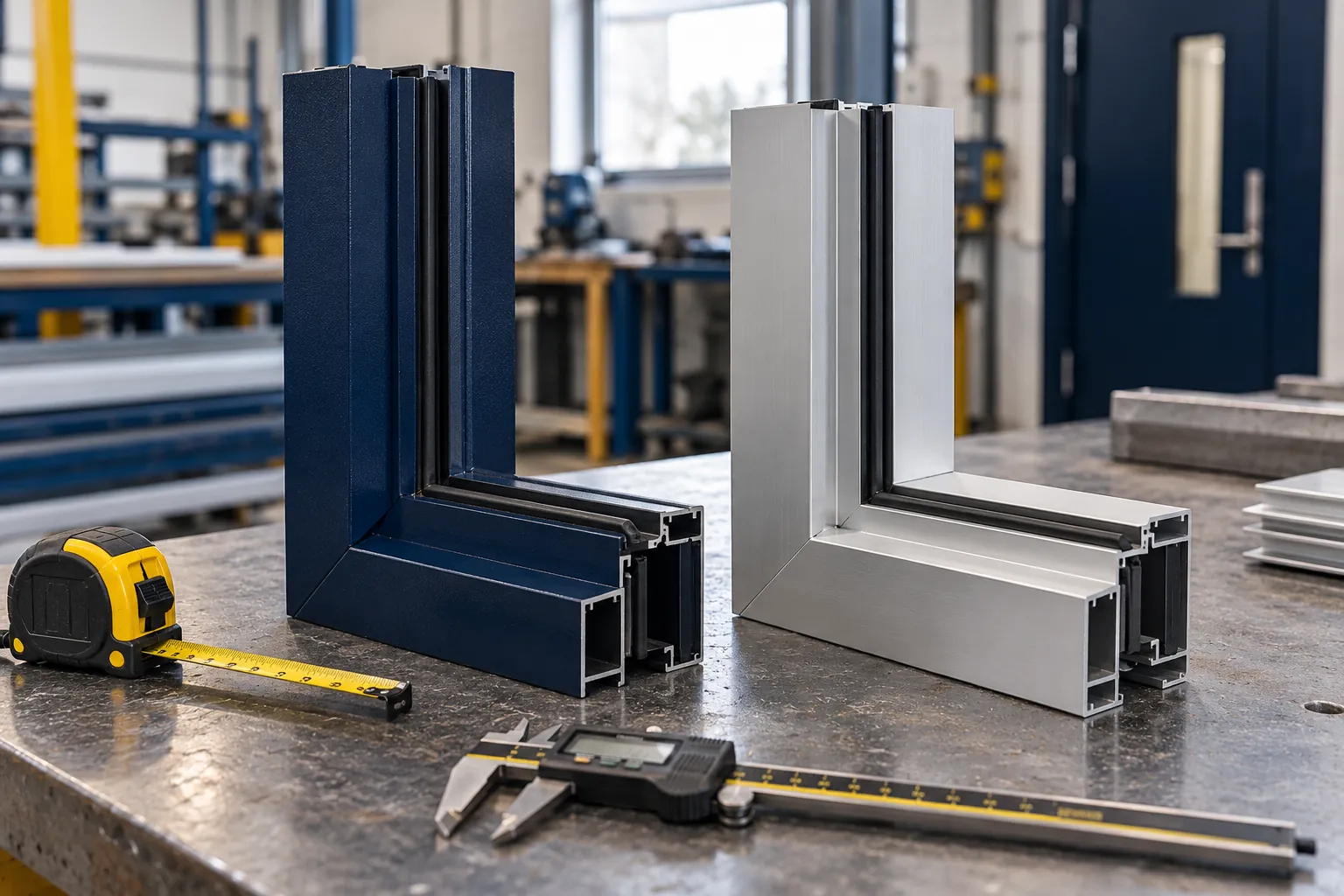
This is where aluminium earns its place. Aluminium extrusions form rigid frames from relatively light sections, so large glazed entrances with narrow sightlines are practical: full height glass doors, screens and shopfronts that stay light enough to operate smoothly. Powder coated aluminium frames with big glass areas suit retail fronts and office receptions where visibility and daylight matter.
Steel can also carry glass, and fine profile steel systems such as the Jansen steel doors range give slim sightlines with steel’s strength. The trade off is weight and build cost: steel framed glass doors are heavier, need stronger hardware, and the slimmest steel profiles cost more to make than aluminium equivalents.
Security glazing complicates both. Laminated or attack resistant glass is heavy, so a large glazed security door in either metal needs the frame, hinges and closer specified for the real leaf weight. Check the tested scope: the glass in a rated doorset must be the glass that was tested.
Thermal performance and weather
Aluminium conducts heat readily, so aluminium entrance frames use thermal breaks, insulating bars fitted between the inner and outer profiles, to slow heat loss. A well designed thermally broken aluminium door with double glazing performs well on a heated building.
Steel conducts heat too, and the same solution applies: thermally broken doors separate the inner and outer steel faces so the frame does not act as a cold bridge. Our thermally broken security doors guide explains how this works in rated doorsets.
Neither metal is automatically better here. The result depends on the design: the break, the glazing and the seals. On an unheated store or plant room the thermal question barely matters; on a heated entrance it should be in the specification either way.
Corrosion, coastal sites and cleaning
Aluminium’s clearest advantage is corrosion. It forms its own oxide layer and does not rust, so it suits coastal sites, pool buildings and places washed down often. A powder coated aluminium door near the sea still needs its coating kept intact, but the base metal forgives a chip far better than steel does.
Steel needs its protection. Galvanising, a zinc coating, plus powder coating gives steel doors long service in normal UK weather, adding colour and a hard wearing skin. But once the coating is breached down to bare steel in salty air, rust starts, so inspection and touch up matter more than with aluminium.
Cleaning is similar for both: mild detergent, no abrasives. The difference is the consequence. A neglected aluminium door looks dull; a neglected steel door can start to corrode at chips and edges.
Finishes: powder coating and anodising
Powder coating suits both metals. The dry powder is sprayed on and cured to a hard, even skin in any RAL or BS colour, matt, satin or gloss. It is the standard finish for security doors in steel and for aluminium entrances alike, and it can be touched up or recoated later.
Aluminium has a second option: anodising. This thickens the natural oxide layer electrochemically, giving a metallic finish that is part of the metal rather than a coating on it. Anodised finishes resist scratching well and never peel, but the colour range is narrower than powder coating and repairs are harder to blend.
For steel, the preparation under the finish decides its life: degrease, blast and prime before the colour coat goes on. A premium powder over poor preparation fails early on either metal.
Weight, hardware and daily use
A steel security door is heavy, often several times the weight of an aluminium entrance door of the same size. That weight shapes everything: the hinges, the closer, the frame fixings and the effort to open it. Hardware must be specified for the real weight, and on a busy entrance a quality closer and correctly rated hinges are not optional extras.
Aluminium’s lightness is a daily benefit. Doors swing easily, automation needs smaller operators, and large sliding or folding entrances stay practical. On high traffic entrances the lighter leaf also means less wear on pivots and closers over time.
There is a security side to weight as well. A heavy steel leaf resists being forced partly by mass; an aluminium door relies more on its locks, frame and keep strength. Either approach works when the doorset is tested, but the hardware schedule must match the leaf in front of it.
The honest verdict: where each material wins
Neither metal wins everywhere. The right choice follows the opening, and many buildings use both: aluminium at the front, steel at the back. Our types of security doors guide maps each opening to the right doorset, the how to specify security doors guide shows what to put in the enquiry, and if the opening also needs fire separation our steel vs timber fire doors comparison helps choose the leaf. The full guides hub holds every comparison in one place.
| Need | Choose steel | Choose aluminium |
|---|---|---|
| Forced entry rating | Reaches B3, C5, D10 and above more readily | Possible at lower bands and PAS 24, fewer high rating options |
| Glazed entrance, slim look | Fine steel profiles exist, but heavier and dearer | Light slim frames with large glass areas |
| Coastal or corrosive site | Needs intact galvanising and coating, more maintenance | Does not rust, forgiving of chips |
| Thermal performance | Needs a thermal break design | Needs a thermal break design |
| High traffic daily use | Works, but heavy: hardware must suit the weight | Light leaves, easy automation, less wear |
| Combined fire rating | Standard: steel fire doorsets tested to EN 1634-1 | Rare: fire rated aluminium doorsets are uncommon |
| Finish choice | Powder coating in any RAL or BS colour | Powder coating or anodising |
What the material comparison does not tell you
The comparison tells you what each metal does well. It does not tell you what the doorset on site will do. The rating belongs to the tested doorset, not the metal: steel reaches the higher LPS 1175 bands more readily because the base metal is stronger, and aluminium doorsets more often carry the lower bands or PAS 24, but either metal without a certificate has no rating at all. Read the certificate, not the metal.
The comparison does not tell you about the glazing. Laminated or attack resistant glass is heavy, so a large glazed security door in either metal needs the frame, hinges and closer specified for the real leaf weight. The glass in a rated doorset must be the glass that was tested, and a heavier pane swapped in afterwards is a change to the tested assembly.
The comparison does not tell you about thermal performance. Both metals conduct heat, and the result depends on the thermal break, the glazing and the seals, not on the metal name. A well designed thermally broken door in either metal performs well on a heated building, and a door without a break performs poorly in both.
The comparison does not tell you about the site. Coastal air, pool buildings and places washed down often punish steel where the coating is breached, while aluminium forgives a chip because it forms its own oxide layer. The exposure decides the finish and the inspection schedule, and that decision belongs in the specification, not in the maintenance manual.
The comparison does not tell you about fire. Neither metal is fire rated by itself: a fire classification belongs to the tested doorset to EN 1634-1, with the leaf, frame, seals and hardware exactly as tested, and it must be proven separately from the security rating. A steel or aluminium doorset that carries an LPS 1175 rating has shown nothing about fire unless it was also fire tested on the same construction.
Evidence to ask for before you choose a metal
Ask for the evidence before the order is placed, not after the doors arrive. The table below sets out what to ask for and what each item proves.
| Evidence | What it must state | Why it matters |
|---|---|---|
| Test report | LPS 1175 or PAS 24, exact doorset, sizes and hardware as tested | Proves the rating belongs to the doorset being supplied |
| Glazing evidence | Glass type and weight as tested, with the frame and hinges to carry it | A heavier pane changes the doorset the certificate covers |
| Thermal evidence | Thermal break, glazing and seals as tested | Proves the door performs on a heated building |
| Finish specification | Powder coating or anodising, with a coastal grade where the site needs it | The finish decides how the door ages in its exposure |
| Maintenance note | Inspection intervals, touch-up and cleaning for the metal and finish chosen | A neglected steel door corrodes; a neglected aluminium door only looks dull |
Choose the metal from the threat, the glazing and the site, then prove the choice with the certificate. A specification that names the standard, the doorset and the evidence leaves nothing to interpret. For the ratings in full, see the LPS 1175 page, and for the residential route, see the PAS 24 requirements guide. Where the entrance must not act as a cold bridge, see thermally broken security doors.
Can an aluminium door carry an LPS 1175 rating?
Yes, in principle: the rating belongs to the tested doorset, not the metal. In practice most certified aluminium doorsets sit at the lower bands, while steel reaches B3, C5, D10 and above more readily. Check the certificate names the exact doorset you are buying.
Which lasts longer outdoors, steel or aluminium?
Aluminium usually needs less attention because it does not rust, so on coastal or washdown sites it outlasts steel with less maintenance. Inland, a galvanised and powder coated steel door lasts well too, provided chips and edges are touched up.
Is steel always more secure than aluminium?
Not automatically. Security is proved by testing, not by the metal. An untested steel door has no rating, while a tested aluminium doorset does. Compare certificates and ratings, not materials.
Can I get a fire rated aluminium security door?
Fire rated doorsets are overwhelmingly steel, tested to EN 1634-1. Aluminium fire doorsets exist but are uncommon, and combining fire with a forced entry rating in aluminium is rare. For a dual rated opening, steel is the practical choice; our fire and security doors dual certification guide explains how the two ratings combine.
Which costs less over its whole life?
No single answer fits every site. Aluminium entrances often cost less to run because automation can be lighter and corrosion maintenance is lower. Steel security doorsets cost more where high ratings demand heavier construction. Compare whole life cost, including hardware, automation and maintenance, not just the door price.
Does an aluminium entrance need a thermal break?
On a heated building, yes. Specify thermally broken profiles with suitable glazing, and check the doorset’s thermal design rather than assuming every aluminium door performs the same.
Get a free quote
Related
More in guides for specifiers
Products
One supplier for the whole building envelope
Ready to specify your project?
Free assessment, written specification and test evidence. Reply within one working day.