
Sectors
Data centres
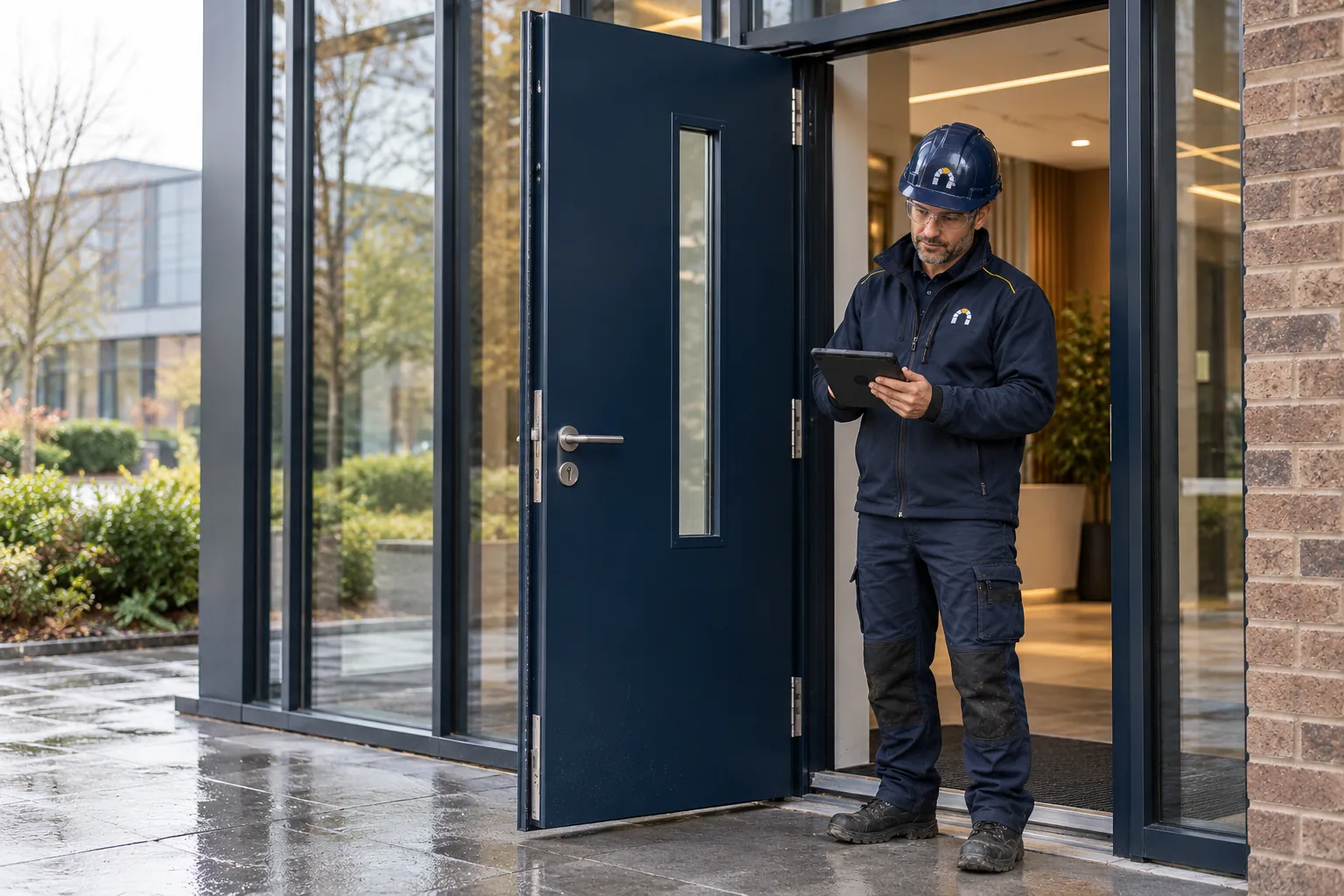
Physical security for UK data centres: LPS 1175 doors, PAS 68 bollards, turnstiles and shielding, specified zone by zone for data halls and plant rooms.
- ✓Third-party test evidence with every product
- ✓Written specification you can issue to tender
- ✓Supplied and installed across the UK
Get a free project quote
Rating, written specification and budget range within one working day.
Confidential. No cost, no obligation.
Third-party tested
Evidence with every quote
UK manufactured
Made to your sizes
One accountable team
Specify, supply, install
Confidential handling
Details never shared
A data centre needs physical protection around the building, not just inside the network. Forced entry to plant rooms, theft from data halls, vehicle attack on the boundary and tailgating at reception all threaten uptime. This page sets out how UK specifiers match each zone to the right tested rating.
- LPS 1175 B3 to D10Security doorsets for plant rooms and data halls
- PAS 68 and IWA 14-1Impact tested HVM bollards at the site perimeter
- LPS 2081 SRBStealth rated doors for quiet attack scenarios
- Turnstiles and speed gatesControlled entry lanes that stop tailgating
The threats data centres face
Data centres attract attackers because the equipment inside is valuable and any interruption to service is costly. Plant rooms sit on the edge of the building, close to service yards and delivery points, which makes them the easiest target. Switchgear, UPS units, batteries and cooling plant all have resale value, and copper cabling is a classic target. A weak plant room door can give an intruder a route into the rest of the building.
Data halls need protection at every opening. The doors must resist forced entry and work with the access control system, so only authorised staff reach the racks. Interlocked doors and mantraps slow anyone trying to follow a legitimate entrant through. Even a brief unauthorised presence in a hall can compromise client equipment.
The perimeter faces vehicle attack. A van or truck driven at a gate or fence line can breach the boundary in seconds and reach the building before any response is possible. Service yards and delivery bays are the usual weak points, because they must admit vehicles throughout the day. Fixed and removable security bollards tested to PAS 68 or IWA 14-1 give the boundary a rated line of defence.
Tailgating is the quietest threat on site. Reception areas and staff entrances see constant movement, and a visitor who follows an employee through a controlled door bypasses every lock the site has. Turnstiles and pedestrian speed gates make tailgating difficult while keeping legitimate staff moving.
Standards and guidance for data centres
LPS 1175 is the main standard for forced entry resistance. Each rating combines a tool category letter with minutes of attack time, from A1 (old SR1) up to H20 (old SR8). For data centres the working range is B3 to D10. B3 resists three minutes of attack with tools such as screwdrivers, pliers and hand saws. C5 resists five minutes with crowbars, drills and chisels. D10 resists ten minutes with sledgehammers, disc cutters and jigsaws. Our LPS 1175 security doors cover the full range, and the LPS 1175 ratings guide explains each class in detail.
LPS 2081 covers stealth attack using quiet tools. SRA gives one minute of resistance and SRB gives three minutes. It suits doors where an attacker would work quietly to avoid detection, for example plant room doors approached at night. The LPS 2081 guide sets out the test method and where it fits.
Vehicle impact is covered by PAS 68, IWA 14-1 and ISO 22343-1:2023, the current international standard. A rating states the vehicle mass, impact speed, impact angle and the penetration distance. Test vehicles range from a 1,500 kg car to a 30,000 kg truck, at speeds of 48, 64 and 80 km/h. The vehicle impact ratings guide explains how to read a rating, and the hostile vehicle mitigation range shows the product options.
Comms and control rooms may need electromagnetic shielding as well as physical security. RF shielded rooms are specified by attenuation in dB over a frequency range. EMP protection also needs filtered power and signal entries, because an unfiltered cable defeats the shield. See EMP shielding for the full approach.
Grade the ratings across the site. A B3 door on a data hall and a D10 door on a bin store both waste budget. Work from the boundary inward and match each rating to the value behind the door.
Zone by zone: data centres
Every opening in a data centre should carry a rating that matches its threat. The table below gives a starting point for the main zones.
| Zone | Threat | Typical rating | Product |
|---|---|---|---|
| Site perimeter | Vehicle attack on gates and fence lines | PAS 68 or IWA 14-1 | Impact tested security bollards |
| Plant rooms | Forced entry and theft of equipment | LPS 1175 B3 to D10 | Ventilated steel louvred doors |
| Data halls | Forced entry and unauthorised access | LPS 1175 C5 to D10 | SR3 and SR4 security doors |
| Main entrances | Tailgating and unauthorised entry | LPS 2081 SRB with access control | Full height turnstiles and pedestrian speed gates |
| Comms and control rooms | Eavesdropping and electromagnetic interference | Attenuation specified in dB | EMP shielding |
Data centres specification mistakes to avoid
- Specifying the same LPS 1175 rating on every door. Grade the ratings from the boundary inward instead.
- Forgetting ventilation. Plant rooms need airflow, so a solid door can overheat the equipment. Use ventilated steel louvred doors that carry a security rating.
- Treating access control as a substitute for a rated doorset. A card reader on an unrated door stops honest people only.
- Leaving the service yard weaker than the building. Attackers choose the delivery gate, not the main entrance.
- Asking for leaf test evidence instead of the full doorset. The frame, lock and fixings must be tested as one assembly.
- Mixing up LPS 1175 and LPS 2081. Forced entry and stealth attack are different tests for different scenarios.
Which LPS 1175 rating do data halls need?
Most specifications land on C5 or D10 for data halls, depending on the threat assessment. C5 gives five minutes against tools such as crowbars and drills, while D10 gives ten minutes against heavier tools including disc cutters. Lower risk plant rooms often use B3.
Do data centres need HVM bollards?
Where vehicles can approach the boundary, gates or building line, impact tested bollards rated to PAS 68 or IWA 14-1 are the standard answer. The rating should match the vehicle mass and speed identified in the site risk assessment.
How do you stop tailgating at staff entrances?
Pair access control with physical lanes that enforce one person per authorisation. Full height turnstiles suit unmanned points, while speed gates keep high footfall entrances moving. Both need to sit in the same entry strategy as the rated doors.
How does LPS 1175 differ from LPS 2081?
LPS 1175 measures forced entry: defined tool sets used over a fixed number of minutes. LPS 2081 measures stealth attack with quiet tools, graded SRA at one minute and SRB at three minutes. Specify 1175 for noisy attackers and 2081 for quiet ones.
Get a free quote
Related
More in sectors we protect
Products
One supplier for the whole building envelope
Ready to specify your project?
Free assessment, written specification and test evidence. Reply within one working day.