
ArxBridge
Blast doors: glazed vs solid and how they are rated
Blast door requirements for UK sites: how solid and glazed blast doors are rated to EN 13123 and EN 13124, and what to check in the frame, wall and glazing.
- ✓Third-party test evidence with every product
- ✓Written specification you can issue to tender
- ✓Supplied and installed across the UK
Get a free project quote
Rating, written specification and budget range within one working day.
Confidential. No cost, no obligation.
Third-party tested
Evidence with every quote
UK manufactured
Made to your sizes
One accountable team
Specify, supply, install
Confidential handling
Details never shared
A blast door is only as good as its tested class, its frame and the wall it sits in. Solid doors reach the highest blast classes because there is no glazing to fail. Glazed doors trade some performance for visibility and light, with the glass carrying its own tested class. Choose from the threat assessment, not from a catalogue.
- EXR1 to EXR5Blast classes for doors, arena tested
- EPR1 to EPR4Blast classes for doors, shock tube tested
- EXV10 to EXV45ISO 16933 classes for blast glazing
- A to FGlass hazard rating, no break to high hazard
How a blast door works
A blast door does one thing: it takes the pressure wave from an explosion and passes it safely into the building structure. The leaf is built stiff enough to catch the load without tearing. The frame is built strong enough to hold the leaf seated when the wave hits. The fixings carry the whole load from the frame into the wall. If any one of those links fails, the rating on the certificate means nothing.
That is why a blast door looks different from an ordinary steel door. Leaves are thicker and heavier, hinges are oversized, and locking is usually multipoint, with bolts engaging the frame at several points so the leaf cannot be blown out of its seat. The door only performs if it is closed and latched when the event happens, so closers and locking hardware are part of the safety case.
Weight has a daily cost. A solid high class leaf can weigh several times what a normal fire door weighs. Opening effort, closer power, hinge wear and the strength of the floor and wall around the frame all have to be designed for the real weight, not the weight of the door you are replacing. Our blast resistant doors are supplied as a complete tested system, not just a leaf.
The European blast classes: EPR, EXR and what they mean
In the UK and Europe, blast doors, windows and shutters are rated under EN 13123 and EN 13124. The classes run in two families. EPR1 to EPR4 come from the shock tube route, where a controlled pressure wave is fired at the test specimen. EXR1 to EXR5 come from the arena route, where real explosives are detonated at a set distance from the specimen. Both routes test the complete assembly, leaf, frame, glazing and fixings together.
The class numbers rise with severity. An EXR5 door has survived a far more severe event than an EXR1 door. The arena route is the closer match to a real explosion, which is why counter terrorism specifications in the UK usually name EXR classes. Industrial and petrochemical sites, where the threat is a vapour cloud or process explosion, more often name EPR classes. The blast ratings standards page sets out the classes side by side.
State the class, the route and the standard in every specification. “Blast resistant” on its own is not a specification. Ask for the test evidence against the exact construction you are buying, including the frame, the fixings and any glazing, and keep the evidence with the project records.
ISO 16933 and the glazing inside a blast door
When a blast door has glass in it, the glass is tested under ISO 16933. This is the arena test for blast glazing. The EXV classes use 100 kg of TNT equivalent at a stand off distance, and the number in the class is that distance in metres: EXV45, EXV33, EXV25, EXV19, EXV15, EXV12 and EXV10. EXV10 is the most severe, because the charge is only 10 metres from the glass. The SB classes cover a different threat, the hand carried satchel charge placed close to the glass.
Every ISO 16933 result also carries a hazard rating from A to F. Hazard rating A means no break, the glass stays intact. The ratings run down to F, which is high hazard, where fragments enter the protected space. The hazard rating is what tells you whether people behind the door stay safe, so read it alongside the EXV or SB class, never on its own. Our guide to EXV vs SB classes explains the difference.
The glazing class is not the door class. A door with EXV25 glass is not automatically an EXR rated door. The glazed door as a whole, frame, fixings and glass together, must carry its own EN 13123 or EN 13124 classification. Our blast resistant glass page covers the glazing side, and blast resistant windows face the same assembly rule.
Glazed versus solid: the honest comparison
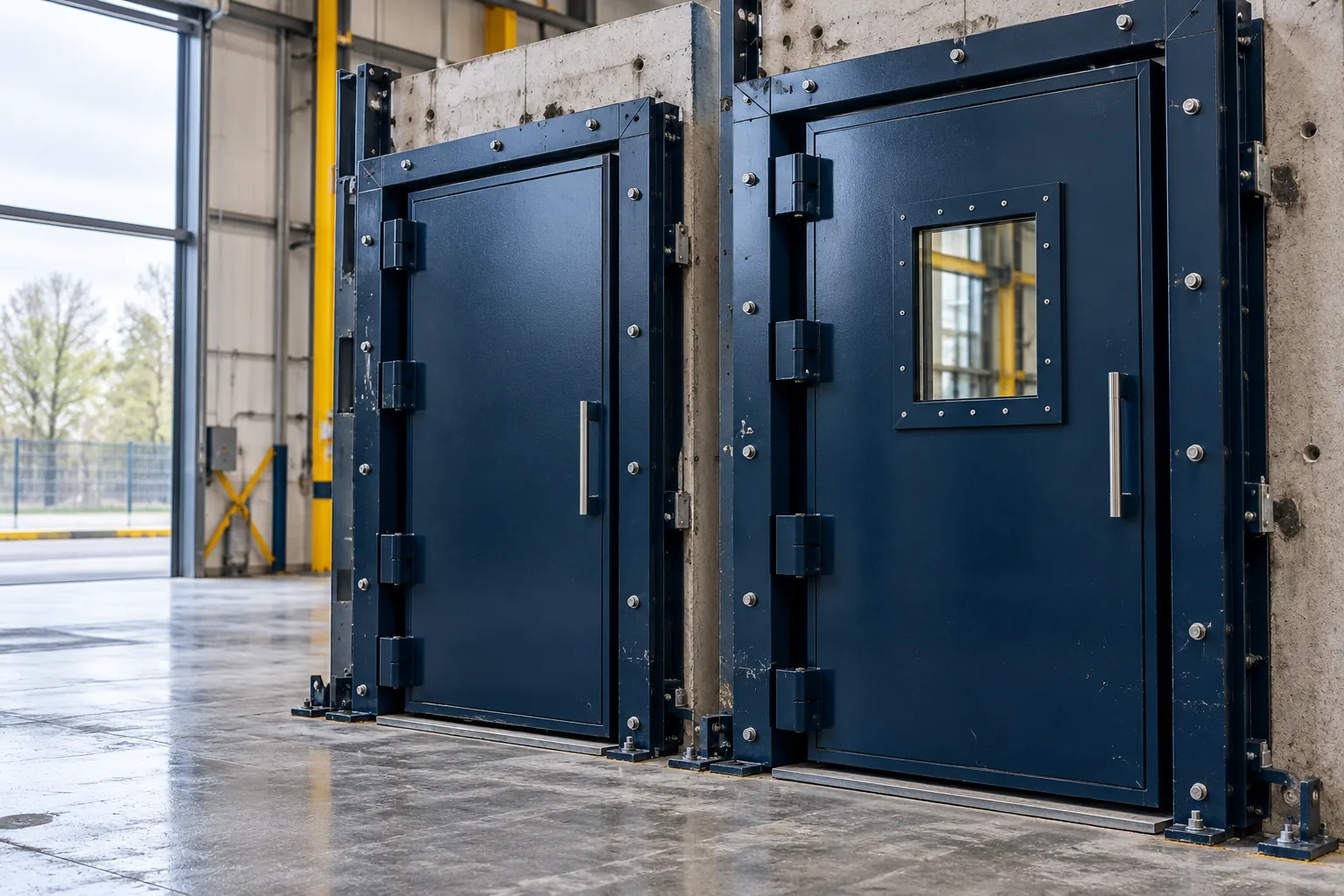
A solid blast door has no glass, so there is no glazing failure mode. That is why the highest classes are usually solid only. The leaf takes the wave as one piece, the hazard inside stays low, and there is nothing for an attacker to see through. The trade off is no visibility. Plant rooms, risers, stores and back of house openings rarely need it, so solid is the natural choice there.
A glazed blast door exists for openings where people must see who is on the other side or where daylight matters: receptions, control rooms, security screening points, lobbies in protected buildings. The glass lets the job be done, but it is always the weak point. The tested glazed area is limited, the hazard rating of the glass decides the safety of the room, and the glazing units are heavy, which adds to the leaf weight the hinges and closer must handle.
The table below lays the comparison out.
| Factor | Solid blast door | Glazed blast door | What to check |
|---|---|---|---|
| Highest classes | Full range, EXR1 to EXR5 available | Glazed area caps the class on most designs | The class on the assembly certificate |
| Visibility | None | Staff can see visitors and threats | Whether the role actually needs it |
| Glass hazard | No glass, no hazard rating needed | Hazard rating A to F, from the ISO 16933 test | Rating letter against the room use |
| Weight and daily use | Heavy leaf, simple hardware | Heavy leaf plus glazing units | Closer, hinges and opening effort |
| Privacy | Full | None, unless blinds or film are added | Whether the opening faces the public |
| Typical fit | Plant rooms, risers, stores, service entries | Receptions, control rooms, screening points | The threat assessment for that opening |
The assembly rule. The rating belongs to the tested doorset, frame, fixings and glazing together. A rated leaf in an untested frame, or rated glass in an untested door, is not a rated blast door.
When the rating has to share the door
Many openings need more than blast resistance. A door on a protected building may also need forced entry resistance to LPS 1175, with B3 at 3 minutes against hand tools, C5 at 5 minutes against crowbars and drills, or D10 at 10 minutes against sledgehammers and disc cutters. An SR2 security door construction shows how the forced entry side is built. Each rating needs its own test evidence on the same construction. A blast class says nothing about forced entry, and a forced entry rating says nothing about blast.
Ballistic combinations follow the same rule. A door can carry an EN 1522 ballistic class such as FB4 or FB6 and a blast class at the same time, but only if both tests were run against the same doorset design. Our bullet resistant doors and the choosing a ballistic rating guide cover that side. Never assume a thick ballistic leaf will pass a blast test. The two tests load the door in completely different ways.
Fire is the third common combination. A blast door is only a fire door if it was also tested to EN 1634-1 and classified E, EW or EI with minutes. The fire rated steel doors page covers that side. If your opening needs all three, say so at the start of the enquiry, because combined evidence is designed in, not added afterwards.
The frame and the wall are part of the rating
The frame carries the blast load from the leaf into the wall. That makes the frame a structural component, not trim. The tested fixings, their spacing, their depth and the substrate they were tested in are all named in the evidence. Changing the fixing type on site, or fitting the frame into a weaker wall than the tested one, takes the installation outside the certificate.
The wall itself has to survive. A rated door in an ordinary partition wall is a strong door in a weak opening. The wall around a blast door must take the load the frame passes into it, which usually means a structural engineer checks the wall build up and confirms it is adequate. Retrofits are where this bites hardest: an existing wall that suits a fire door will often not suit a blast door without strengthening.
Plan the wall, the frame and the fixings as one package. Installers should work from the tested fixing detail, as the installation page outlines, and the specifying security doors guide shows how to write fixings into an enquiry.
Survey, engineer input and what to put in the specification
Start with the threat, not the product. The threat assessment sets the stand off distance and the charge size, and those two numbers point at the class: EXV and SB for the glazing, EPR or EXR for the door assembly. A security consultant or the project engineer should confirm the class before any supplier is approached. Guessing a class wastes the budget on the wrong door and its replacement.
Bring the structural engineer in early. The engineer confirms the wall can take the transferred load, the fixings suit the substrate, and the surrounding structure will not fail before the door does. Our government and defence sector page covers the wider protective security context, and design support can shape the door around the engineer’s requirements.
Write the specification as one line that names everything: the standard, the class and the route, solid or glazed, the glazing class and hazard rating if glazed, the hardware schedule, and the requirement that labels and test evidence match the supplied doorset. The blast windows cost and specification guide applies the same discipline to windows. Send that line to every bidder and compare evidence, not brochures. More background sits in the guides hub.
Can a blast door have a vision panel?
Only if the vision panel was in the tested doorset. A glazed blast door is tested as a complete assembly with its exact glazing, so cutting a vision panel into a solid rated door afterwards takes the door outside its certificate.
Which rating do I need, EPR or EXR?
It depends on the threat. EXR classes come from arena tests with real explosives and suit counter terrorism and hostile vehicle scenarios. EPR classes come from shock tube tests and suit industrial and petrochemical explosions. The threat assessment and the project engineer should set this, not the door supplier.
Can a blast door also be a fire door?
Only if it was also tested to EN 1634-1 and given a fire classification such as E, EW or EI with minutes. Blast testing does not prove fire performance. Ask for the fire test evidence against the same doorset if the opening sits on a compartment line.
Does high rated blast glass make the whole door blast rated?
No. The glass rating covers the glazing, not the door. The leaf, frame and fixings must carry their own EN 13123 or EN 13124 classification for the door to be described as blast resistant.
Can I fit a blast door into an existing wall?
Sometimes, but a structural engineer must confirm the wall can take the load the frame will pass into it. The tested fixing detail names the substrate the evidence covers, so compare it with what is actually there.
Get a free quote
Related
More in guides for specifiers
Products
One supplier for the whole building envelope
Ready to specify your project?
Free assessment, written specification and test evidence. Reply within one working day.