
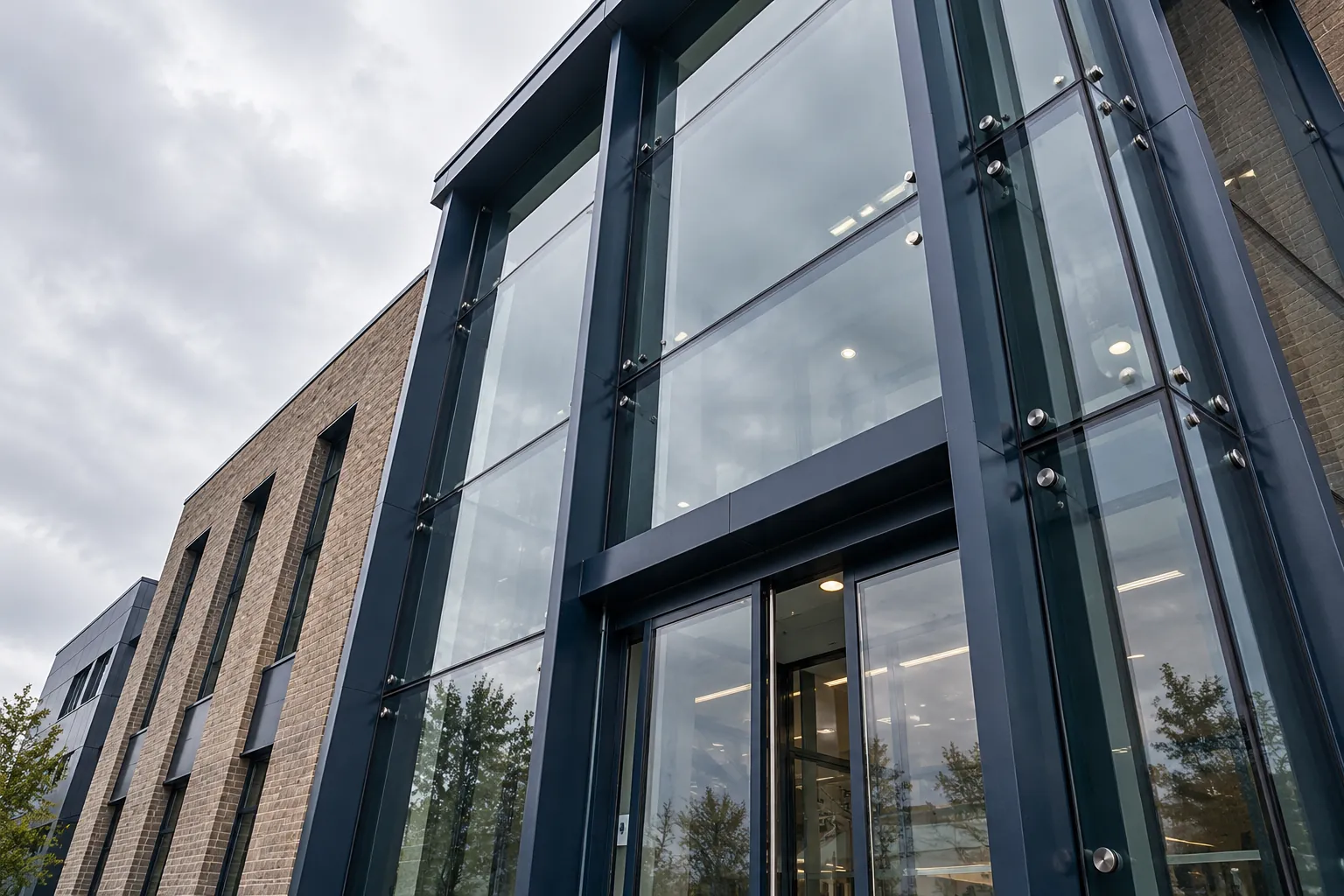
Blast · ISO 16933 EXV45 to EXV10
Blast resistant glass in West Midlands
Blast resistant glass across the West Midlands for arenas, stations, plants and civic frontages, rated to ISO 16933 and EN 13123, fitted as one system.
- ✓Third-party test evidence with every product
- ✓Written specification you can issue to tender
- ✓Supplied and installed in the West Midlands
Get a free quote in the West Midlands
Rating, written specification and budget range within one working day.
Confidential. No cost, no obligation.
Third-party tested
Evidence with every quote
UK manufactured
Made to your sizes
One accountable team
Specify, supply, install
Confidential handling
Details never shared
Supplied and installed in the West Midlands
What we supply in the West Midlands
The West Midlands works as one region of six centres: Birmingham, Coventry, Wolverhampton, Dudley, Walsall and Solihull, with the NEC and Birmingham Airport pulling crowds and freight through the middle of it. Manufacturing plants, city centre arenas, stations and civic frontages share the same streets, and the glass on those frontages takes the same treatment: a blast rating that matches the crowd outside and the work inside. Blast resistant glass gives a rated pane for that frontage, and the rating covers the glass, the frame and the fixing as one unit.
The ratings sit under ISO 16933, with EXV and SB classes, and under EN 13123 and EN 13124, with EPR and EXR classes. A pane alone does not carry the rating, and a frame untested with that glass takes no rating from it. One sheet should carry the class, the standard and the fixing, while the test evidence carries that same class, so spec and evidence agree before ordering.
Arena frontages face crowds, plant receptions face yards, and station concourses face both at once, so the rating for each frontage follows the people outside it and the work inside. The glass, the frame and the fixing are planned together from the survey.
What the blast ratings mean
ISO 16933 lists two classes that specs name first, EXV and SB. For windows and doors under blast load, EPR and EXR come from EN 13123 and EN 13124. The two families test the same idea in different ways, and the spec should name one family and one class, not a mix of both. PAS 68:2013 left the books in October 2023, on the 25th, and ISO 22343-1:2023 now covers the vehicle impact work it used to cover. IWA 14-1:2013 left the books as well, and ISO 22343-1:2023 covers that work too. The schedule backs LPS 1175 Issue 8.2 (September 2024) aiming to keep the forced entry rating and the blast rating on one sheet, so the client reads one set of numbers.
| Standard | Classes | What it covers |
|---|---|---|
| ISO 16933 | EXV, SB | Glazing against blast load, tested as a unit |
| EN 13123 and EN 13124 | EPR, EXR | Windows and doors against blast load |
| ISO 22343-1 | V/7500[N3]/80/90:0/0 | Worked example of a vehicle impact rating |
| LPS 1175 | SR1, 1 minute; SR2, 3 minutes | Forced entry rating |
A vehicle rating is written as one string; take V/7500[N3]/80/90:0/0 as a worked example. Test vehicles weigh 1,500 kg to 30,000 kg, and the test speeds are 48 km/h, 64 km/h and 80 km/h. The EXV and SB guide gives the short version of the blast classes, and the vehicle impact standards guide covers the move from PAS 68 and IWA 14-1 to ISO 22343-1 in full. Before writing the spec, open the LPS 1175 rating table, and check the blast ratings page, which puts the same classes in one place. The vehicle impact ratings page lists the same masses and speeds beside the rating strings.
A blast rating and a ballistic rating test different things, and a forced entry rating tests a third. Put the three tests next to each other and the rating types guide marks the line between them, so nobody pays for blast testing when forced entry is the real risk, or the reverse. The vehicle barriers guide explains the same move for bollards and blockers, and the glazed or solid guide shows how a blast door changes when the pane grows. The cost and specification guide for blast windows puts the price factors beside the rating.
Where the glass fits across the region
The NEC and Birmingham Airport set the pace. Exhibition halls fill and empty in waves, flights land through the day, and the glass at entrances, concourses and check-in areas faces crowds that change by the hour. The transport hub security guide explains the airport pattern, and mitigation in the West Midlands places bollards and blockers outside the same frontages.
Birmingham city centre holds arenas, stations and civic buildings within a short walk of each other, and the glass on those frontages takes the same rating logic as the NEC. Venues for 800 people and above belong to the enhanced tier of Martyn’s Law, while the standard tier covers venues for 200 to 799 people. Assent came on 3 April 2025, with the start date aimed at spring 2027. Security bollards in the West Midlands stand outside the same frontages, and the guide to choosing bollards sets the spacing and the rating for the street outside the glass.
Coventry, Wolverhampton, Dudley, Walsall and Solihull each add their own mix. Manufacturing plants ask for rated glass at reception and control rooms, where staff look out over yards and delivery bays. Warehouse doors and the glazing beside them share the same survey, and security doors in the West Midlands pair with the glass on the same openings, so the door and the pane carry ratings that match. A plant that runs shifts through the night needs the same rating at 3 in the morning as it does at noon.
Frames, fixing and the survey
A site visit opens the work, and the team looks past the bare opening. The notes log reveal depth, wall build-up, anchor positions and how much slack the opening allows, since a strong pane set into a soft reveal leaves the wall itself unrated. Steel frames fit the tougher classes, so the survey sheet pairs frame and pane together on the order sheet.
The fixing carries the load the glass was tested for, so the anchors, the brackets and the wall behind them are part of the rating in practice, even where the test sheet names only the unit. Installation in Birmingham runs from the same survey notes, and the fitters check each unit against the sheet as it goes in. One set of survey notes, fixings and beads serves blast resistant windows and blast resistant doors in the same blast family, wherever an opening lets them.
Keeping the rating valid
The rating stays good only as long as the unit matches its test build. During a maintenance visit, the team looks over bead, gasket and fixings, and a swapped pane must match the class of the one removed. If a hole is cut through the frame once fitted, the unit needs checking again, because its rating applies to the tested build alone. Maintenance in Birmingham keeps the round local, and the in-service care guide for barriers gives the same discipline for the bollards outside the glass.
Bollards outside a glazed frontage stand at least 500 mm high under the ProtectUK guidance, with gaps between them capped at 1,200 mm, so a vehicle is stopped before it reaches the glass. Measure the gap on site, not from a drawing.
Ask for blast class, standard and test evidence together on a single sheet, and ask how the bollards outside the glass were rated too. A frontage is one system, and the sheet should read like one.
Questions we hear
How do EXV and SB differ?
ISO 16933 covers both classes, and a spec picks one of them for a frontage. Test evidence should carry that same class, so spec and evidence match.
Does blast glass stop a forced entry attack?
No, not by itself. Blast testing loads the pane with a blast, and forced entry testing attacks the unit with tools over time. SR1 resists for 1 minute, SR2 for 3 minutes, and a unit needing both ratings goes through both tests.
Do bollards outside the glass change the spec?
They change the layer outside the glass, not the glass itself. The bollards take a vehicle rating under ISO 22343-1, with the gap and the height set on site, and the glass keeps its own blast class behind them.
Can existing frames take new blast glass?
The survey decides. It checks the frame depth, the fixing points and the wall behind them, since blast glass is thicker and heavier than the pane it replaces. Where the frame falls short, a new frame goes in with the glass, and the rating covers the pair.
Write to [email protected] for advice on the rating, the frame and the fixing, with the sizes and the use of each frontage. Send samples to our dock Saffron Road, Romford, Essex RM5 3ES phone for an arrival time before you set out.
Send the frontage sizes and how each room is used, and we will price the rated glass to match.
Other areas
Blast resistant glass in other areas
Ready to specify your project?
Free assessment, written specification and test evidence. Reply within one working day.