
Blast · ISO 16933 EXV45 to EXV10
Blast Resistant Glass in London
Blast resistant glass for London buildings: rated glazing for offices, public venues and transport sites, specified to the right blast rating.
- ✓Third-party test evidence with every product
- ✓Written specification you can issue to tender
- ✓Supplied and installed in London
Get a free quote in London
Rating, written specification and budget range within one working day.
Confidential. No cost, no obligation.
Third-party tested
Evidence with every quote
UK manufactured
Made to your sizes
One accountable team
Specify, supply, install
Confidential handling
Details never shared
Supplied and installed in London
What we supply in London
London is a city of glass. Office towers in the City and Canary Wharf, hotels and shops in the West End, stations and public buildings across the boroughs, all use large areas of glazing to bring in light and to give a clear view in and out. That glass is also the weakest part of the facade when a blast wave reaches it, because a pane that breaks into sharp pieces can injure people far from the point of the blast. Blast resistant glass is made to stay in its frame under blast load, so the glazing holds together and the opening stays closed.
The glass works as part of a system. A rated pane in a weak frame, or a rated frame fixed to a weak wall, will not give the rating that the glass alone was tested to. The frame depth, the fixing, the bite of glass in the frame and the wall around the opening all form part of the result. That is why a specification for blast resistant glass in London should name the glass rating, the frame rating and the fixing detail together, and why a survey of the opening matters before an order is placed.
Buyers in London use this glass for office receptions, transport buildings, government and public buildings, hotels, museums, banks and high footfall retail. The work can cover a single glazed screen in a reception in Clerkenwell, a set of windows for a public building in Westminster, or a full facade package for a new development near a station. Every job begins the same way: the blast rating agreed in writing, the opening surveyed, and the frame and fixing specified to match the glass. Work across the capital beyond blast glass is set out on our page on physical security in London.
How blast resistant glass works
Blast resistant glass is a laminated pane built up from layers of glass and interlayer. Under blast load the glass may crack, but the interlayer holds the pieces together and the pane stays in the frame. That behaviour is the point of the rating: the glass is not expected to stay clear and unmarked, it is expected to stay in place and to keep the opening closed, so that people inside are protected from flying glass and from the pressure that follows.
The rating is set by test. The blast ratings page sets out the ratings used for glazing and doorsets, and the guide to ISO 16933 EXV and SB classes explains the two ways a pane can be classified. EXV classes are set by explosive charge and distance, while SB classes are set by shock tube test. A specification should name the class and the standard in full, because a pane rated to one class does not automatically meet the other.
London buildings that need blast resistant glass
The table below sets out the London buildings where blast resistant glass is most often specified, and what the specification has to allow for in each one.
| Building in London | What the glass must allow for |
|---|---|
| City and Canary Wharf offices | Large glazed facades, reception screens and ground floor windows facing the street |
| Transport buildings and stations | High footfall areas, glazed canopies and ticket halls with large openings |
| Government and public buildings | Windows and screens on public facing elevations, with controlled entry behind them |
| Hotels in Westminster and the West End | Ground floor glazing, restaurant windows and entrance screens used by guests all day |
| Museums, theatres and venues | Large entrance glazing, box office screens and windows on busy pavements |
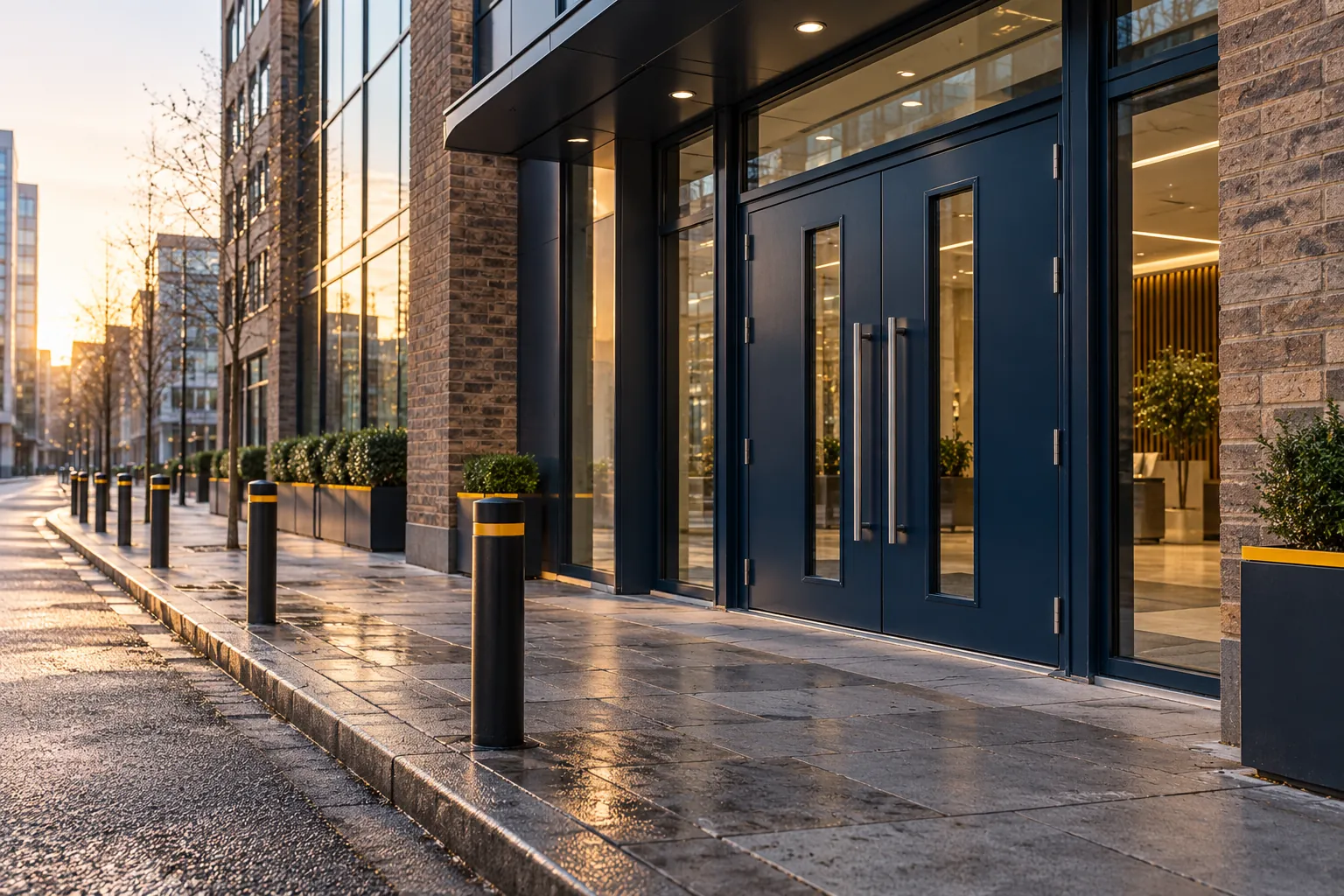
Office towers in the City and Canary Wharf often have a fully glazed ground floor. That glazing gives the building its look, and it is also the first part of the facade to face a blast wave from the street. The guide to blast doors, glazed and solid explains the trade off between a glazed doorset and a solid one, and why a glazed entrance needs the glass, the frame and the door leaf to be rated together.
Blast, ballistic and forced entry ratings compared
Blast, ballistic and forced entry ratings test different things, and a pane that meets one rating does not automatically meet the others. Blast ratings test the pane under a blast wave. Ballistic ratings test the pane against a bullet of a stated calibre. Forced entry ratings test the pane against a hand tool attack over a set time. A specification that names only one rating, when the site needs two, leaves a gap that shows up only when the glass is tested or attacked.
Do not order blast resistant glass by thickness alone. Two panes of the same thickness can carry different ratings, and only the named class and standard show what the pane was tested to.
Where a site needs both blast and ballistic performance, the two ratings should be set together. The guide to ballistic glass ratings BR1 to BR7 explains the ballistic classes, the guide to choosing a ballistic rating helps set the class from the risk at the site, and the guide to forced entry, ballistic and blast ratings compares all three. The guide to bullet resistant glass cost sets out the factors behind the price of a rated pane.
How to specify blast resistant glass in London
Start with the elevation. A ground floor window facing a busy London street faces a different risk from a third floor window facing a courtyard, and the rating should follow that risk. Write down the floor, the direction the window faces, the distance to the public pavement or road, and what sits behind the glass. That note is the basis for the rating, and it should be kept with the specification.
Then settle the practical details: the pane size, the frame section, the finish, the manifestation on the glass, the opening lights if any, and the way the unit will be cleaned and maintained. A large pane may need a crane or a suction lifter to reach a London site, and a narrow street in Soho or a basement lightwell may limit the size of pane that can be delivered. Those limits should be noted at survey stage, not found on delivery day.
What happens from survey to handover
The first stage is the survey. The surveyor visits the London site, measures each opening, records the wall build up and the reveal depth, and notes where access is tight, for instance a narrow street, a basement reached only by stairs, or a site where deliveries are allowed only outside working hours. The written specification comes next, naming the glass rating, the frame, the fixing and the finish, and the buyer agrees it before the order is placed. Supply follows, with the panes protected for transport through London traffic. Then comes the install, with the install work and the upkeep after it done by our own team or by our installation partners. That handover is the final stage. The test records and the care notes go to the buyer in a single pack.
Frequently asked questions
Is blast resistant glass the same as bullet resistant glass?
No. Blast resistant glass is tested under a blast wave, while bullet resistant glass is tested against a bullet of a stated calibre. Some panes carry both ratings, but a pane should only be described as meeting a rating when the test record names that rating in full.
Can blast resistant glass be fitted to an existing London window frame?
Only where the existing frame is deep enough to hold the rated pane, and strong enough to stay in the wall under blast load. In many older London buildings the existing frame is too shallow, so a new frame is needed. The survey will show whether the existing frame can be kept.
Does blast resistant glass look different from normal glass?
It is thicker and heavier, and the frame is deeper, but a well specified unit can look close to normal glazing from inside the room. The difference is most visible at the frame edge and at the bead. The finish and the manifestation should be agreed at specification stage so the finished unit suits the building.
How do I choose the blast rating for a London office?
The rating follows the risk at that elevation, including the floor, the distance to the street and the use of the room behind the glass. The class should be agreed in writing, with the standard ISO 16933 named in full, before the order is placed. A consultant can help set the class where the risk is not clear.
Get a quote for blast resistant glass in London
Send the size of each window or screen and the rating you need, with a photograph of it. We will come back to you within one working day, with a survey date and the next step in the process. Contact ArxBridge to start.
Other areas
Blast resistant glass in other areas
Ready to specify your project?
Free assessment, written specification and test evidence. Reply within one working day.