
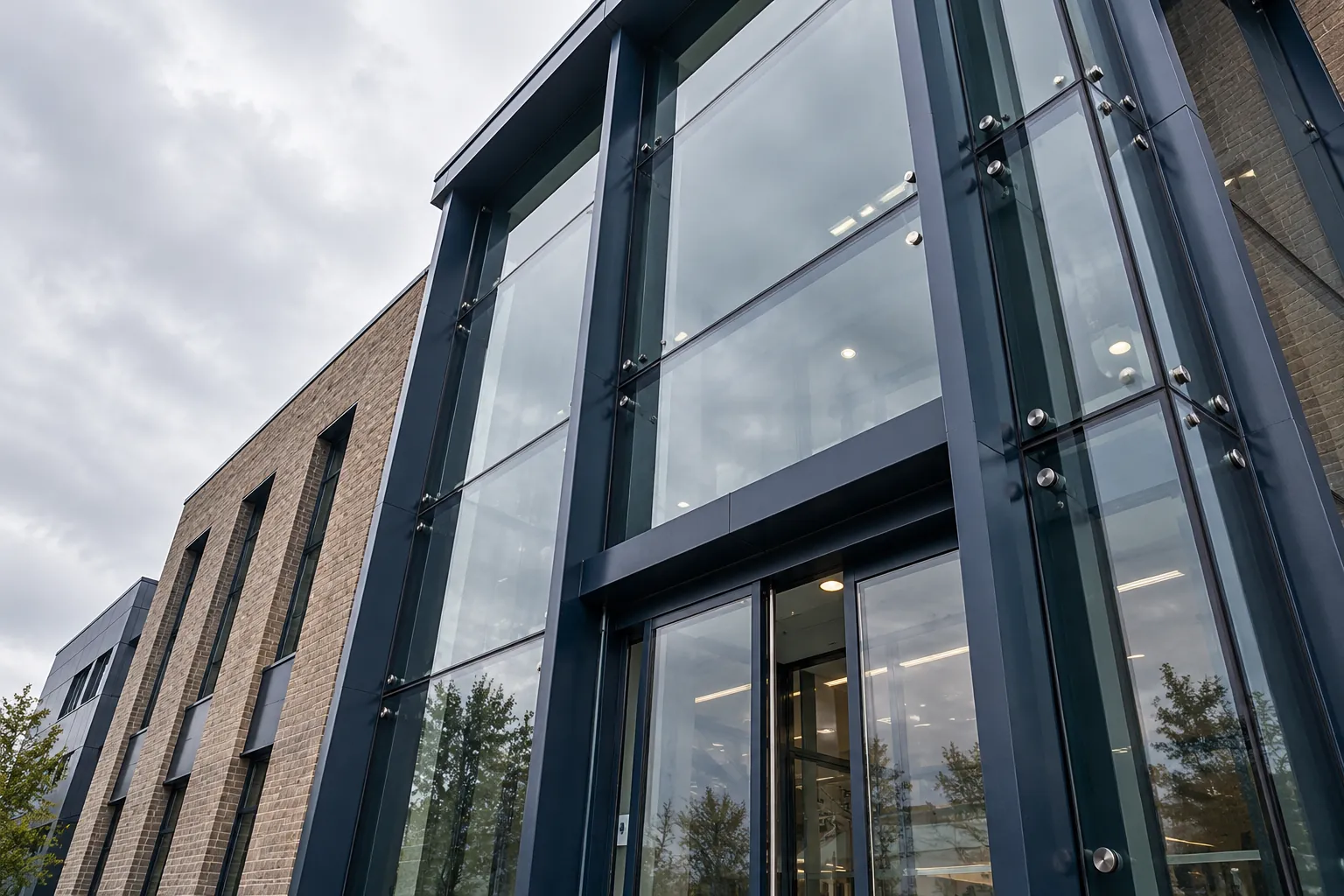
Blast · ISO 16933 EXV45 to EXV10
Blast resistant glass in Coventry
Blast resistant glass for Coventry sites, from arena entrances to hospital screens, rated to ISO 16933 and fitted to a written specification.
- ✓Third-party test evidence with every product
- ✓Written specification you can issue to tender
- ✓Supplied and installed in Coventry
Get a free quote in Coventry
Rating, written specification and budget range within one working day.
Confidential. No cost, no obligation.
Third-party tested
Evidence with every quote
UK manufactured
Made to your sizes
One accountable team
Specify, supply, install
Confidential handling
Details never shared
Supplied and installed in Coventry
What we supply in Coventry
A pane of blast resistant glass at a Coventry site must keep its line when pressure strikes it. It must remain seated in its frame, hold shards away from the room behind it, and still admit daylight on an ordinary working day. One pane at a hospital entrance in Walsgrave, another at a university building in the city centre and a third at a depot on the city edge all meet the same pressure test, yet each calls for its own thickness, its own surround and its own method of seating the glass in the opening. blast resistant glass from ArxBridge is cut from measurements taken at every opening, so the pane sits true in its surround and the fixings bear the load the rating demands.
Coventry gives a pane plenty of work to do. Coventry Cathedral draws visitors all day, lecture rooms, laboratories and halls at Coventry University, along with the University of Warwick, see students pass through glazed entrances, and Coventry Building Society Arena brings crowds through wide entrances on match days and concert nights. Passengers move through glazed concourses at Coventry railway station, visitors reach glazed frontages at the Herbert Art Gallery and Museum, and also at the Belgrade Theatre in the city centre, and Coventry Transport Museum keeps vehicles behind glass that visitors stand close to. The hospital in Walsgrave, car-making sites and council buildings complete a city where glazed entrances serve the public, staff and patients side by side.
Before any pane is ordered, the site is measured first, the rating is then agreed on paper, and a detailed specification follows naming the thickness, the pane size, the frame and the fixings. A pane that seems right in the drawings can still fail when its frame cannot bear it, so frame, fixings and glass are treated as a single assembly. The forced entry, ballistic and blast ratings in one place page explains the difference between the three kinds of rating, and the blast ratings page gives every class a buyer may cite.
Where Coventry buildings use blast resistant glass
Crowd buildings place the heaviest demand on a pane. At the arena, glazed entrances absorb a surge of people in a short window, and the pane there must keep working after a knock from a crowd as well as after a blast load. At University Hospital Coventry, glazed screens and entrances stand beside routes used by patients, visitors and porters, and a pane shedding shards into a corridor would endanger people at the worst moment. University buildings put glazed entrances at lecture theatres and libraries where students gather, and a pane there must hold its line without turning a busy entrance dark.
Council buildings and offices fit blast resistant glass at receptions and service counters, where staff deal with members of the public in person. Coventry railway station fits glazed screens beside passenger routes, and the pane there must stay clear enough for staff to watch the concourse while it resists pressure. The Herbert Art Gallery and Museum fits glazed frontages, the Belgrade Theatre does the same, and Coventry Transport Museum keeps glazed frontages where visitors stand close to the glass, and a pane that stays in its frame keeps the visit safe without shutting out the light.
Ratings that decide the pane
The first rating to cite comes from ISO 16933. EXV classes deal with a blast load from an explosive charge at a set distance, while SB classes deal with a blast load from a charge carried by hand, and the guide to EXV and SB ratings explains the difference between the two. European classes sit beside them: EN 13123 and EN 13124 carry EPR and EXR classes, which apply to windows, doors and shutters, and the blast ratings page sets out each class beside the load it was tested against. A buyer who records the class in the order has a named test to refer to when the work is checked.
Window film is not the same as a blast pane. The guide to blast window film explains what film can do for a pane that is already in place, and a film can hold shards back where a full pane change is not possible. Where a pane must also resist a forced entry attempt, the written specification invokes LPS 1175 Issue 8.2 (September 2024) describing the tool sets used in testing the pane, the frame and the fixings. SR1 to SR4 are the LPS 1175 steps, and the guide to keeping the rating valid after fitting explains the checks that preserve the rating once fitted.
| Pane | Where it fits | Rating to name |
|---|---|---|
| Laminated blast pane | Entrances and receptions | EXV or SB |
| Insulated blast unit | Hospital and university entrances | EXV or EPR |
| Blast pane with film | Existing frames kept in place | SB with film |
| Blast window unit | Arena and station screens | EXR |
What the survey settles before pricing the pane
Measurement decides whether the pane still performs through a second winter as it did in its first. The survey notes the depth of the reveal, the clear opening, the state of the wall the frame is fixed into, how the door beside the pane opens and how people use the entrance day to day. A pane at the arena that serves a crowd on event nights carries a different duty from a pane at a council reception that serves a steady flow of visitors, and thickness, interlayer and fixings are chosen to match that use. The cost and specification guide lists the items that push a pane price up or down, and the lead times guide explains the run from survey to fitting for an order.
Once the survey sizes are in, frame and pane are built to those sizes, with fixing positions marked on the plans. A blast resistant window beside the pane is worth settling now, because the window and the pane then use a single frame detail and a single rating. The specification that comes next names the rating, the pane size, the frame, the fixings and the finish, and it stays with the buyer as the record both sides agreed for the job.
Get the rating on paper before the order goes in. A pane described only as strong gives the buyer no test to cite when the work is checked.
Fitting, handover and aftercare
The fitting plan keeps the site open while work goes on. A pane at a hospital entrance goes in during a slot agreed with the site manager, the old pane stays in place until the new frame is ready for the pane, and fixings, seals and beads are checked together before the pane is handed over. The handover pack holds the specification, the pane sizes and the maintenance notes. Your Coventry order is priced from the Romford site: Saffron Road, Romford, Essex RM5 3ES.
After fitting, the pane needs little beyond a routine look-over. Seals are looked at for gaps, beads are checked for movement, and frame fixings get checked for loosening at entrances in daily use. Any pane struck by a knock gets looked over straight away, even when the glass still looks sound, because the interlayer may hide damage the eye cannot spot. The handover pack notes give the timing for each check after fitting.
Questions from Coventry buyers
Can blast resistant glass go into an existing frame in Coventry?
It depends on the frame. A frame able to carry the thicker pane and the fixings the rating asks for can stay, and measurement settles the point by checking the rebate and the wall behind it. Where the frame cannot carry the load, a new frame is made to the opening and the pane is fitted into that instead.
How do EXV and SB ratings differ from each other?
EXV classes deal with a blast load from an explosive charge at a set distance, while SB classes deal with a blast load from a charge carried by hand. The guide to EXV and SB ratings gives each class, and the specification for the site names the class it needs.
Can blast resistant glass also stop a forced entry?
Not on its own. A blast rating tests the pane against pressure, while a forced entry rating tests pane, frame and fixings against tools. Where one opening faces both risks, the specification names both ratings, with LPS 1175 steps running from SR1 through to SR4.
How long does a blast glass order take from survey to fitting?
You hear back within one working day of the enquiry. The specification comes after the survey, and the fitting date is fixed once the sizes are confirmed and the pane is in manufacture.
To get a price on the pane, write to [email protected], please add the opening sizes. The team replies in writing inside one working day and names the pane thickness, the frame detail and what the job will cost.
Other areas
Blast resistant glass in other areas
Ready to specify your project?
Free assessment, written specification and test evidence. Reply within one working day.