
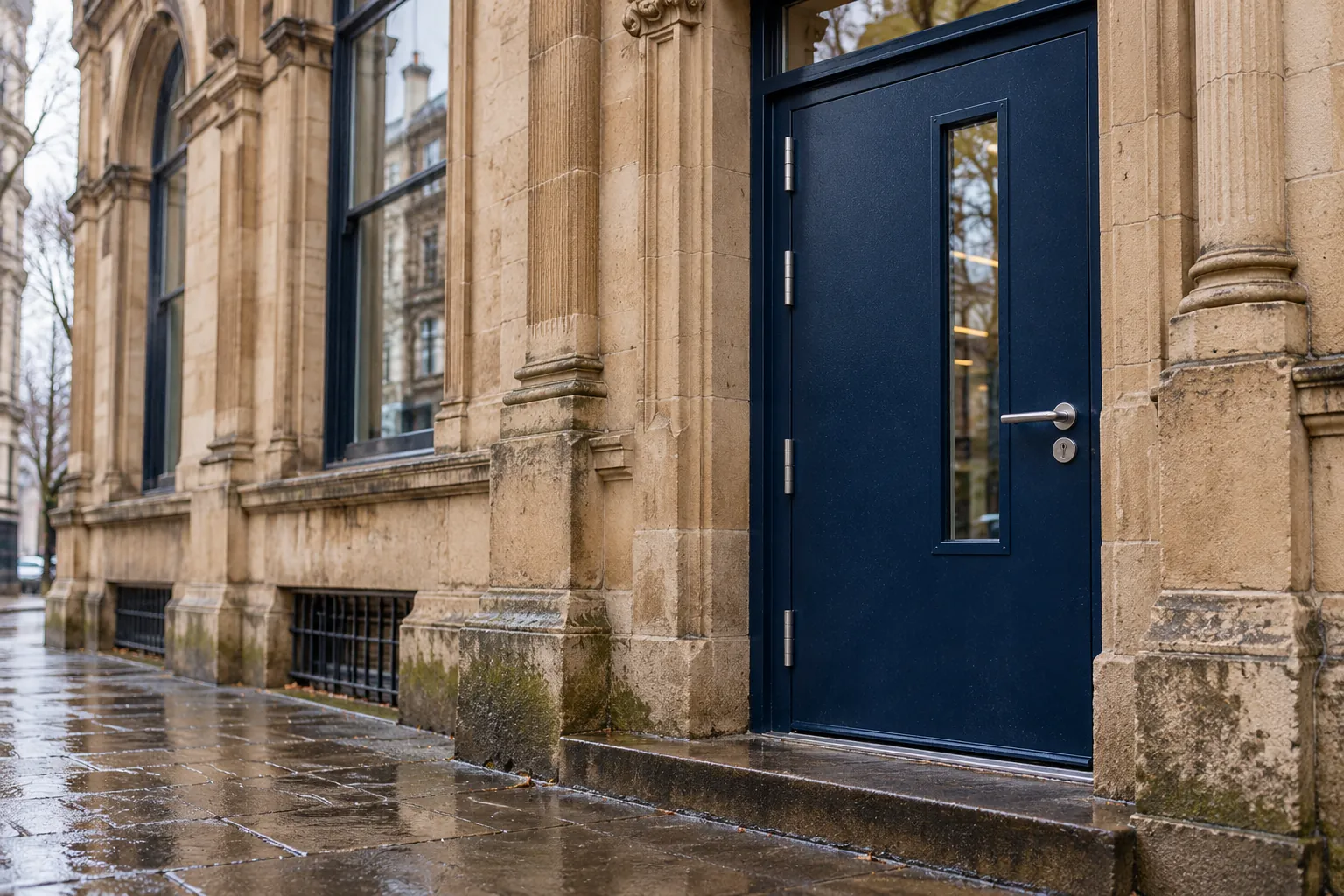
Blast · ISO 16933 EXV45 to EXV10
Blast Resistant Glass in Glasgow
Blast resistant glass for Glasgow entrances and glazed screens, tested to ISO 16933 classes with rated frames, specified to surveyed Glasgow sizes.
- ✓Third-party test evidence with every product
- ✓Written specification you can issue to tender
- ✓Supplied and installed in Glasgow
Get a free quote in Glasgow
Rating, written specification and budget range within one working day.
Confidential. No cost, no obligation.
Third-party tested
Evidence with every quote
UK manufactured
Made to your sizes
One accountable team
Specify, supply, install
Confidential handling
Details never shared
Supplied and installed in Glasgow
What we supply in Glasgow
Blast resistant glass in Glasgow is specified by its test class, its frame and its fixing, not by thickness alone. A laminated pane holds together after a blast load, and the frame and the fixings hold the pane in the opening so the glazed screen keeps working as a barrier after the event.
Glasgow buyers ask for it at public entrances, reception screens and glazed facades where people gather and glass forms a large part of the frontage. The River Clyde runs through the city, and buildings near the SEC Centre, Buchanan Street and Merchant City hold busy frontages where a glazed screen faces the street all day. Two large universities sit in the city, the University of Glasgow and the University of Strathclyde, with a major hospital in Queen Elizabeth University Hospital and Glasgow Airport, and each brings glazed entrances where a blast class is weighed beside forced entry and ballistic classes.
The Blast resistant glass range sets out the product forms, and the physical security in Glasgow page maps the wider protection available across the city.
Where Glasgow buildings ask for blast resistant glass
Exhibition and event buildings near the SEC Centre hold long glazed frontages and entrance screens where crowds pass through at set times. Retail frontages on Buchanan Street and across Merchant City hold shopfront glass at street level, and a blast class is weighed there beside the forced entry class for the same screen. Clyde Gateway, Govan and Hillington hold industrial and logistics buildings where glazed offices and reception areas sit inside larger sites, and the glass at those entrances is specified to the same standard as the doors beside it.
Education and healthcare buildings bring a different pattern. University entrances and student buildings hold glazed screens that stay in use through the teaching day. How those openings are protected is set out on the education sector page. Hospital entrances hold glazed screens beside reception and waiting areas, and the healthcare sector page covers the same question for clinical buildings. Retail and public buildings follow the same logic, and the retail and public spaces sector pages set out how frontages and gathering places are handled.
Blast classes and forced entry ratings side by side
Blast glass is tested to ISO 16933, which gives EXV classes for vehicle borne loads and SB classes for other blast loads, and to EN 13123 and EN 13124, which give EPR and EXR classes for windows, doors and shutters. The blast ratings page sets out those classes. How the two sets differ is explained in the guide to ISO 16933 classes. A buyer names the class the risk assessment calls for, and the evidence is checked on the exact pane and frame pair.
The specification introduces LPS 1175 Issue 8.2 (September 2024) upon the same line as the SR class, with SR2 as class B3. SR1 sits at class A1, SR3 at class C5 and SR4 at class D10, and the SR class is named beside the blast class so the glazed screen resists both a blast load and a hand tool attack. The LPS 1175 page carries the SR classes in full, and the Issue 8 guide explains how the current issue works in practice.
A ballistic class is a separate question from a blast class, and the two are named apart from each other. Ballistic glass is rated to EN 1522 and EN 1523 in classes FB1 to FB7 with FSG, and to EN 1063 in classes BR1 to BR7 with SG1 and SG2. The ballistic ratings page sets out those classes, the ballistic glass ratings guide explains the BR classes, and the choosing a ballistic rating guide helps a buyer pick the right class where both blast and ballistic protection are wanted. How the three rating families sit beside each other is set out on the ratings compared page.
Rating table for blast resistant glass in Glasgow
Read the table as a starting point for the written specification. The risk assessment sets the blast class, the forced entry class follows the use of the opening, and the frame form follows the pane.
| Glasgow use | Blast class to ask for | Forced entry class | Glazing form |
|---|---|---|---|
| Public entrance near the SEC Centre | ISO 16933 EXV or SB as the risk assessment names | SR2 | Laminated pane in a tested frame |
| Retail frontage on Buchanan Street | ISO 16933 EXV or SB as the risk assessment names | SR2 | Laminated pane in a tested shopfront frame |
| University reception or entrance screen | ISO 16933 EXV or SB as the risk assessment names | SR2 | Laminated pane in a tested frame |
| Hospital entrance screen | ISO 16933 EXV or SB as the risk assessment names | SR2 | Laminated pane in a tested frame |
| Airport terminal frontage | ISO 16933 EXV or SB as the risk assessment names | SR2 | Laminated pane in a tested frame |
How to specify blast resistant glass in Glasgow
Start with the risk assessment, not the catalogue. The assessment names the blast class, the forced entry class and the openings that need them, and the specification is written from those three facts. Cost and specification questions to settle first are set out in the guide to blast window costs, and the official guidance for government sites is explained in the NPSA guidance guide.
Then settle the frame and the fixing beside the pane. A blast class on the glass alone proves nothing about the screen, since the frame, the bead and the fixings carry the same load and the evidence covers the whole assembly. The glazed and solid blast doors guide compares glazed and solid forms where a door sits beside the screen, and the design service sets out how the specification is drawn up for each opening.
Finish with the written specification. It names the blast class, the SR class, the pane build, the frame form and the fixing detail for each opening, with sizes taken from the survey. Check the three rating families against the ratings compared page before the specification is signed.
Project steps from first call to handover
Every job starts with a survey at each opening. At every opening the surveyor records the width, the height and the depth of the frame, and looks at the wall build and the threshold level. The exposure of the elevation and the pattern of use at the entrance are noted too.
Then the written specification names the blast class, the SR class, the pane build, the frame form and the fixing detail for each opening.
Installation is planned around the hours the building is in use, and the installation service sets out how the work is fitted around opening hours. After handover the maintenance service covers the checks that keep the screen working as specified. Send the opening sizes and the class each screen needs to [email protected]. You receive a budget range, a check of the figures and the written specification inside one working day.
Ask for the test evidence on the exact pane and frame pair. A blast class on the glass alone does not prove the glazed screen holds together, since the frame and the fixings carry the same load.
Questions about blast resistant glass in Glasgow
What blast class should a Glasgow public entrance ask for?
The risk assessment sets it. It names an ISO 16933 EXV or SB class for the openings it covers, and the specification names that class beside the SR class for the same screen, with the evidence checked on the exact pane and frame pair.
Does blast resistant glass also stop forced entry?
Only where an SR class is tested on the same glazed screen. A blast class proves the pane holds together after a blast load, and the SR class proves it resists a hand tool attack, so the specification names both classes and the evidence covers both.
Can blast glass also carry a ballistic class?
Yes, where the same pane and frame pair is tested to both. The blast class and the ballistic class are named apart from each other, with the BR class from EN 1063 or the FB class from EN 1522 beside the ISO 16933 class, and the evidence covers each class on the same assembly.
How long does a Glasgow blast glass job take?
The survey and the written specification come first, and the sizes and the classes set the supply time. Inside one working day a budget range, a check of the figures and the written specification arrive, and the programme is agreed once the sizes and the classes are fixed.
Need blast resistant glass for a Glasgow building? Email the opening sizes and the class each screen needs.
Other areas
Blast resistant glass in other areas
Ready to specify your project?
Free assessment, written specification and test evidence. Reply within one working day.