
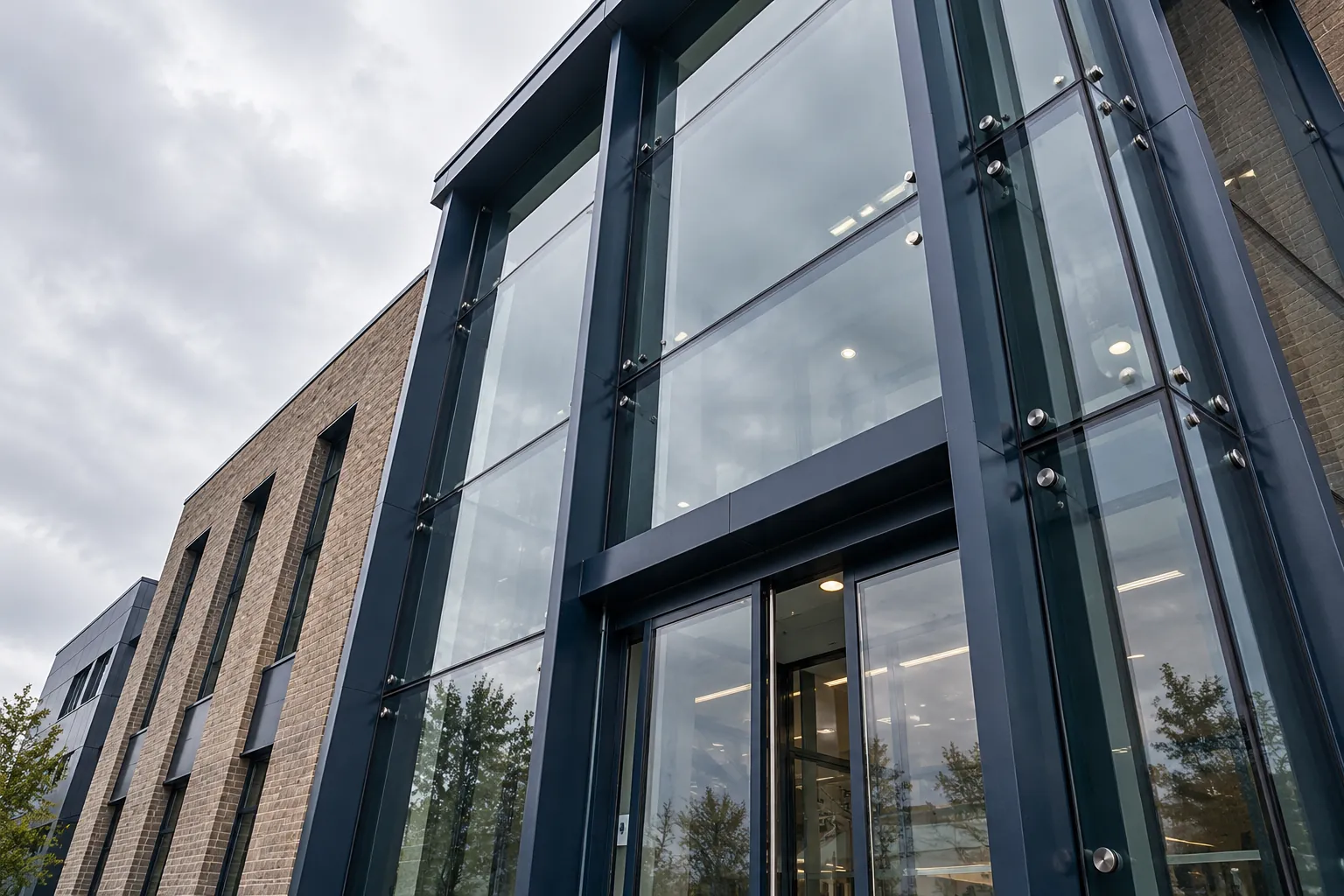
Blast · ISO 16933 EXV45 to EXV10
Blast resistant doors in West Midlands
Blast resistant doors across the West Midlands, from Birmingham and Coventry to Wolverhampton and Solihull, rated to ISO 16933 with matched frames and glazing.
- ✓Third-party test evidence with every product
- ✓Written specification you can issue to tender
- ✓Supplied and installed in the West Midlands
Get a free quote in the West Midlands
Rating, written specification and budget range within one working day.
Confidential. No cost, no obligation.
Third-party tested
Evidence with every quote
UK manufactured
Made to your sizes
One accountable team
Specify, supply, install
Confidential handling
Details never shared
Supplied and installed in the West Midlands
What we supply in the West Midlands
The West Midlands holds cities and towns that form one working economy, with Birmingham at the centre and Coventry, Wolverhampton, Dudley, Walsall and Solihull around it. Manufacturing plants, logistics parks, the NEC and Birmingham Airport sit beside city centre arenas, stations and shopping quarters, and each of those places has entries that need a blast resistant door where a blast load is part of the threat picture. The leaf has a plain job: take the pressure from a blast, stay in its frame, and let people move through the building in the normal way on every other day.
A blast rating is not a forced entry rating and not a ballistic rating, and the three should never be mixed up in a schedule. Door, frame, glazing and fixings go through testing as a single assembly, so a tough leaf fitted into a flimsy frame fails the test as a whole. The sections below set out the standards that govern blast doors, the places across the region where they fit, and the survey and fitting checks that keep a fitted door true. The glazed versus solid guide explains the first choice a specifier faces.
Standards that govern a blast door
Under ISO 16933, glazing and doors under blast load carry EXV and SB classes, while EN 13123 with EN 13124 give EPR and EXR ratings to windows, doors and shutters. Each rating states the charge size and the distance used in the test, so two doors sharing a class name can still have been proved against different loads. Put the class, the charge and the standoff distance together on a schedule, or the number by itself means little. The blast ratings page puts the classes beside each other, and the ISO 16933 guide explains how EXV and SB differ.
The schedule documents LPS 1175 Issue 8.2 (September 2024) advising SR2 as the starting level when forced entry risk stands next to the blast rating. On that scale, SR1 means one minute of delay, SR2 means three, SR3 means five and SR4 means ten. See the LPS 1175 page for the SR levels in full. PAS 68:2013 left current use on 25 October 2023, and the work it covered moved to ISO 22343-1:2023, which became the standard in its stead. IWA 14-1:2013 left current use as well, superseded by that same ISO standard, so any schedule still treating PAS 68 or IWA 14-1 as current is behind the times. The vehicle barrier standards guide traces that change, and the vehicle impact ratings page lists the ISO 22343-1 classes, with test masses running 1,500 to 30,000 kg and test speeds of 48, 64 and 80 km/h.
| Standard | Scale | What it covers |
|---|---|---|
| ISO 16933 | EXV and SB | Glazing and doors under blast pressure |
| EN 13123 plus EN 13124 | EPR and EXR | Windows, doors and shutters under blast load |
| ISO 22343-1:2023 | V rating, naming mass, class, speed and angle | Impact testing for barriers and gates |
| LPS 1175 Issue 8.2 | Ratings SR1 to SR4 | Resistance time against attack, 1 to 10 minutes across the scale |
Martyns Law adds a legal frame for many venues in the region. Assent arrived on 3 April 2025, commencement is looked for in spring 2027, and venues with 200 to 799 people belong to the standard tier, and the enhanced tier starts at 800. A venue that falls in scope should plan its doors, locks and procedures together. The Martyns Law page sets out the tiers, and the premises guide explains what a venue should put in place.
Where the doors fit across the region
Birmingham city centre holds the densest mix: arenas, stations, shopping quarters and office towers, each with public entries that see large crowds and back of house doors that guard plant rooms, cash offices and control rooms. A blast door at a station or an arena sits beside bollards and gates, and the ProtectUK guidance for hostile vehicle mitigation caps the clear space between barriers at 1,200 mm, and asks for barrier height of 500 mm or more, so the door, the barrier line and the gap between them should be planned as one layout. The hostile vehicle mitigation work in the West Midlands and the bollards in the West Midlands cover the outside of that layout.
Coventry adds manufacturing plants and logistics parks, where a blast door guards a production hall entrance or a stores area rather than a public concourse. Wolverhampton and Dudley hold a similar mix of factories, depots and town centre buildings, and Walsall adds retail and civic buildings where a rated door sits at a service entry. Solihull brings the NEC, Birmingham Airport and the business parks around them, where exhibition halls, terminals and support buildings need rated doors at staff entries and plant rooms while the public areas stay open and easy to move through.
The doors also fit buildings that never see a crowd. A data hall, a substation or a laboratory in the region needs a single controlled entry with a rated leaf, while the rest of the building keeps its normal doors. blast resistant glass in the right class keeps a vision panel from becoming the weak point, and the blast windows guide explains how glass, frame and leaf are priced as one assembly.
Frames, glazing and hardware that carry the rating
Rated leaves weigh a great deal, so the frame takes a constant load through daily use. Steel suits most of this work, and the leaf hangs on hinges rated for its weight. Under BS EN 1935, a 160 kg leaf needs grade 14 and a 120 kg leaf needs grade 13, each proved over 200,000 cycles. Put that hinge grade beside the blast class when the schedule is written. The closer must match the leaf so the door closes fully after every opening. BS EN 1154 spans power size EN 1, a 750 mm leaf of 20 kg, through to EN 7, a 1600 mm leaf of 160 kg. Choose locks to match the threat level the leaf is rated for.
The finish should suit the setting, with powder coat for most internal work and a heavier coating where a leaf faces weather or wash down. A glazed leaf needs the same care as a solid one: the rebate must give the pane a deep seat with no flex, and the bead must be fixed so the pane stays seated under load.
Put the blast class, charge and standoff distance, forced entry level and hinge grade together on a single schedule line. Those five facts on one line leave a supplier no room to offer a strong leaf paired with weak glass or light hinge sets.
Survey, fitting and aftercare
At survey stage the opening is measured, the wall construction is checked, and the floor level, services inside the wall and daily use of the door are all noted. Fitting begins at the frame, plumbed and squared and anchored to sound structure. Then the leaf goes on its hinges, clearances are set, and lock and closer are tuned so the door closes gently from any open position. The installation service in Birmingham covers fitting across the region, following the same order at each site.
Later checks keep the rating true. Wear on hinges is looked for, closers are retuned as the building settles, and seals are swapped out once they lose their edge. You can view samples and drawings at our corner Saffron Road, Romford, Essex RM5 3ES email us with the opening sizes before you travel. Write to [email protected] before sending drawings, and include the rating you need with the opening sizes you already hold.
Frequently asked questions
How do EXV and SB differ?
EXV applies to glazing put through a blast test, while SB applies to the wider assembly of door, frame and glazing. Name on the schedule the class that fits the part being supplied.
Does a blast door also resist forced entry?
Not on its own. Forced entry is covered by the SR scale, with SR2 giving three minutes as a common baseline. A door that needs both ratings should carry both on the schedule.
Can a blast door have a vision panel?
Yes, if the glazing carries a class that matches the leaf and the bead and fixings hold the pane under load. A glazed leaf and a solid leaf are tested as different assemblies, so the rating should name the one being supplied.
How often should a blast door be checked after fitting?
Book a check every twelve months at least, and earlier when the door sees heavy daily use at an arena, a station or a plant. Hinges, closers, seals and latches are the parts that wear first.
Share the sizes of your openings plus the rating you need; we will cost leaf, frame and hardware together as one package. Get a free quote
Other areas
Blast resistant doors in other areas
Ready to specify your project?
Free assessment, written specification and test evidence. Reply within one working day.