
Blast · ISO 16933 EXV45 to EXV10
Blast Resistant Doors in Liverpool
Blast resistant doors for Liverpool offices, hospitals, stations and venues, specified to ISO 16933 with written evidence and a reply in one working day.
- ✓Third-party test evidence with every product
- ✓Written specification you can issue to tender
- ✓Supplied and installed in Liverpool
Get a free quote in Liverpool
Rating, written specification and budget range within one working day.
Confidential. No cost, no obligation.
Third-party tested
Evidence with every quote
UK manufactured
Made to your sizes
One accountable team
Specify, supply, install
Confidential handling
Details never shared
Supplied and installed in Liverpool
What we supply in Liverpool
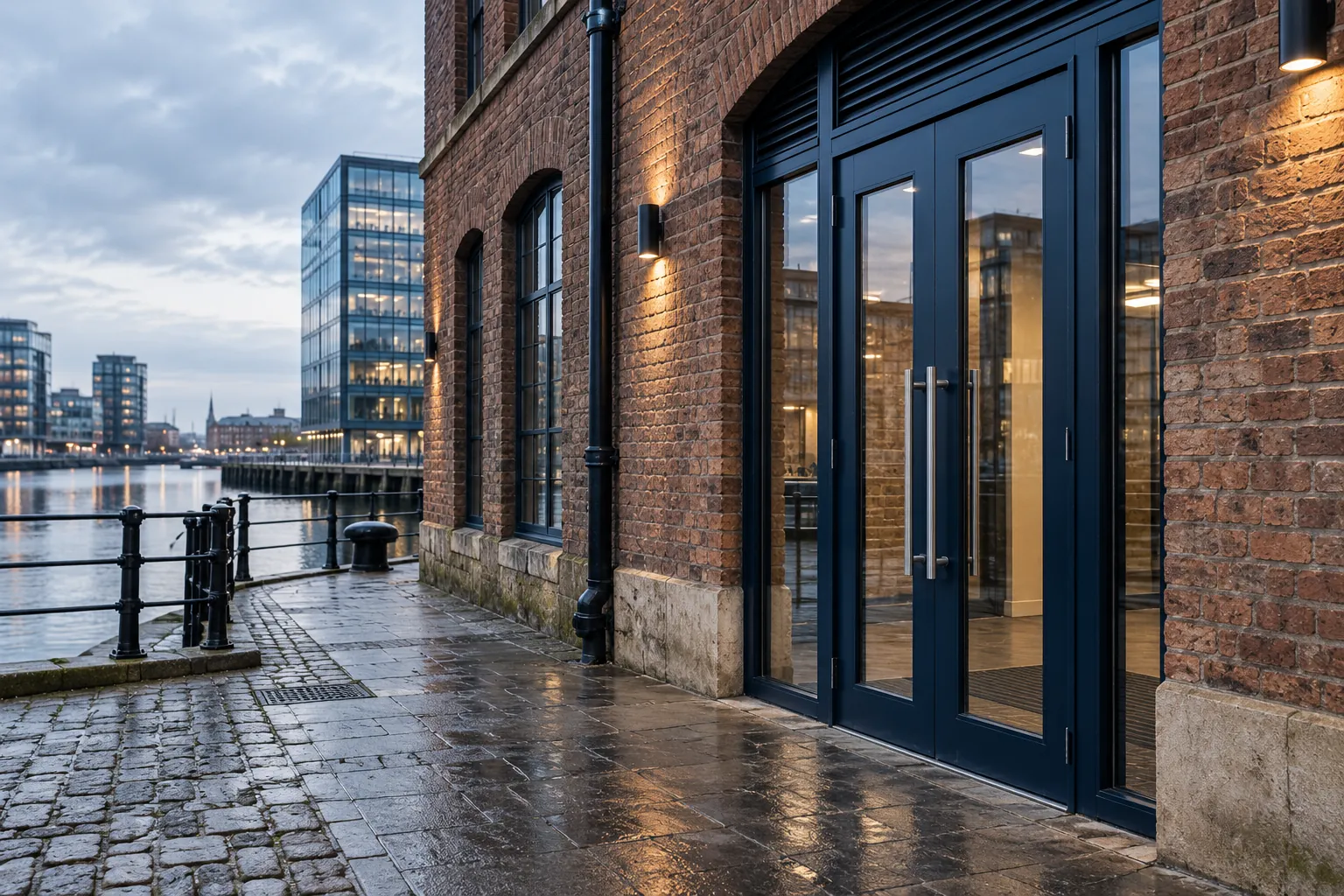
Liverpool needs blast resistant doors where a street facing entrance, a service yard or a plant room sits close to a vehicle route. Crowds gather in a small area around the waterfront, the city centre, the mainline station, the airport, the arena and conference halls, and the two football stadiums, so a door on such a building often stands as the first line of defence after the boundary.
The port and the River Mersey shape much of the demand. Warehouses and logistics buildings along the docks, offices in the commercial district, hotels and museums around the Albert Dock, and the hospitals and universities in the Knowledge Quarter each hold doors that face public roads, delivery bays and car parks. A threat assessment sets the rating of each opening, and that rating then settles the door, the frame, the glazing and the hardware as one tested set. The city area page gives the wider picture of rated work: see physical security in Liverpool.
Where Liverpool asks for blast resistant doors first
In Liverpool, government offices, courts and civic buildings usually put the highest ratings on street facing doors. Staff entrances, public counters and service doors at the Queen Elizabeth II Law Courts, council offices and other public buildings sit near roads that vans and lorries use, so those openings need a forced entry class and a blast class together. The government and defence sector page shows how such estates are zoned.
The mix changes at hospitals and universities. Accident and emergency departments, wards, pharmacies and plant rooms at the Royal Liverpool Hospital and Alder Hey Children’s Hospital sit under one estate plan, while laboratories, lecture halls and student buildings of the University of Liverpool and Liverpool John Moores University spread across the Knowledge Quarter. A plant room, a drug store, a delivery bay or a main entrance takes its door rating from the use of the room behind it.
Crowded places set the third group. Liverpool Lime Street station, the M and S Bank Arena, the ACC Liverpool conference halls, the museums at the Albert Dock, the shops at Liverpool ONE and the two football stadiums all fall within the scope of Martyn’s Law, which sets duties for premises where large numbers of people gather. The Martyn’s Law premises guide sets out the tiers, and blast resistant doors form part of the physical layer on the openings that face vehicle routes.
What a blast rating means for a door
Only the complete doorset carries the rating, because the leaf, the frame, the hinges, the locks, the seals and any glazing in the door were tested as one set. A part changed after that test leaves the rating without support. What the pressure wave does to the doorset is what the rating describes, and a written specification should list each part beside the test evidence that covers it.
For a door, the distance from the road and the size of the charge settle the class. A charge carried by a vehicle is met by the EXV scale at a set stand off distance, while a charge carried by hand is met by the SB scale at closer stand off. Specifiers quote those ISO 16933 classes for blast resistant doors, and the ISO 16933 EXV versus SB guide sets out the two scales, with the full classes on the blast ratings page.
A glazed leaf needs its vision panel judged on the hazard scale, from A for no break at one end to F for high hazard at the other. Match the frame grade to the glazing grade, because a strong leaf in a weak frame, or a weak vision panel in a strong leaf, still leaves a way through the opening for the pressure wave. Treat the frame and the glazing as part of the rating, not as extras, in the specification. The blast doors glazed versus solid guide compares a glazed leaf with a solid leaf, and the forced entry versus ballistic versus blast ratings guide explains why one rating does not stand in for another.
Rating guide for Liverpool openings
Read the table as a guide, not a decision. A consultant or the site security team settles the final class for each opening from the threat assessment, before any price is given.
| Site in Liverpool | Opening | Rating to quote | Door type |
|---|---|---|---|
| Courts and civic buildings | Street facing staff and public doors | EXV or SB class set by the assessment | Blast resistant steel doorset |
| Hospitals and universities | Plant rooms, drug stores and delivery bays | ISO 16933 class with LPS 1175 SR2 or SR3 | Blast resistant door with forced entry rating |
| Stations, arena and stadiums | Public entrances near vehicle routes | EXV class set by the assessment | Blast resistant door with panic hardware |
| Waterfront offices and hotels | Reception and service doors facing the road | ISO 16933 class with glazing hazard A to C | Glazed blast resistant door |
| Warehouses and docks | Yard doors and loading bay personnel doors | ISO 16933 class with LPS 1175 SR2 | Solid blast resistant steel door |
How to specify a blast resistant door in Liverpool
For each opening, begin with the stand off distance and the threat assessment. From the charge size and the distance in that assessment, the ISO 16933 class follows. The how to specify security doors guide sets out the questions to answer before pricing, and the ten steps for specifying an LPS 1175 door guide covers the forced entry side where a door needs both ratings. LPS 1175 Issue 8.2 (September 2024) carries the SR scale, SR1 to SR5, and each class is explained on the LPS 1175 standard page.
Name the door leaf, the frame, the glazing and the hardware as one set in the specification, beside the test evidence for the class quoted. Also name the finish, the threshold, the access control interface and the fire rating where a door needs fire resistance as well as blast resistance, so both duties are covered by the evidence and the handover can be checked against one document.
Where a Liverpool door faces a vehicle route, the boundary work matters too. Bollards, barriers and gates rated to ISO 22343-1:2023 can hold the vehicle line at the forecourt and increase the stand off distance. ISO 22343-1:2023 is the current standard: it superseded PAS 68:2013 when that standard was withdrawn on 25 October 2023. Never quote PAS 24 for a commercial blast resistant door: that standard covers residential doors only.
From survey to fitted doorset in Liverpool
Drawings or a door schedule, with the required class for each opening, open a Liverpool project. The survey team measures every opening on site, checks the wall, the floor level and the services that cross the frame, and notes the access control, the escape route and the daily use of the door. Sizes and the fixing method come out of the survey, so each doorset is made to the opening that was measured.
Manufacture follows the written specification, and test evidence for the class quoted is supplied with each doorset. The work, done by our own team or by our installation partners, holds to the drawings already issued. The installation service covers the fitting and the handover, and the security door maintenance checklist sets out the checks that keep a doorset working after handover.
Email the drawings and the class wanted for each opening to [email protected]. The quote form takes the same details. Inside one working day the reply will give a budget range, a check on the class and a written specification.
Doors, frames and hardware for Liverpool buildings
Measure the stand off first. A class taken from another building rarely fits a Liverpool door, so put the distance from the road to each door in the enquiry, and the specification follows from it.
Questions about blast resistant doors in Liverpool
Which ISO 16933 class fits a Liverpool office door?
The threat assessment decides it. From the charge size and the stand off distance, the assessment points to the EXV class for a vehicle borne charge or the SB class for a hand carried charge.
Can a blast resistant door also carry a forced entry rating?
Yes, where the doorset has been tested for both. Put the ISO 16933 class beside the LPS 1175 SR class on the same specification line, with test evidence for each.
Do Liverpool stadiums and arenas need blast resistant doors?
Doors on openings that face vehicle routes at a stadium, an arena or a conference hall often need a blast class, and Martyn’s Law sets duties for such premises.
What does a Liverpool quote need?
Send drawings and the class for each opening, with the stand off distance, through the quote form or by email. The answer will carry a written specification and a check on the class, with a budget range, and all of it arrives inside one working day.
Planning a blast resistant door for a Liverpool building? Send the drawings and the required class, and a tested doorset will be put forward for each opening.
Other areas
Blast resistant doors in other areas
Ready to specify your project?
Free assessment, written specification and test evidence. Reply within one working day.