
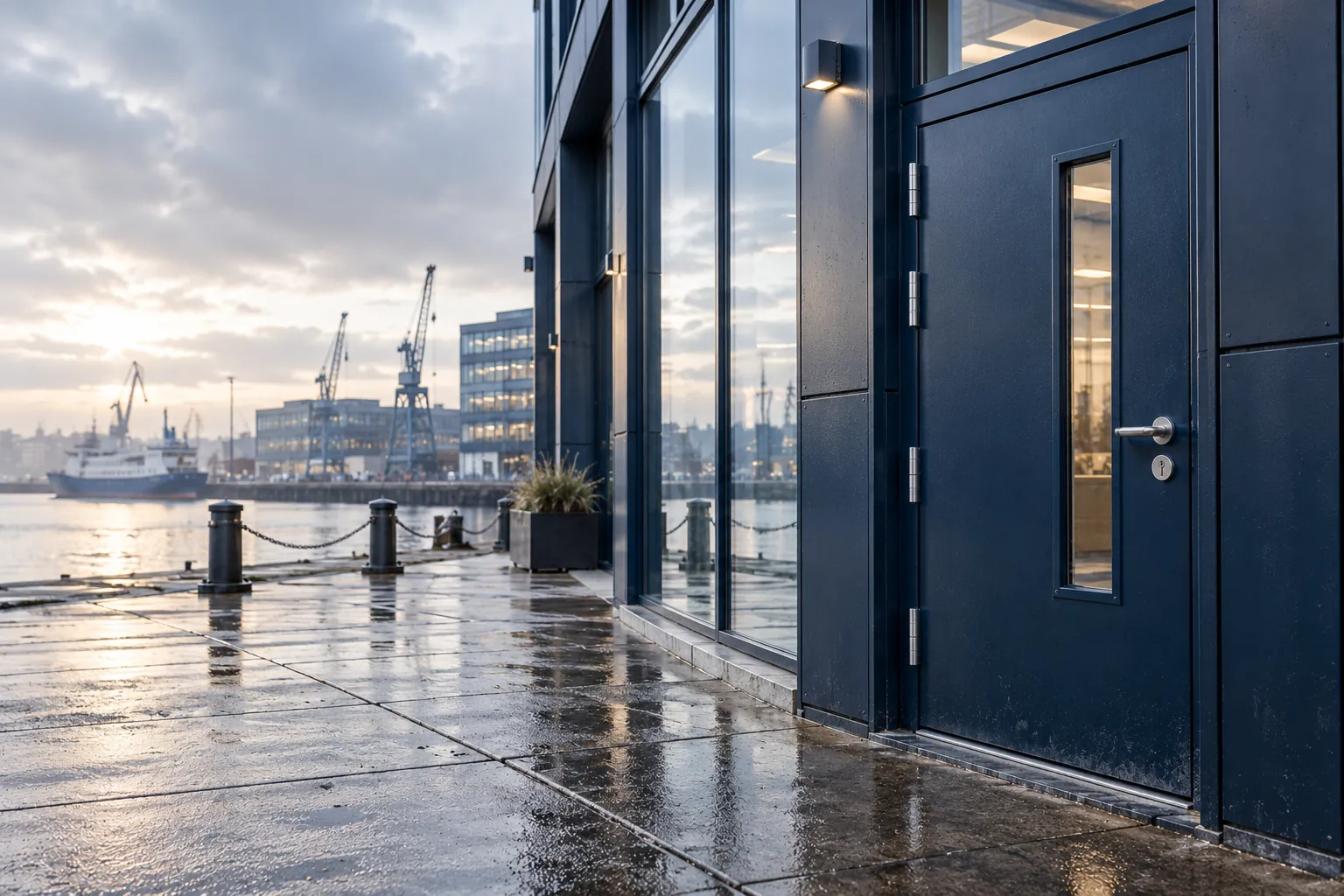
Fire · EI 30 to EI 120
Thermally Broken Doors in Southampton
Thermally broken doors for Southampton port buildings, hospitals, universities and hotels: fire and security rated, warm at the frame, built to your opening.
- ✓Third-party test evidence with every product
- ✓Written specification you can issue to tender
- ✓Supplied and installed in Southampton
Get a free quote in Southampton
Rating, written specification and budget range within one working day.
Confidential. No cost, no obligation.
Third-party tested
Evidence with every quote
UK manufactured
Made to your sizes
One accountable team
Specify, supply, install
Confidential handling
Details never shared
Supplied and installed in Southampton
What we supply in Southampton
A rated door on a Southampton building is often a warm door too. A steel fire door on an outside wall, a security door at a hospital entrance or a glazed doorset in a university corridor can all let heat escape through the frame and the leaf, while on a south coast site the wind and the salt air make that loss harder to ignore. A thermal break slows that loss without touching the rating.
The break is an insulating section fitted inside the frame and the leaf, so heat has no straight metal path from inside to outside. The doorset keeps its fire and forced entry ratings because the break forms part of the tested assembly. That matters at a port city, where external doors face the weather every day of the year.
ArxBridge supplies thermally broken doors to Southampton buyers who need a fire, security or dual rated doorset on an external opening. The break is specified with the rating, so both are judged together, with neither one giving way to the other. For the wider picture, our page on physical security in Southampton covers the rest of the city.
Where Southampton buildings need thermally broken doors
The port is the first place to look. Cruise terminals, the container terminal buildings, vehicle handling sheds and the ferry terminal at Town Quay all have external doors in use many times a day, in weather that comes straight off Southampton Water. A doorset there needs a fire or security rating for the building, and a thermal break so the entrance does not act as a cold bridge all winter. The fire door regulations for ports guide sets out what port buildings must meet.
Health and education buildings add the same pattern inland. Southampton General Hospital, university buildings, student accommodation and schools hold entrances, corridors and plant rooms where a fire rating for the door and a thermal break for the frame are both needed, because a cold inner face gathers condensation and a draughty entrance wastes heat. Hotels near the waterfront and offices in the city centre bring the same question at main entrances open to the street.
Retail and leisure buildings bring the same question with high footfall. Westquay and Ocean Village hold shops and restaurants whose doors open all day, St Mary’s Stadium and the Mayflower Theatre hold large public entrances, and warehouses at Marchwood and along the M27 hold personnel doors that open for every shift. At those openings, a thermally broken doorset keeps the entrance usable in cold weather and keeps the fire or security rating with it.
How the break and the rating work together
Steel carries heat well, so a plain steel doorset on an outside wall lets heat pass straight from inside to outside. The break is an insulating section inside the frame and the leaf, cutting that bridge. The rating stays valid because the break forms part of the tested assembly, so the evidence covers the whole doorset with the break in it.
The two sets of figures are checked on their own terms. Fire resistance is given in E, EW or EI classes, 30 to 120 minutes, per BS EN 1634-1, 2014 edition with amendment A1:2018. The U-value is the thermal figure, and it must belong to the doorset as built: the test evidence should name that doorset, not another product from the same range. Forced entry takes SR classes from LPS 1175. Issue 8.2 is dated September 2024. The thermal and weather performance guide shows how the two sets of figures fit together.
Glazing, seals and ironmongery each change the result. Glass in a vision panel should match both the rating and the thermal target, the seals should shut the gaps the frame leaves. The threshold should fit the floor and the exposure. On a coastal site the finish matters too: salt air reaches every external surface, so the powder coating service should be agreed with the exposure in mind. The dual certification guide covers ratings for the same opening. The steel versus timber fire doors guide covers materials.
Ratings and thermal performance for Southampton openings
Use the table as a starting point only. The fire strategy or the threat assessment fixes the rating at each opening, and the U-value must be taken from the test evidence for that doorset.
| Southampton site | Opening | Rating | Thermal point |
|---|---|---|---|
| Port terminals and sheds | Doors facing the quayside | EI 60 plus LPS 1175 SR2 | Break in the frame and the leaf |
| Hospital wards and clinics | Doors from corridors to outside | EI 60 fire rated | Keep the inner face free of condensation |
| University halls and flats | Entrances and lobbies | EI 30 plus LPS 1175 SR2 | Glazing matched to the rating |
| Shops, hotels and restaurants | Front and service doors | LPS 1175 SR2 | Break in the frame and the leaf |
| Depots and warehouses | Personnel doors on outside walls | LPS 1175 SR2 or SR3 | Break with a sealed threshold |
| Stadium and theatre doors | Public entrances | EI 60 plus LPS 1175 SR2 | Seals and closers built for heavy use |
Which standards the specification should name
The fire class comes first in this specification. Fire resistance is set in E, EW or EI classes, 30 to 120 minutes, per BS EN 1634-1, 2014 edition with amendment A1:2018, and the fire ratings page sets out the classes as they stand. Forced entry runs SR1 to SR5, all under LPS 1175, issue 8.2. Where a doorset carries both ratings, name both in the specification, and ask for evidence that covers both.
Two details catch buyers out. PAS 24 was written for residential doors only, so it should never be named for a commercial door in Southampton, and the fire door certification guide lists the evidence to ask for instead. For thermal performance, the building regulations set the target, and the energy assessment sets the figure: ask for it for the doorset as built, and check it on its test evidence.
Survey, specification and fitting in Southampton
A Southampton project opens with drawings or a door schedule, with each opening marked for its rating and for the thermal target the building must meet. A site survey follows, taking the size of every opening and noting the wall build up, the floor level, the exposure to weather and the services that pass through the frame. Those measurements are what the doorset is built to, so it arrives square, sealed and true to size.
The specification is then written down, covering the fire class, the SR class where one applies, the glazing, the ironmongery, the finish, and the U-value of the doorset as built. The how to specify security doors guide covers how those items sit in one specification. The fire door cost factors guide lists what moves the price. The colour and finish are settled at the same stage, through the powder coating service.
Once the specification is agreed, the doorsets go into manufacture, and fitting follows on site. Each rated doorset arrives with its test evidence, fire test evidence included, and the U-value for the doorset as built. For a Southampton order, email the drawings and the ratings to [email protected]. The reply brings a budget range with a written specification inside one working day, with the rating checked before it is sent. The quote form is another way to send them. The wider door range is covered by fire rated glazed doors, fire rated steel doors and the guide to keeping dual certified doors valid.
A thermal figure borrowed from another doorset in the range proves nothing about the doorset you are buying. Ask for the U-value tested on the doorset as built.
Questions on thermally broken doors in Southampton
Does the thermal break weaken the fire rating?
No, where the break forms part of the tested assembly. The class covers the whole doorset with the break in it, so the evidence should cover the doorset as fitted.
What U-value should a Southampton port building ask for?
The building regulations and the energy assessment set the figure. Ask for it on the test evidence for that doorset, not on a figure taken from another product in the range.
Can a thermally broken door carry a security rating as well?
Yes, where the product holds both ratings. The specification should carry the fire class and the SR class together, with evidence that covers both.
What is needed for a Southampton quote?
Send drawings or a door schedule, marking the rating and the thermal target for each opening, with the sizes, or ask for a survey. A budget range and a written specification arrive within one working day, with the rating checked in the same reply.
Thermally broken doors for a Southampton building? Send the drawings with the rating for each opening, and the specification that comes back covers every opening on the schedule.
Other areas
Thermally broken doors in other areas
Ready to specify your project?
Free assessment, written specification and test evidence. Reply within one working day.