
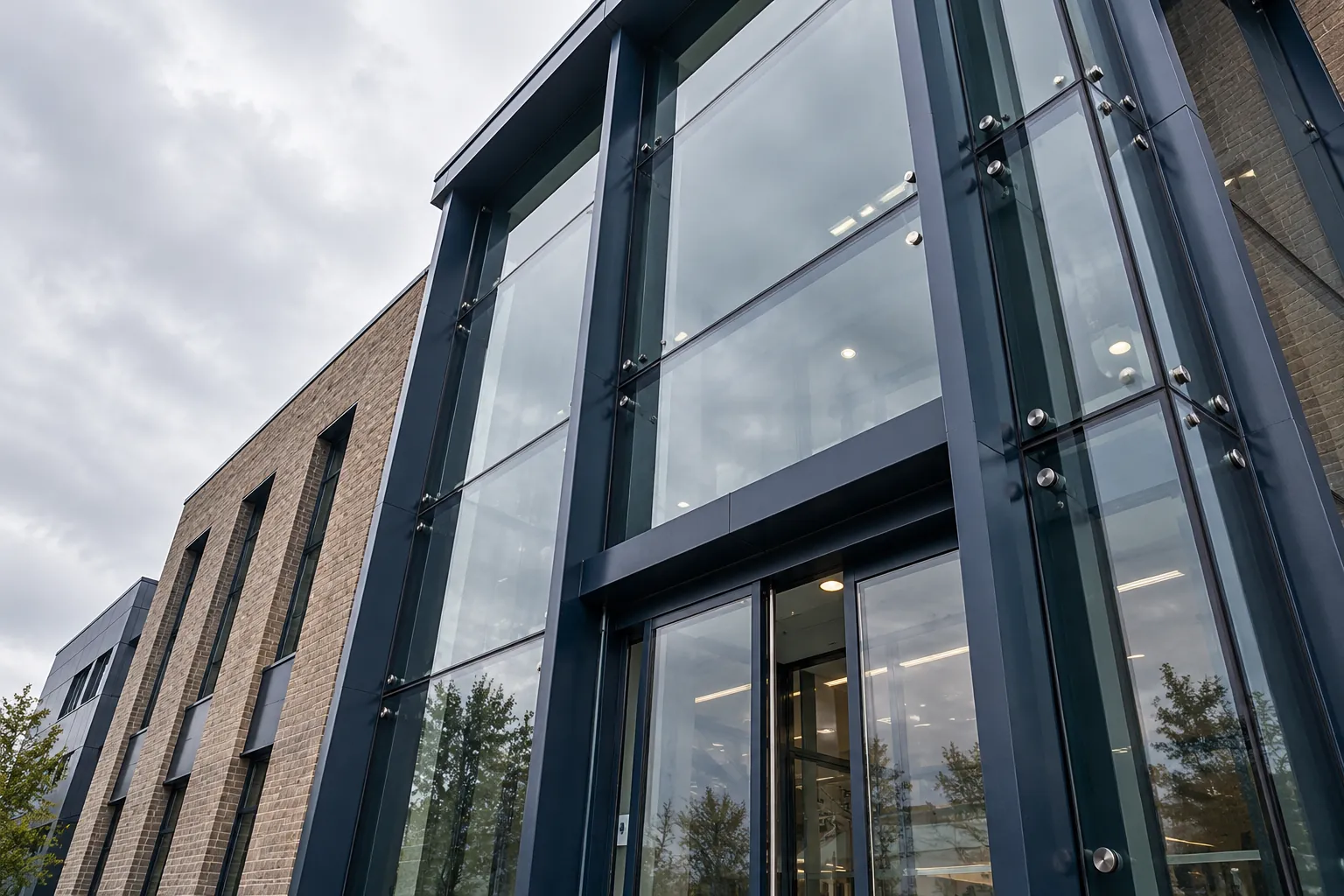
Blast · ISO 16933 EXV45 to EXV10
Blast resistant windows in Wolverhampton
Blast resistant windows for Wolverhampton public buildings and factories, rated to ISO 16933 and EN 13123, with frames and fixings tested as one set.
- ✓Third-party test evidence with every product
- ✓Written specification you can issue to tender
- ✓Supplied and installed in Wolverhampton
Get a free quote in Wolverhampton
Rating, written specification and budget range within one working day.
Confidential. No cost, no obligation.
Third-party tested
Evidence with every quote
UK manufactured
Made to your sizes
One accountable team
Specify, supply, install
Confidential handling
Details never shared
Supplied and installed in Wolverhampton
What we supply in Wolverhampton
Wolverhampton is a city centre with a railway station, a university, a hospital and two shopping centres, and its buildings range from civic offices to factories on the edge of town. Molineux Stadium draws large crowds on match days, while the Grand Theatre, the Mander Centre and the Wulfrun Centre bring visitors into the centre through the week. Blast resistant windows in Wolverhampton have to suit that range, from public buildings with busy frontages to industrial sites with controlled perimeters.
A blast resistant window brings frame, glazing and fixings into one assembly, proved as a unit against a blast load. The glass flexes and holds, the frame takes the load into the wall, and the fixings keep the whole set in place. Swap any one element and the rating needs fresh proof from the test evidence for that revised assembly. A window works best as part of a layered security plan.
Most buyers start with ISO 16933, which offers EXV and SB as its two test paths, one using explosive vapour and the other a shock tube, and with EN 13123 and EN 13124, which set the EPR and EXR classes for windows and doors. The schedule captures LPS 1175 Issue 8.2 (September 2024) allocating a rating to each opening, so every opening gets one tested assembly. Our guide to blast window costs lists the factors that move the price.
Work starts with a visit to the site. During that visit the team measures every opening, looks at the wall round it, notes how far the glass stands from the road, and records barriers already in place, from bollards to planters. Those notes fix the frame size, the glazing build up and the fixing pattern before any material is cut.
What the blast rating has to cover
A blast rating only helps when it matches the threat the site faces. ISO 16933 tests a window against a shock wave, and EN 13123 sets the classes from EPR1 to EPR4, with EN 13124 giving the test method. The classes run from EPR1 to EPR4, with higher classes taking a larger charge at the same stand off distance. The blast ratings page gives each class with the test method behind it.
| Class | Standard | Where it is used |
|---|---|---|
| EPR1 | EN 13123 | Lowest class, for sheltered openings |
| EPR2 | EN 13123 | Mid class, for street frontages with stand off |
| EPR3 | EN 13123 | Higher class, for exposed frontages |
| EPR4 | EN 13123 | Highest class, for high risk frontages |
ISO 22343-1:2023 is the standard for vehicle security barriers now. The new standard replaced PAS 68:2013, and the older document was taken out of use on 25 October 2023, so barriers guarding the frontage are now rated under it. Test masses run between 1,500 kg and 30,000 kg. Speeds used are 48, 64 and 80 km/h, and a barrier rating records vehicle type, speed and how far the vehicle travels past the line. For ISO 22343-1, a rating record starts with V/7500 for the mass, then [N3] names the vehicle type, 80 gives the speed, 90 gives the distance past the line, and 0/0 closes the record. The HVM standards guide explains the change in full.
Forced entry ratings sit on the LPS 1175 page, where the SR levels and attack times are listed. A blast window often carries a forced entry rating as well, since the same frame and fixings face both threats, and the tender should name both ratings so the test evidence covers each one.
Glazing, frames and fixings
The glazing in a blast window is a laminated build up that flexes under load and holds the fragments in the frame. A single pane would break into pieces, so the interlayer does the work of keeping the sheet together while the frame takes the load into the wall. Bead, gasket and fixings all sit on that same test record, and a change to any one of them means the rating is checked again. Where the opening is a fixed pane rather than a window, blast resistant glass in Wolverhampton is rated under the same standards.
Martyn’s Law adds a second reason to look at the glass. Royal Assent came on 3 April 2025, spring 2027 is the expected go live date, and the standard tier covers premises with 200 to 799 people, while 800 and above puts a place in the enhanced tier. Premises in the enhanced tier need physical measures that match the risk, and blast resistant glazing is one of the measures a site team weighs for a busy frontage. Full detail on tiers and dates is in the Martyn’s Law guide. ProtectUK guidance for hostile vehicle mitigation sets a 1,200 mm maximum clear gap and a 500 mm minimum height for barriers.
Where a door sits beside the window, the choice between a glazed or solid leaf shapes the light in the room. A glazed door keeps sightlines open, while a solid leaf suits a room where privacy matters more than light.
Check the stand off distance before you choose a class. A window rated at a long stand off may not hold the same charge where the road runs close to the glass, so the survey fixes the distance first.
Wolverhampton buildings and their openings
The city centre gives each building a different problem. The Mander Centre and the Wulfrun Centre have long shopfronts at street level, where the glass faces pavements full of shoppers and delivery vehicles close by. The Grand Theatre brings evening crowds to its front doors, and the railway station moves passengers through its concourse from early morning to late night.
Across its campuses, the University of Wolverhampton has lecture halls, labs and student rooms, and each opening needs protection matched to the room behind the glass. Lecture halls that need quiet as well as protection use sound masking in Wolverhampton alongside the rated glazing. At New Cross Hospital, staff need windows that open for ventilation and are simple to clean, and at Molineux Stadium the glazing has to stand up on match days, when tens of thousands of supporters pass the stands and the concourses.
Factories on the edge of town face a different risk, with yards, sliding vehicle gates in Wolverhampton and vehicle routes close to the building line. In each case the opening decides the rating, and the survey fixes that rating before any window is ordered.
Survey, manufacture and fitting
Building starts once the survey notes are signed off. The wrapping keeps the glazing clean and the frame free of marks while the unit moves from the workshop to the site.
Where the programme allows, fitting goes ahead while the building stays open, with access dates fixed with the site manager ahead of arrival. On many jobs the windows stand next to security doors in Wolverhampton, and both go in during a single visit when the schedule permits. After fitting, maintenance visits check the glazing, with beads, gaskets and locks inspected and any worn part swapped out.
Send drawings and samples to our garage Saffron Road, Romford, Essex RM5 3ES talk with the design team before posting, so the parcel reaches the right desk. Email [email protected] to send the opening sizes, the blast rating you need and the survey dates that suit your site team.
Frequently asked questions
Do blast resistant windows look different from ordinary windows?
Seen from outside, a rated window looks much like any other window. The laminated glass stays clear, the frame keeps a slim sightline where the test allows it, and the fixings sit out of sight. The difference sits in the test record, which shows the blast load the set was tested against.
How do EXV and SB testing differ?
EXV uses an explosive vapour charge, while SB uses a shock tube to form the blast wave. Both paths sit under ISO 16933, and the choice depends on the test house and the threat the site faces. The ISO 16933 guide explains the two paths in plain terms.
How is a blast window fixed into the wall?
The frame is anchored into the structure around the opening, so the blast load passes into the wall rather than pushing the frame out. The fixing pattern is part of the test record, and the survey checks the wall build up before the anchors are chosen. A weak wall needs a different fixing detail, which the survey notes before manufacture.
How long does a blast window last once fitted?
The glazing and frame last as long as any well made window, provided the seals are checked and the fixings stay tight. Our maintenance visits look at the beads, gaskets and locks, and any worn part is swapped out before it affects the rating. A window that has taken a blast load is replaced, not repaired.
Send us your opening sizes and the blast rating you need, and we will price blast resistant windows for your Wolverhampton building.
Other areas
Blast resistant windows in other areas
Ready to specify your project?
Free assessment, written specification and test evidence. Reply within one working day.