
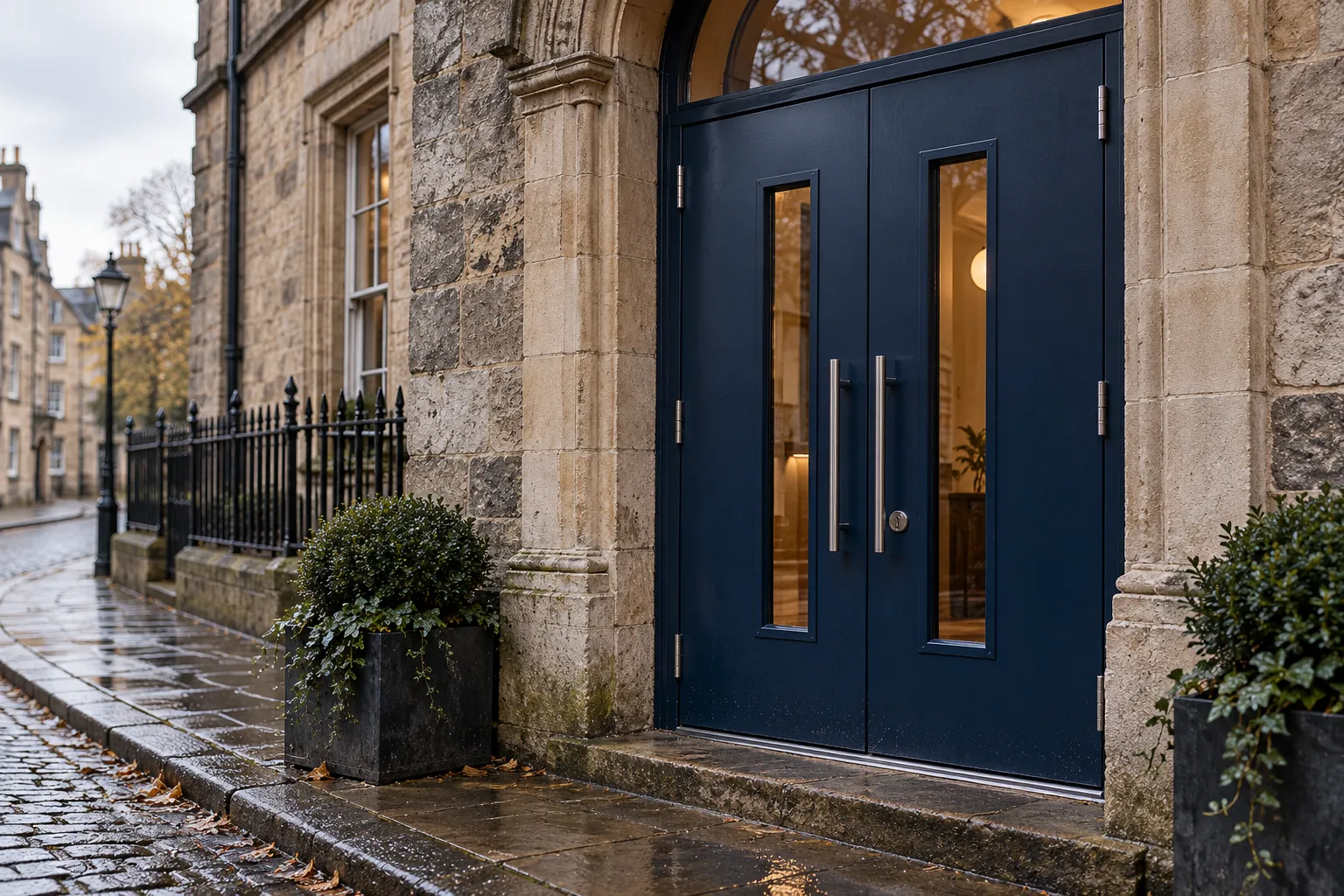
Blast · ISO 16933 EXV45 to EXV10
Blast Resistant Windows in Edinburgh
Blast resistant windows for Edinburgh government, hospital and festival buildings, specified to ISO 16933 with written evidence and a reply in one working day.
- ✓Third-party test evidence with every product
- ✓Written specification you can issue to tender
- ✓Supplied and installed in Edinburgh
Get a free quote in Edinburgh
Rating, written specification and budget range within one working day.
Confidential. No cost, no obligation.
Third-party tested
Evidence with every quote
UK manufactured
Made to your sizes
One accountable team
Specify, supply, install
Confidential handling
Details never shared
Supplied and installed in Edinburgh
What we supply in Edinburgh
Edinburgh needs blast resistant windows where a glazed facade, a ground floor office or a public entrance sits close to a road that carries vehicles. The capital holds the Scottish Parliament at Holyrood, government offices, courts, banks, universities, hospitals and festival venues within a small centre, and many of those buildings hold large areas of glass at street level.
The Old Town and the New Town shape much of the work. Georgian townhouses and stone tenements in the New Town, the Royal Mile and the streets around the Castle hold sash windows behind listed facades, while modern offices in the Exchange district, the hospitals at Little France and the Western General, and the university buildings around George Square hold large glazed facades on open sites. A threat assessment for its opening sets the rating of each window. For rated work across Edinburgh as a whole, see physical security in Edinburgh.
Where Edinburgh asks for blast resistant windows first
In Edinburgh, government buildings and courts usually ask for the highest ratings on street facing glazing. Public entrances, committee rooms and offices at the Scottish Parliament, the government offices around St Andrew’s House and the courts at Parliament House sit close to roads carrying vans and lorries, so those elevations need ratings for both blast and forced entry.
Hospitals and universities ask for a different mix. Wards, laboratories, pharmacies and imaging suites at the Royal Infirmary of Edinburgh at Little France and the Western General Hospital sit under one estate plan, while lecture halls, laboratories and student buildings of the University of Edinburgh, Heriot-Watt University and Edinburgh Napier University spread across the city. Windows on wards and laboratories need to hold their glazing in place under pressure.
Festival venues, finance and transport set the third group. The Usher Hall, the Festival Theatre, the EICC, the National Museum of Scotland, the hotels and offices in the Exchange district, Edinburgh Waverley station and the airport all bring large numbers of people together in glazed buildings. Schools across the city also hold glazed entrances and halls that face the street, and the security windows for schools guide explains how a school schedule treats entrance glazing, halls and classrooms.
What a blast rating means for a window
The pane, the frame, the beads, the fixings and the seals were tested as one set, and only the complete window carries the rating. Swap one part after that test and the rating may no longer have support behind it. What the pressure wave does to the window is what the rating describes, and each part should be listed in the specification beside the test evidence that covers it.
A ground floor pane that faces a road with no stand off needs a higher class than a pane set back behind a forecourt, because the class is set by the charge size and the distance from the window. The two ISO 16933 scales split the work: EXV for a charge carried by a vehicle at a set stand off distance, and SB for a charge carried by hand at closer stand off. See the ISO 16933 EXV versus SB guide for the two scales, and the blast ratings page for the full classes.
Grade the frame to the hazard level of the pane: the glazing hazard runs from A, no break, to F, high hazard. A strong pane in a weak frame still lets the pressure wave find a path through the opening. Security glazing is covered by LPS 1270 Issue 1.1 (2014), and the LPS 1270 standard page sets out the classes. The blast resistant windows cost and specification guide sets out the factors that change the price of a rated window.
Rating guide for Edinburgh windows
Treat the table as a guide only. The threat assessment gives the final class for each opening, and the consultant or the site security team agrees it before pricing.
| Site in Edinburgh | Opening | Rating to quote | Window type |
|---|---|---|---|
| Parliament and government offices | Street facing ground floor glazing | EXV or SB class from the assessment | Blast resistant window with matched frame |
| Courts and civic buildings | Public entrance and waiting room glazing | ISO 16933 class, hazard A to C for the glazing | Blast resistant glazed screen |
| Hospitals and universities | Wards, laboratories and entrance glazing | ISO 16933 class with LPS 1270 glazing class | Blast resistant window with laminated glass |
| Festival venues and hotels | Public elevations facing roads and forecourts | EXV class from the assessment | Blast resistant window with matched frame |
| Listed townhouses and tenements | Street facing sash windows | ISO 16933 class where consent allows a rated unit | Rated sash window to the approved design |
How to specify a blast resistant window in Edinburgh
Each elevation starts from the threat assessment and the stand off distance. Those two figures, the charge size and the distance, point to the ISO 16933 class. The how to specify security doors guide lists the questions to answer before pricing. The LPS 1175 windows and walling guide covers the forced entry side, and LPS 1175 Issue 8.2 (September 2024) gives the SR classes, SR1 through SR5.
The specification should list the pane, the frame, the beads and the fixings together, and the test evidence for the class quoted should sit beside them. It should also name the opening method, the ventilation, the cleaning access and the finish, so the fitted window can be used and cleaned without weakening the rating. Blast resistant glass should be graded to match the frame, and a window that also needs to hold back fire should name the fire class in the same line.
Where an Edinburgh window sits in a listed building or a conservation area, consent comes before replacement. Listed building consent and conservation area consent are separate from the building warrant, and the application should carry drawings of the proposed window, the sightlines and the rating evidence. The listed building fire doors guide explains how consent works for rated work in listed buildings, and the same order applies to windows: consent first, then manufacture, then fitting.
From survey to fitted window in Edinburgh
An Edinburgh project opens with drawings or a window schedule and the required class for each opening. On site, the survey measures each opening, checks the wall construction, the stone or brick reveal and the sill level, and notes the opening method and the daily use of the room. The survey settles the sizes and the fixing method, so each window is built to the opening that was measured, which matters in older Edinburgh buildings where no two openings match.
Each window is made to the written specification, with test evidence for the class quoted supplied alongside it. Ongoing care, done by our own team or by our installation partners, stays with the drawings already issued. Fitting follows the drawings already issued. Fitting and handover are covered by the installation service, and the maintenance contract scope for security doors and barriers guide sets out the checks that keep a rated opening working after handover.
Use the quote form, or email [email protected], with drawings and the class for each opening. The answer will carry a written specification, a check on the class and a budget range, all inside one working day. Where consent is needed, send the listing status with the drawings.
Windows, frames and finishes for Edinburgh buildings
Measure the stand off and check the listing status first. A class borrowed from another building rarely fits an Edinburgh window, so give the distance from the road to each window and the listing status in the enquiry, and the specification will follow from both.
Questions about blast resistant windows in Edinburgh
Do listed Edinburgh buildings need consent for blast resistant windows?
Yes, where the building is listed or sits in a conservation area. Listed building consent or conservation area consent comes before replacement, and the application should carry drawings, sightlines and rating evidence.
Which ISO 16933 class fits an Edinburgh office window?
It comes from the threat assessment. A vehicle borne charge takes the EXV class and a hand carried charge takes the SB class, once the charge size and the stand off are known.
What does the glazing hazard from A to F mean?
It describes how the glazing breaks under pressure. A means no break, and F means high hazard, with the classes between them describing how far fragments travel. Grade the frame to the same hazard level as the pane.
Can a rated window keep its rating after the glass is replaced?
Only where the replacement pane, beads and fixings match the tested set and the work is recorded. A pane swapped on its own, without the matching frame and fixings, can leave the rating without support, so the replacement should be checked against the test evidence first.
Planning blast resistant windows for an Edinburgh building? A tested window will be put forward for each opening once the drawings and the required class arrive.
Other areas
Blast resistant windows in other areas
Ready to specify your project?
Free assessment, written specification and test evidence. Reply within one working day.