
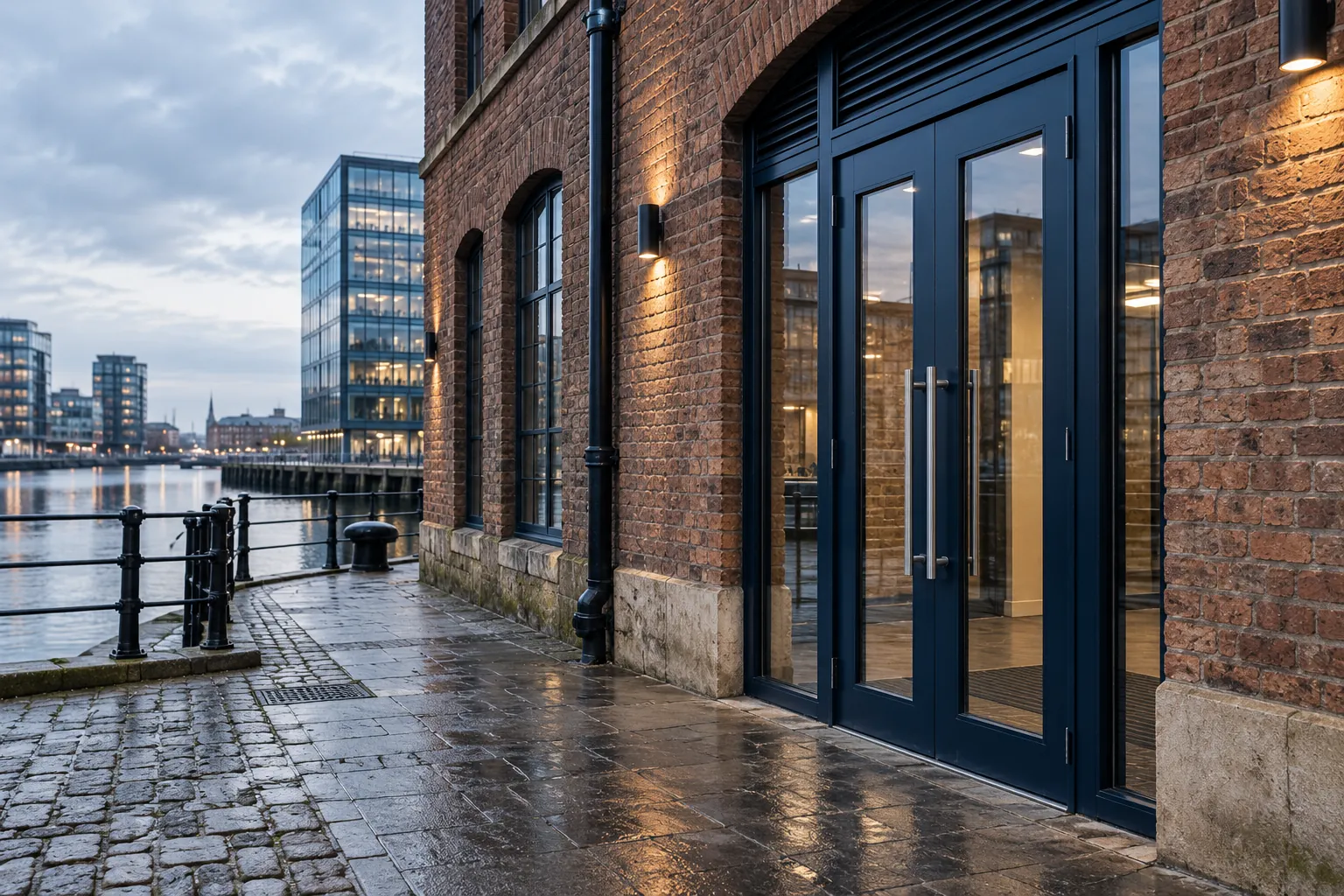
Blast · ISO 16933 EXV45 to EXV10
Blast resistant glass in Liverpool
Blast resistant glass in Liverpool for shopfronts, stations, arenas and hospitals, with blast ratings, frames, fixings and survey steps explained.
- ✓Third-party test evidence with every product
- ✓Written specification you can issue to tender
- ✓Supplied and installed in Liverpool
Get a free quote in Liverpool
Rating, written specification and budget range within one working day.
Confidential. No cost, no obligation.
Third-party tested
Evidence with every quote
UK manufactured
Made to your sizes
One accountable team
Specify, supply, install
Confidential handling
Details never shared
Supplied and installed in Liverpool
What we supply in Liverpool
Blast resistant glass in Liverpool suits glazed openings where a blast wave must be held back without turning the pane into flying fragments. The glass is built up in layers, and a plastic interlayer between the layers holds the broken pieces in the frame after the pressure wave passes. The frame and the fixings matter as much as the pane, because the frame must hold the pane when the wave hits, and a weak frame gives way first.
Liverpool has glazed frontages of every kind, from the shopfronts of Liverpool ONE to the public rooms around the Albert Dock. Physical security in Liverpool takes in the whole city, while the choice at each opening turns on three facts: the blast rating the site asks for, the size of the pane, and the frame that holds it. The M&S Bank Arena, Lime Street station and the Royal Liverpool Hospital all show the same pattern, a busy public frontage where glass must let light in and still hold together under pressure.
Blast resistant glass is specified by its make up, its thickness, its frame and its fixings, and the threat decides which rating leads. A pane tested for blast carries a rating under ISO 16933 or EN 13123, while a pane on a security glazing line carries a forced entry rating instead. Blast and forced entry are judged apart, each on the evidence of its own test.
Where blast resistant glass fits a Liverpool building
Liverpool ONE shopfronts need glass that keeps the shop open to the street while holding together if a blast wave reaches the frontage. A shopfront pane is large and low, so the interlayer and the frame carry the load once the glass cracks, and the fixings must hold the pane in place rather than letting it drop out of the frame. The Albert Dock public rooms face the same ask at a larger scale, with tall glazing that looks over the water and must stay in its frame under pressure.
Lime Street station and the M&S Bank Arena show why the frame matters as much as the pane. A station concourse screen and an arena hospitality screen both sit where crowds gather, so a pane that shatters into loose pieces puts people at risk even when the blast itself is held back. The Royal Liverpool Hospital entrance screens and the University of Liverpool teaching blocks need the same treatment, with glass that lets light into the entrance while holding its place in the frame. The Port of Liverpool offices and the terminal at John Lennon Airport add long glazed frontages where the wind load and the blast rating must be settled together.
Anfield hospitality areas need glazing that serves crowds on a match day and sits quiet the rest of the week. A retrofit into an existing frame is often the first question, and the answer turns on the depth of the frame rebate and the strength of the fixings, because a pane thicker than the old glass needs a deeper rebate. Window film is not the same as blast resistant glass, and the blast window film guide explains what film does and where it falls short.
What the blast ratings mean for a glazed screen
ISO 16933 gives EXV ratings from explosive testing and SB ratings from shock tube testing, and the rating names the charge size and the distance the pane was tested against. EN 13123 and EN 13124 give EPR and EXR ratings for blast resistant windows, doors and shutters, and the two families of ratings answer the same question with different test methods. Blast ratings explains the scales, and the ISO 16933: EXV versus SB page compares the two test methods.
The frame around the pane applies LPS 1175 Issue 8.2 (September 2024) because the pane and the frame are tested as one unit, and a rating for the glass alone says nothing about the frame. Security glazing against forced entry sits under LPS 1270 Issue 1.1 (2014), so a screen that must resist both blast and forced entry needs both ratings named in the order. A pane rated for blast is not rated for bullets. The ballistic classes in EN 1063 run BR1 to BR7, with SG1 and SG2 showing whether the glass holds its splinters. The forced entry versus ballistic versus blast guide keeps the three rating families apart, and ballistic ratings explains the BR scale.
The size of the pane changes the rating, because a larger pane flexes more under the pressure wave and puts more load on its fixings. A small pane in a deep steel frame holds its rating more easily than a tall pane in a shallow frame, so the pane size, the frame depth and the fixing spacing are settled together. The blast resistant windows: cost and specification page names the factors that set the price of a glazed screen.
Points to settle before the glass is ordered
The order should name the glass make up, the thickness, the frame, the fixings and the finish, with the pane size and the blast rating agreed first. LPS 1270 security glazing suits openings where forced entry through the glass is the main ask, and the frame for a blast screen should be agreed at the same time as the pane.
| Opening | Blast rating | Frame | Glazing note |
|---|---|---|---|
| Shopfront at Liverpool ONE | ISO 16933 SB | Steel frame | Large low pane, interlayer holds pieces in place |
| Station concourse screen | ISO 16933 EXV | Deep steel frame | Tall pane, fixings spaced for the pressure load |
| Hospital entrance screen | EN 13124 EXR | Steel frame | Light through the pane, low threshold at the door |
| Arena hospitality glazing | ISO 16933 SB | Steel frame | Wide pane, seals checked after idle spells |
Settle the finish with the pane, because a screen left out in all weathers needs a frame coating that holds against rain and road salt. A door in the same frame must carry the same blast rating as the fixed pane beside it.
The order of work on a blast resistant glass job
Work begins at the opening, where the team measures the pane, the frame rebate, the fixing points and the structure behind the frame, and notes any services or finishes that affect the screen. The frame depth decides whether the existing frame can take the new glass.
The pane is then set, the gaskets are fitted, and the fixings are torqued to the setting named in the specification.
Handover covers the fixings, the gaskets, the cleaning method and the service plan. A screen that faces the street needs its gaskets checked, its fixings inspected and its glass cleaned with a method that leaves the interlayer and the coatings intact, with each check given its own interval in the service plan. The manufacture team leaves the screen with its fixings torqued and its gaskets set, and that record goes with the building safety file.
A blast rating belongs to the pane, the frame and the fixings together. Order the three parts as one unit, because a rated pane in a plain frame fails at the frame.
Questions about blast resistant glass in Liverpool
Does blast resistant glass stop bullets as well?
No, the two are tested in different ways. Blast resistant glass is rated for a pressure wave under ISO 16933 or EN 13123, while bullet resistant glass is rated for shots under EN 1063, BR1 to BR7, with SG1 and SG2 marking spall. The ballistic glass ratings guide lists the BR scale.
Can the glass go into an existing frame?
It can when the frame rebate is deep enough for the thicker pane and the fixings are strong enough for the pressure load. A survey measures the rebate and the fixing points first, because a frame that is too shallow or too weak needs to be replaced rather than reused.
Does blast resistant glass stop forced entry?
Blast resistant glass holds together under a pressure wave, but forced entry is a separate test, and a screen that must resist both needs a rating under LPS 1270 as well as its blast rating.
What happens to the glass after a blast?
The interlayer holds the broken pieces in the frame, so the opening stays shut and the fragments stay out of the room. The pane has done its job and needs to be replaced after the event, and the frame and fixings should be inspected before the new pane is fitted.
You can reach the Arxbridge team at Saffron Road, Romford, Essex RM5 3ES during working hours.
Email the pane size, the blast rating and a photo of the opening to [email protected]. The reply reaches you inside one working day, and it carries the specification and the price.
Other areas
Blast resistant glass in other areas
Ready to specify your project?
Free assessment, written specification and test evidence. Reply within one working day.