
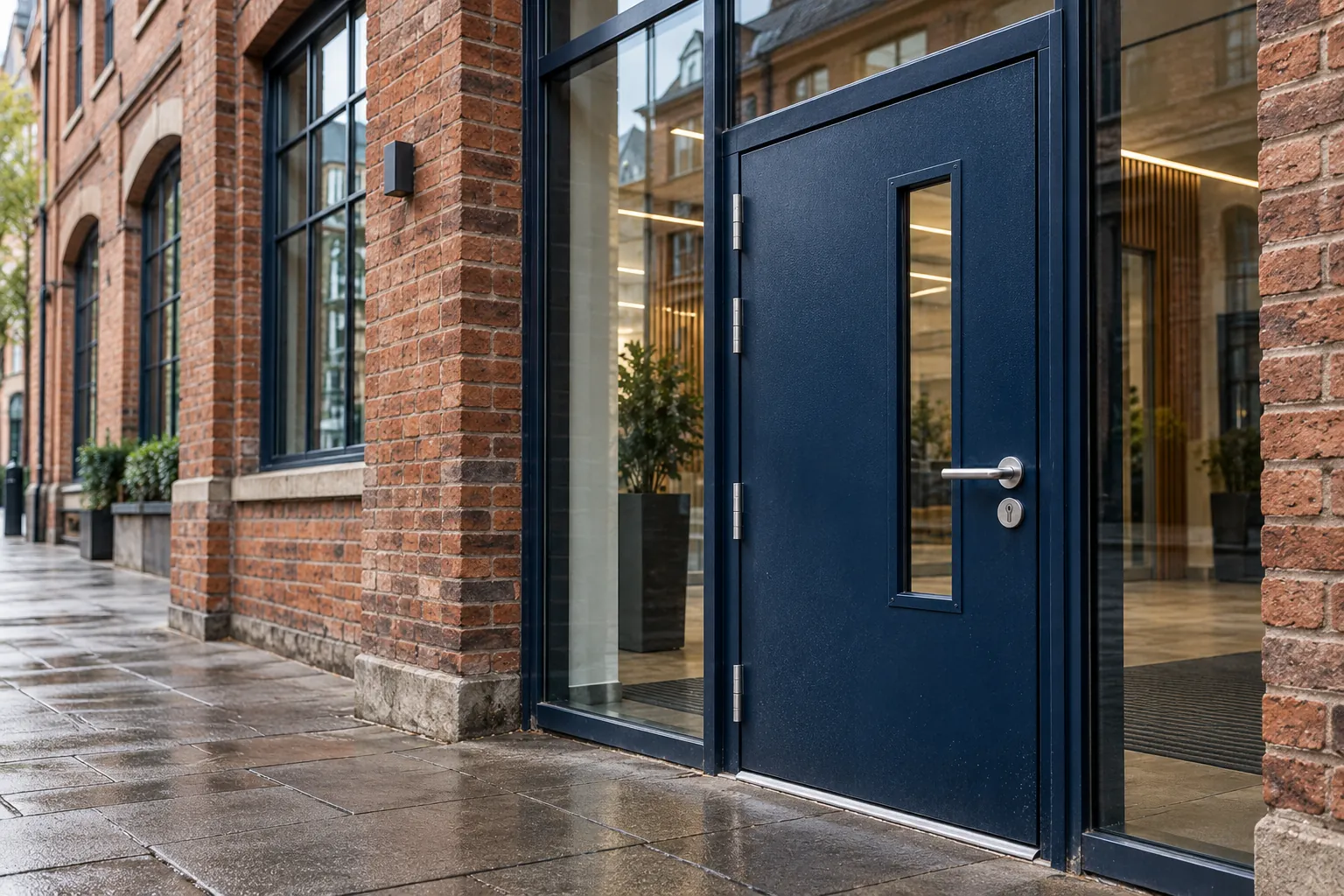
Blast · ISO 16933 EXV45 to EXV10
Blast Resistant Doors in Nottingham
Blast resistant doors in Nottingham for courts, civic buildings, arenas and offices. ISO 16933 ratings, glazing hazard classes and stand off distance explained.
- ✓Third-party test evidence with every product
- ✓Written specification you can issue to tender
- ✓Supplied and installed in Nottingham
Get a free quote in Nottingham
Rating, written specification and budget range within one working day.
Confidential. No cost, no obligation.
Third-party tested
Evidence with every quote
UK manufactured
Made to your sizes
One accountable team
Specify, supply, install
Confidential handling
Details never shared
Supplied and installed in Nottingham
What we supply in Nottingham
Blast resistant doors in Nottingham guard the entrances of buildings where the risk assessment names a blast threat. The Castle and the Lace Market pull in visitors through the year. Courts and civic offices near Old Market Square stand beside busy streets. Trent Bridge and the City Ground draw large crowds to the south of the city. Every one of those buildings needs an entrance that holds under blast load, lets people through on a normal day, and suits the street it faces.
Judge a blast door as one doorset, not as a leaf by itself. Leaf, frame, fixings, hinges, lock and any glazing were tested as a set, so changing one part after the test voids the rating. Other rated openings around Nottingham are listed on the Nottingham area page.
Where Nottingham uses blast resistant doors first
Civic buildings and courts fit them at the public entrance. At Old Market Square and in the Lace Market, the entrance faces pavements where crowds gather, and it must hold under blast load while staff, visitors and legal teams pass through in numbers each morning. The sector page on government and defence compares the zoning of a civic entrance, a public front with a guarded route behind it.
At arenas and stadiums they sit at turnstiles, hospitality entrances and back of house doors. On a match day Trent Bridge and the City Ground fill with thousands of supporters, so the doors at the crowd entrances must work with stewards, search points and ticket checks, while the service doors behind them stay locked to everyone except staff. A door that holds the crowd up at entry fails the building even if it passes its test, so leaf weight, closer and hold open arrangement follow the crowd plan.
The third group covers universities, hospitals and offices. The two universities run large campuses that host public lectures, open days and evening events. Queen’s Medical Centre keeps a busy front entrance open day and night, and offices in the city centre hold reception desks facing the street. The public spaces sector page compares how such buildings mix open access with guarded rooms behind the front door.
How a blast class is set for a door
The rating for a blast door comes from ISO 16933, and the classes are named EXV for explosive vapour and SB for shock tube testing, with the charge weight and the stand off distance named alongside the class. Stand off distance is the distance between the charge and the door, and it matters as much as the charge itself, because a door further from the blast faces a lower load. The blast ratings page compares the classes in plain terms.
Glazing in a blast door carries its own hazard class, from A to F, and the class names how the glass breaks and how far fragments travel. A solid leaf suits a service door or a plant room, while a glazed leaf suits a reception or a ticket hall where staff need to see who stands outside. The guide on blast doors, glazed versus solid, compares the two choices, and the guide on blast resistant windows cost and specification notes what changes the price of the glazed parts.
Where a door must resist both blast and attack, the forced entry standard often sits on the same specification line: LPS 1175 Issue 8.2, the current issue from September 2024. Blast and forced entry are tested in different ways, and one never stands in for the other, so a specification that needs both names both, with the evidence for each kept together. The guide on forced entry, ballistic and blast ratings explains how the rating families differ.
Rating guide for Nottingham entrances
Take the table as an early steer only. The blast assessment for the building settles the final class, charge weight and stand off distance for each door, and the security consultant signs it off before pricing.
| Building in Nottingham | Door position | Class to quote | Glazing class |
|---|---|---|---|
| Courts and civic buildings | Public entrance and staff entrance | EXV25 to EXV45, per the assessment | Class C to D, per the assessment |
| Arenas and stadiums | Turnstiles and hospitality entrances | EXV15 to EXV25, per the assessment | Class D to E, per the assessment |
| Universities | Main entrances and lecture blocks | EXV15, per the assessment | Class D, per the assessment |
| Hospital front entrance | Queen’s Medical Centre main door | EXV15 to EXV25, per the assessment | Class C to D, per the assessment |
| Offices and public desks | Reception desks and enquiry counters | EXV15, per the assessment | Class D to E, per the assessment |
Specifying blast resistant doors in Nottingham
Start from the threat and the stand off distance. Name the charge weight, the hazard class for any glazing and the distance from the public side, then set the EXV or SB class under ISO 16933. Set leaf, frame, fixings, hinges, lock, closer and glazing down as one doorset, with the test evidence for the quoted class kept with them.
Look at the wall the frame fixes into, because a tested door in a weak wall still leaves the opening unguarded. Put the finish, the threshold and the access control on the same line, so the door works with the search point, the ticket check or the reception desk beside it. A door for a court entrance near Old Market Square will carry a different class and a different glazing hazard class from a door for a university lecture block, and the specification should show that difference plainly.
From survey to a fitted blast door in Nottingham
Drawings or a schedule that gives the class for every door start a Nottingham blast job. At the site, each opening is taped, the wall build and the floor level are checked, then the services behind the door, and staff and visitors are watched passing through the entrance during a normal day. Those figures decide size and fixing method for each doorset, so each door is built for the opening that was taped.
Each doorset is built to the specification agreed at survey, and production tracks the programme dates agreed at the start, and fitting is arranged through the installation service. The guide on acceptance and snagging for security doors lists the handover checks to run before the job is signed off, and a blast resistant glass pane beside the door should be checked against the same class.
Send drawings and the class for each door through the quote form, or email them to [email protected]. A reply comes by the following working day, with the class checked, a cost figure and the specification in writing.
Blast door notes for Nottingham buyers
Send the stand off distance and the class each entrance needs in the enquiry. A class borrowed from another city seldom suits a Nottingham entrance, so send both figures first; the specification starts from them.
Blast resistant door questions for Nottingham
What does stand off distance change on a blast door?
It changes the load the door must take. A door further from the blast faces a lower load, so the assessment names the charge weight and the distance together, and the EXV or SB class follows from both figures.
Can a blast door have glass in it?
Yes, where the glazing carries a hazard class from A to F and was tested as part of the doorset. Name the hazard class in the specification, and hold the test evidence for the quoted class beside it.
Does a blast rating also cover forced entry?
No. Blast and forced entry are tested in different ways, and one never stands in for the other. Where a door needs both, the specification names both ratings, with the evidence for each travelling together.
What happens between survey and fitting for a Nottingham blast door?
The class for each door is set on drawings or a schedule first, then the surveyor tapes each opening, each doorset is built to the specification agreed at survey, and fitting keeps to the programme dates agreed at the start. A reply comes by the following working day, with a cost figure and the specification written down.
Blast resistant doors needed at a Nottingham entrance? Send the drawings, with the class for each door noted, and a tested doorset is picked to fit every opening.
Other areas
Blast resistant doors in other areas
Ready to specify your project?
Free assessment, written specification and test evidence. Reply within one working day.