
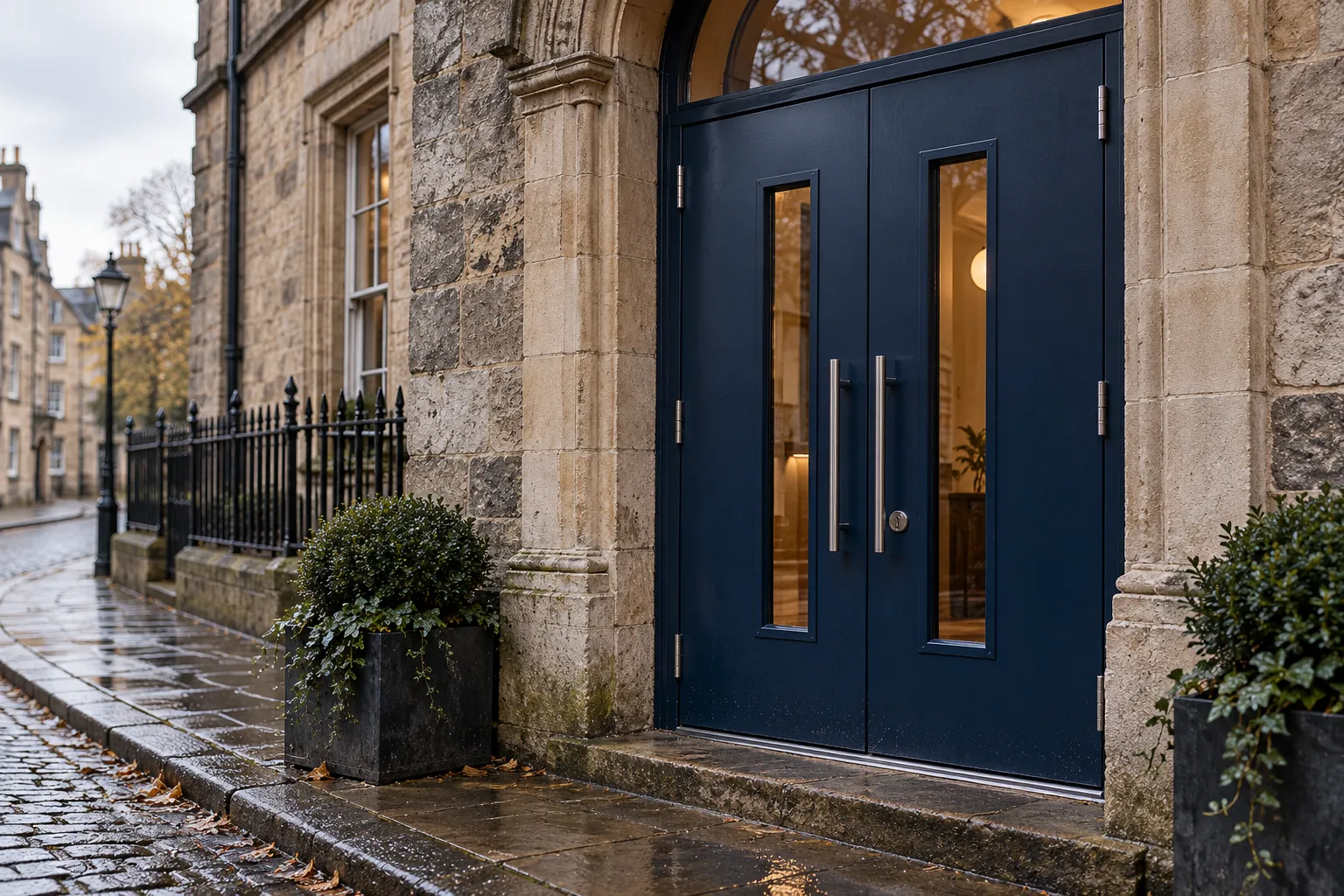
Blast · ISO 16933 EXV45 to EXV10
Blast resistant glass in Edinburgh
Blast resistant glass in Edinburgh for stations, hospitals, hotels and offices, rated to ISO 16933 and EN 13123, supplied with a written specification.
- ✓Third-party test evidence with every product
- ✓Written specification you can issue to tender
- ✓Supplied and installed in Edinburgh
Get a free quote in Edinburgh
Rating, written specification and budget range within one working day.
Confidential. No cost, no obligation.
Third-party tested
Evidence with every quote
UK manufactured
Made to your sizes
One accountable team
Specify, supply, install
Confidential handling
Details never shared
Supplied and installed in Edinburgh
What we supply in Edinburgh
A glazed frontage on Princes Street or at St James Quarter takes the blast load before anything behind it, and the glass in that frontage has to stay in its frame and keep people behind it safe from flying shards. Our blast resistant glass for Edinburgh is made as a laminated unit in a frame that was tested with it, so the pane, the bead and the frame act as one piece when the pressure wave arrives. The unit is sized for the opening it fills, and the rating is named in writing before any glass is ordered.
Waverley station moves crowds through glazed concourses and entrances through the day, and the Royal Mile carries visitors past hotel and shop fronts where glass runs close to the pavement. Edinburgh Airport, Murrayfield Stadium, the University of Edinburgh and the Royal Infirmary of Edinburgh each run buildings where large glazed areas sit beside busy public routes. At those places the glass has to hold its line under a blast load and still let daylight through, and the frame has to carry the load into the wall behind it.
Each glazed unit is built for the single opening it fills, with blast class, pane build and frame written into one specification. Our page for physical security in Edinburgh carries the wider city picture. The glass here sits on street frontages, station concourses and hospital entrances, where a pane has to stay put and keep its rating at once.
Where Edinburgh buildings ask for blast rated glazing
At Waverley station the glazed screens beside the concourse and the entrances from Market Street and Princes Street sit where crowds gather, and a pane there has to hold under a blast load without shedding shards across the floor. The frames are set into the structure behind them, and the bead and gasket hold the pane in place while the pressure wave passes. Survey visits are timed round train times, with the work planned so no entrance closes while trains are running.
Princes Street shopfronts and the St James Quarter run long glazed frontages at pavement level, and the Royal Mile runs hotel and shop fronts where glass sits close to people on foot. At those frontages the glass has to read as a shop window in the day and still hold its rating, so the pane build and the frame finish are picked for the street as well as the test record. Leith carries offices and flats along the waterfront, and Holyrood carries government buildings where glazed screens sit beside public routes, and both need panes that hold their line without darkening the rooms behind them.
Ratings that govern blast resistant glazing
The blast class for a pane is set by the test it passed. ISO 16933 gives EXV and SB classes for vehicle borne and hand carried loads, and EN 13123 with EN 13124 gives EPR and EXR classes for the glazing and its frame. A pane that fulfils LPS 1175 Issue 8.2 (September 2024) once the forced entry class is named in the specification holds its SR class beside its blast class. SR1 pairs with tool set A1. SR2 pairs with tool set B3. SR3 pairs with tool set C5. SR4 pairs with tool set D10. Security glazing takes its classes from LPS 1270 Issue 1.1 (2014), and they are set out on our blast ratings page and our LPS 1270 standard page.
Pane, bead and frame are ordered as one tested unit, because a pane tested in one frame does not carry its class into another. The laminate interlayer holds the shards together, the bead keeps the pane seated, and the frame carries the load into the wall. How the classes compare across forced entry, ballistic and blast is set out in our forced entry, ballistic and blast ratings guide, and the difference between EXV and SB is explained in our ISO 16933 EXV and SB guide.
What a unit costs follows its size, its class and its frame, and the blast window costs guide runs through the items that set the price. Our guide to glazed and solid blast doors sets out where glass belongs beside a solid leaf, and the SR classes are listed in order on the LPS 1175 standard page.
Glazing Edinburgh buildings order most often
The table below matches each kind of Edinburgh building with the glazing its openings most often take. The survey fixes the class, the pane build and the frame for each opening in turn, and the specification is signed off in writing before the workshop starts work.
| Edinburgh building | Glazing position | Class to order | Other items named |
|---|---|---|---|
| Waverley station | Concourse screens and entrances | ISO 16933 SB, per the blast plan | Bead, gasket, frame fixings |
| Princes Street and St James Quarter | Shopfronts at pavement level | EN 13123 EPR, per the blast plan | Laminate, bead, frame finish |
| Royal Infirmary of Edinburgh | Entrances and ground floor glazing | ISO 16933 EXV, per the blast plan | Bead, seals, access control |
| Murrayfield Stadium | Concourse and entrance glazing | EN 13123 EPR, per the blast plan | Frame, bead, closer |
| University of Edinburgh | Teaching blocks and library glazing | ISO 16933 SB, per the blast plan | Laminate, seals, ironmongery |
| Edinburgh Airport | Terminal frontages and screens | ISO 16933 EXV, per the blast plan | Bead, gasket, frame fixings |
Setting the specification for an Edinburgh site
Begin with a list of every opening. For each pane note its measured size, the wall it sits in, the frame it needs, its class and its bead, and keep the test papers that name the quoted class beside them. Wait for the test papers before the order goes in: a unit bought without them can stall handover, so the papers are checked first and the order follows after. The blast resistant windows in Edinburgh page covers the window side of the same openings, and the layered security guide sets out how glazing sits beside doors, barriers and detection.
Pane, bead and frame are agreed as one set. The gasket is set so the pane sits true without pinching, the fixings match the tested set, and the frontage decides the finish. Where a glazed door needs access control, the drawing also shows the reader position and its power supply.
From specification to fitting in Edinburgh
After sign-off, the workshop builds each unit to the agreed specification, working from the survey figures, so a station screen matches the size the survey recorded. On site each frame is plumbed and levelled, each pane is bedded and its bead set, and each gasket is checked against the figure for its opening.
Put the opening list on the quote form, with the class noted against each opening. Write to our inbox at [email protected]. The team answers in writing inside one working day, with the price and the specification in the reply.
The team plans surveys and installations from Saffron Road, Romford, Essex RM5 3ES.
Blast glass notes for Edinburgh buyers
Stand at the pavement and look at the bead line before handover is signed. A bead that sits even along its length shows the pane is seated true, and a gap at a corner points to a frame that needs sorting before handover.
Frequently asked questions
Does blast resistant glass still let daylight through in Edinburgh?
Yes. The laminate is clear, and the pane reads as ordinary glass from inside the room. The frame is deeper than a plain window frame, so the reveal is checked at survey, and the light through the pane stays clear.
Can blast resistant glass be fitted into an existing Edinburgh frame?
Only where the frame was tested with that pane build. The frame and the pane travel as one tested unit, and an old frame is replaced where it was never part of a test.
What class of blast glass does a station or a stadium in Edinburgh need?
The class follows the threat assessment for that site, and the survey names it opening by opening. ISO 16933 SB and EXV and EN 13123 EPR cover the classes most often named, and the papers that prove the quoted class are kept with the specification.
What checks follow fitting of blast resistant glass in Edinburgh?
The fitters check each frame for level, test each bead and gasket against the figure for its opening, and write the class, pane build, bead and fixings for each opening into the handover record.
Planning blast resistant glass for an Edinburgh building?
Send the opening list with the class noted for each pane, and the reply carries a specification for every unit. Get a free quote and the survey is booked from there.
Other areas
Blast resistant glass in other areas
Ready to specify your project?
Free assessment, written specification and test evidence. Reply within one working day.