
Security · LPS 1175 SR2 to SR5
LPS 1175 swinging security doors
LPS 1175 swing doors for UK specifiers: what a tested swinging doorset includes, A1 to H20 ratings, frames, hardware and the evidence to ask for.
- ✓Third-party test evidence with every product
- ✓Written specification you can issue to tender
- ✓Supplied and installed across the UK
Get a free project quote
Rating, written specification and budget range within one working day.
Confidential. No cost, no obligation.
Third-party tested
Evidence with every quote
UK manufactured
Made to your sizes
One accountable team
Specify, supply, install
Confidential handling
Details never shared
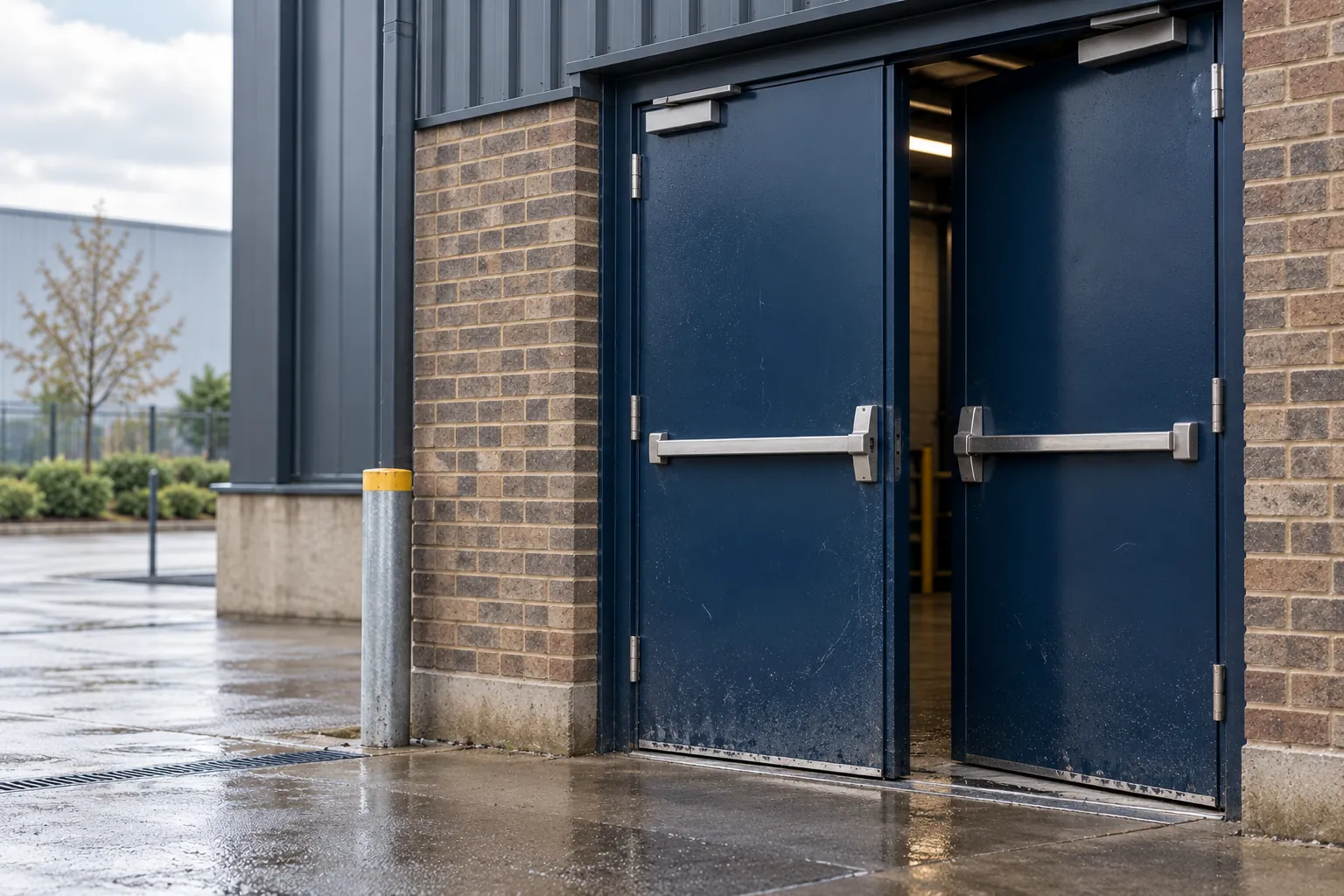
LPS 1175 swinging security doors are hinged doorsets tested as complete assemblies against forced entry. The rating covers the leaf, frame, hinges, lock and threshold together, not the leaf on its own. Issue 8 labels run from A1 to H20, where the letter sets the tool category and the number sets the minutes of attack the doorset must resist.
- Tested as one assemblyLeaf, frame, hinges, lock and threshold are tested together
- A1 to H20Issue 8 labels: the letter sets the tools, the number sets the minutes
- B3, C5 and D10The common commercial labels: 3, 5 and 10 minutes
- Ask for the certificateCheck the scope matches the doorset you are buying
What counts as an LPS 1175 swinging doorset
A swinging security door is a hinged doorset: a single leaf that swings on hinges, or a pair of leaves that meet in the middle. LPS 1175 tests the doorset as one unit. That unit includes the leaf or leaves, the frame, the hinges, the locking points, the threshold and the fixings that hold the frame in the wall. During the test, the attack team goes after the parts of the doorset they judge most likely to give way, and the doorset is tested in its locked condition. A weak hinge or a soft point in the frame fails the whole doorset, even if the leaf itself holds firm.
This is the point most specifications get wrong. A rating is a property of the doorset, not of the leaf. If you change any tested part, the rating no longer applies. Read the LPS 1175 standard page for how the labels work, and browse the security doors range to see the main doorset types before you specify.
The rating labels, from A1 to H20
Under LPS 1175 Issue 8, each label has two parts. The letter names the tool category, running from A for an opportunist with basic hand tools up to H for extreme tools. The number is the minimum attack time in minutes that the doorset must resist. The old Issue 7 names (SR1 to SR8) still appear in older documents, so the table below maps both.
| Issue 8 label | Old SR name | Attack time | Tool category |
|---|---|---|---|
| A1 | SR1 | 1 minute | A: opportunist, basic hand tools |
| B3 | SR2 | 3 minutes | B: screwdrivers, pliers, hand saws |
| C5 | SR3 | 5 minutes | C: crowbars, drills, chisels |
| D10 | SR4 | 10 minutes | D: sledgehammers, disc cutters, jigsaws |
| E10 | SR5 | 10 minutes | E: a step above D |
| F10 | SR6 | 10 minutes | F: a step above E |
| G10 | SR7 | 10 minutes | G: a step above F |
| H20 | SR8 | 20 minutes | H: extreme tools |
Most swinging doorsets on commercial projects are specified at B3, C5 or D10. B3 suits a standard commercial entrance where the threat is opportunistic. C5 suits premises holding cash or higher value goods. D10 suits sites where the risk assessment points to a determined attack with powered tools. Labels above D10 are for critical infrastructure and similar high risk sites. Match the label to your risk assessment, and compare the middle three in the SR2 vs SR3 vs SR4 guide. The LPS 1175 Issue 8 guide explains how the two part labelling replaced the old SR names.
Frames, thresholds, hinges and locks are tested parts
Every part of the doorset that was present at the test is part of the rating. The frame must be the tested frame, fixed the tested way. The threshold must be the tested threshold. The hinges and the locking points must be the exact models that were tested, fitted in the tested positions. Swapping a hinge for a cheaper one, changing the lock, or fitting the frame with different fixings takes the doorset outside the tested design. The certificate no longer describes what is on your wall.
The assembly rule. A rated leaf hung in an unrated frame is not a rated doorset. The certificate only covers the exact assembly that passed the test, fitted the way the test laboratory fitted it.
Thresholds deserve attention because they are easy to get wrong on site. A doorset tested with a low threshold for accessibility cannot be fitted with a different threshold to suit the floor build up without leaving the tested scope. The same applies to the frame fixings: the spacing and type of fixings are part of the evidence. Ask for the installation instructions with the certificate. The installation service page describes how a survey confirms the opening before manufacture. If anything about the opening changes after the survey, say so before the doorset is made, as explained in keeping your LPS 1175 rating valid.
Handing, opening direction and daily use
Handing simply means which side the hinges are on and which way the leaf swings. It matters for two reasons. First, the handing you order must match the handing that was tested, because hinge and lock positions are part of the evidence. Second, the opening direction affects how people use the door every day. A leaf that swings out over a pavement or into a corridor creates its own problems, whatever the rating.
On escape routes, the security rating has to sit alongside escape hardware. Panic bars and emergency exit devices change the hardware schedule, so they must be part of the tested design or covered by separate evidence. Doorsets that also carry a fire rating need both sets of evidence to be valid at the same time; the dual certification guide works through the conflicts. If the door needs access control, readers and electric locking must be specified up front, not added later.
Vision panels, louvres and extras only work inside the tested design
A vision panel is fine in a rated swinging door, but only if the certificate scope includes it. The glazing in the panel must meet the tested specification, and the beading that holds it is a tested part. The same rule covers louvres for ventilation: they are acceptable only where the tested design includes them, with the tested louvre construction. Anything else, however small it looks, sits outside the evidence.
Glazing in a security doorset often needs its own rating. Where the vision panel must resist attack on the glass itself, ask for glazing tested to LPS 1270, as described on the LPS 1270 security glazing page. For ventilation through a rated door, the tested option is a steel louvred door construction within scope, not a louvre cut into a solid leaf afterwards. When in doubt, ask for the scope document and check the exact configuration line by line.
What to ask for before you order
Good specification is mostly about paperwork. Ask for these five things and read them before you sign anything. First, the certificate or approval document with its number. Second, the scope or schedule that lists the exact configurations covered: leaf sizes, single or double, hardware models, threshold type and fixing method. Third, confirmation that the product is listed with the certification body. Fourth, the installation instructions. Fifth, the maintenance schedule, because the rating assumes the doorset is kept in the condition it was tested in.
Write the rating into the specification as a label plus the standard, for example “swinging steel doorset tested to LPS 1175 Issue 8.2 (September 2024), rating C5”. Name the handing, the opening direction, the threshold and the hardware schedule. State that no substitution of tested parts is permitted without written confirmation that the rating still applies. The how to specify security doors guide gives the full wording approach, and the maintenance page covers what keeps a doorset in its tested condition year after year.
Swinging doorsets at these ratings are common in banking branches, data centres and retail back of house areas, where the rating matches the risk assessment. Where the threat includes weapons or blast as well as forced entry, the doorset may need to carry a second rating: bullet resistant doors cover EN 1522 classes, and blast resistant doors cover the blast standards. A doorset that must also hold back fire needs the fire evidence too, as on the fire and security doors page. For a quieter threat where attackers avoid noise, the related LPS 2081 swing security doors page explains the stealth attack standard.
Can I fit an LPS 1175 rated leaf into my existing frame and keep the rating?
No. The rating belongs to the tested assembly, which includes the frame, the fixings, the hinges and the lock. A rated leaf in an unrated or different frame has not been tested as a combination, so it carries no rating. Order the complete doorset or do not claim the label.
What is the difference between a rated leaf and a rated doorset?
A rated leaf is only one component. A rated doorset is the leaf plus the frame, threshold, hinges, locking and fixings, all exactly as tested. Certificates are issued against the doorset, so the scope document is the part that tells you what you are actually buying.
Which LPS 1175 rating should I specify for a commercial entrance?
Start from the risk assessment, not the catalogue. B3 is the common baseline for a standard commercial entrance. C5 fits premises with higher value targets or a history of determined attempts. D10 fits sites assessed against powered tool attack. Your insurer may also set a minimum, so check the policy wording before you specify.
Can a swinging security door include a vision panel?
Yes, but only where the certificate scope includes that exact vision panel: the glazing specification, the size and the beading are all tested parts. A panel added after manufacture, or one that differs from the tested design, takes the doorset outside its evidence.
Does the rating still count once the door is installed and in use?
Only if the doorset stays in its tested condition. That means installation to the tested fixing method, no substitution of hardware, no site modifications such as extra holes or different seals, and maintenance to the schedule. Any change needs written confirmation that the rating still applies.
Get a free quote
Related
More in security doors, windows and entrance control
Ready to specify your project?
Free assessment, written specification and test evidence. Reply within one working day.