
Security · LPS 1175 SR2 to SR5
Full height glass turnstiles
Full height glass turnstiles for UK entrances: how the glass rotor stops tailgating, glass versus steel bars, access control, fire release and specification.
- ✓Third-party test evidence with every product
- ✓Written specification you can issue to tender
- ✓Supplied and installed across the UK
Get a free project quote
Rating, written specification and budget range within one working day.
Confidential. No cost, no obligation.
Third-party tested
Evidence with every quote
UK manufactured
Made to your sizes
One accountable team
Specify, supply, install
Confidential handling
Details never shared
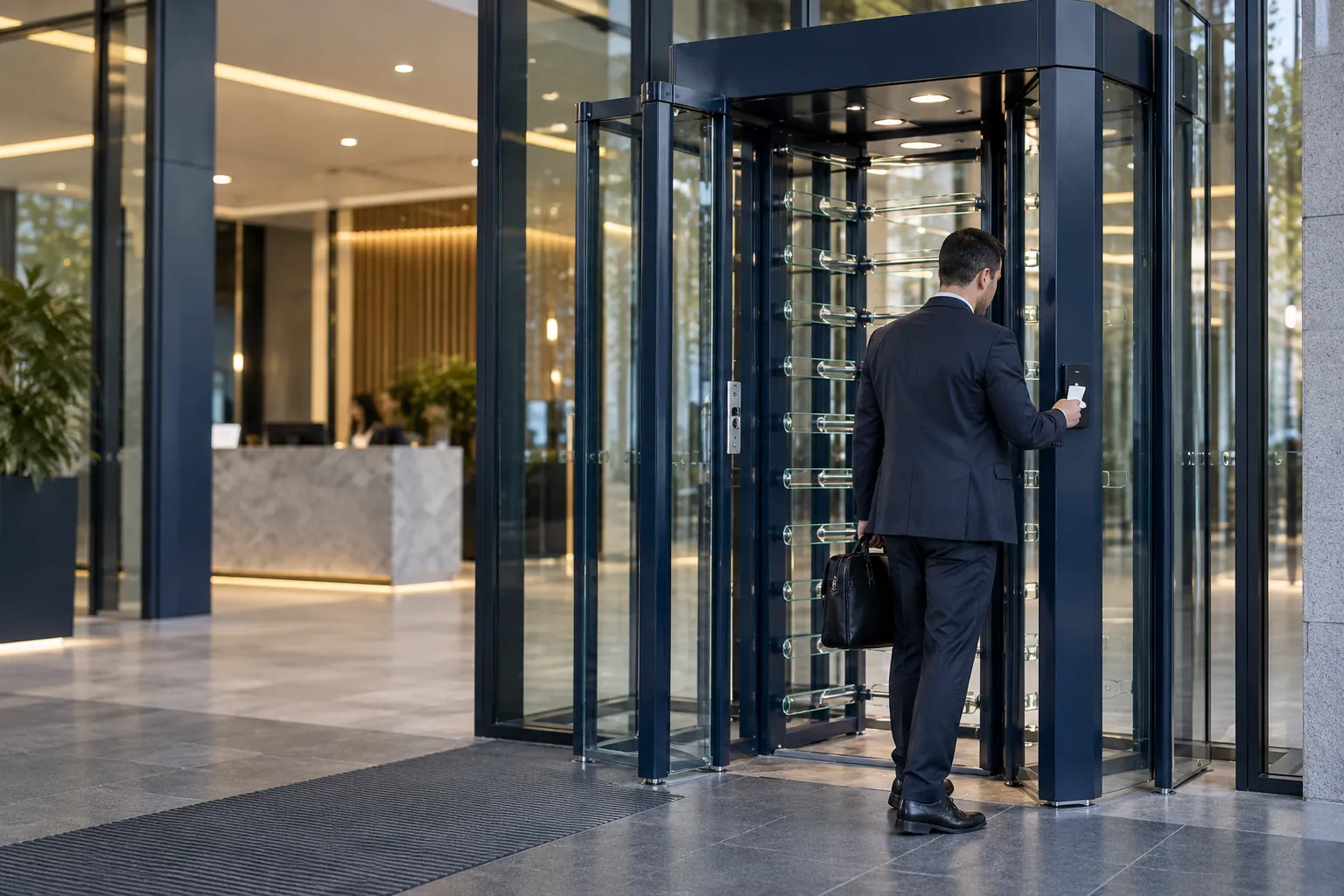
A full height glass turnstile is a floor to ceiling revolving barrier that uses glass wings instead of steel bars. Each rotation admits one person, which stops tailgating at entrances with no guard on duty. This page compares glass and steel rotors, then covers access control, fire release and specification.
- Floor to ceilingA full height barrier that blocks climbing and pass-back
- One person per rotationThe rotor stops tailgating at unattended entrances
- Glass wingsVisibility and daylight for lobbies and reception areas
- Access control readyCard, PIN, biometric and intercom integration
How a full height turnstile stops tailgating
A full height turnstile works like a revolving door that only moves when the access system allows it. The rotor has three or four wings inside a fixed enclosure. A valid credential releases the rotor for one rotation, and the passage closes behind each person before the next can enter. There is no gap to slip through and no arm to duck under.
Height is the key difference from a waist high unit or a pedestrian speed gate. The enclosure runs floor to ceiling, so nobody can climb over it or pass a bag over the top. That matters at unmanned entrances, such as a depot side gate or a staff entrance used outside office hours. Utilities and data centres use them at unmanned gates, while transport hubs and education sites use them for busy pedestrian entrances.
Glass changes the feel of the same mechanism. The wings and side panels are glazed, so the unit reads as part of the lobby rather than a cage. Reception staff can see who is passing, which supports the informal supervision that keeps an entrance working well. One honest limit: a turnstile controls the flow of people, not a forced entry attack. Where the threat is higher, it should sit inside a layered plan, for example with security portals on the most sensitive doors.
Glass wings or steel bars: which to choose
The choice is really about the setting. Both use the same rotor principle. Glass rotors suit corporate lobbies, reception areas and leisure clubs where appearance matters. The housing is usually stainless steel with glazed wings, so the unit matches modern interiors and lets daylight through.
Steel bar rotors suit industrial sites, utilities, construction compounds and outdoor perimeters. The open bar construction tolerates rough treatment and weather, costs less and is easy to keep clean. Nobody chooses steel bars for looks. They choose them because the entrance takes a beating and must work every shift.
| Aspect | Glass rotor | Steel bar rotor |
|---|---|---|
| Appearance | Glazed wings and panels, suits modern interiors | Industrial and functional |
| Visibility | See-through, reception can monitor the lane | Open bars, see-through but utilitarian |
| Typical setting | Corporate lobbies, leisure, staff entrances | Construction, utilities, outdoor perimeters |
| Hard use | Needs care, glass marks and chips | Tolerates knocks, weather and dirt |
| Position | Indoor or covered outdoor | Indoor and fully outdoor |
Choose by setting, not by habit. A glass rotor in a muddy site compound looks tired within months, and a steel cage in a client-facing lobby sends the wrong message. Match the unit to the building and its daily users.
Rotation, throughput and planning the entrance
Plan throughput first. A full height turnstile moves people more slowly than a speed gate lane, because each person presents a credential and walks one rotation. At shift change a single lane can queue, so sites with timed peaks often install two lanes or pair the turnstile with a separate exit lane.
Most units run single direction or bi-directional, and the setting can change by time of day. A common pattern is entry by credential with free exit during working hours, then locked both ways overnight. Leave the rotor sweep zone clear, keep the approach straight so people face the reader on arrival, and mount readers at a height that suits short and tall users. Route deliveries and trolleys through a separate gate, not the rotor.
Access control integration
Almost any credential can drive the release: proximity cards and fobs, PIN keypads, fingerprint or facial recognition, and mobile credentials. The usual choice is whatever the site already uses, so one card opens the turnstile, the doors and the car park. An intercom at the unit lets reception admit visitors remotely, so the entrance can run unmanned.
Anti-passback logic stops credential sharing: a card used to enter cannot enter again until it has been used to exit. Ask for a lockdown input that freezes the rotor and an alarm output for forced wings, and confirm them at specification stage rather than rewiring later. Brief the access contractor on positions, reader types and release logic before first fix, so power and data land correctly and the installation team commissions both systems together.
Emergency egress, fire release and accessibility
Settle fire behaviour before anything else. On a fire alarm the unit must let people out, usually by releasing the rotor to free rotation in the exit direction or defaulting the lane open. Write the exact behaviour into the fire strategy and agree it with the fire officer, with a manual release such as a break-glass unit as backup.
Fail-safe releases the lock when power fails so people can leave; fail-secure stays locked. Turnstiles on an escape route are normally fail-safe on the exit side, while entry can stay locked to keep the building secure.
Accessibility needs a separate lane. A rotor compartment is too narrow for a wheelchair, so accessible entrances use a wide powered gate beside the turnstile, released by the same access system with level thresholds and manoeuvring space. Plan it from the start.
Outdoor use, finishes and maintenance
Glass rotors belong indoors or under a canopy. Steel bar units handle full exposure, but last longer with a rain canopy and drainage under the lane. Housings are normally stainless steel; a coastal or chemical site needs a higher grade than a dry indoor lobby.
Maintenance is light but regular: rotor bearings, locking solenoids and safety sensors checked on schedule, and glass cleaned with non-abrasive products. A maintenance contract with stated response times and stocked parts keeps a stuck rotor from becoming a shift-change crisis. Keep the sweep zone floor clear of standing water and de-icing salt in winter.
Specification checklist
- Define the threat. Tailgating and unauthorised entry, or a higher threat needing layered measures.
- Choose the rotor. Glass for lobbies and receptions, steel bars for industrial and outdoor sites.
- Set the direction. Single, bi-directional or timed changeover, plus free exit behaviour.
- Pick the credentials. Card, PIN, biometric or mobile, matched to the existing system.
- Fix the fire behaviour. Release on alarm, fail-safe or fail-secure per side, manual override.
- Plan the accessible lane. Wide powered gate with level access beside the turnstile.
- Confirm the environment. Indoor, canopied or fully outdoor, and the stainless grade.
- Sort power and data. Supplies and network points in place before first fix.
- Agree maintenance. Scheduled visits, response times and stocked parts in writing.
For the wider entrance specification, the guide to specifying security doors covers evidence and wording across entrance products, and the security range shows where turnstiles sit alongside doors, gates and glazing.
What is the difference between a full height glass turnstile and a standard full height turnstile?
The mechanism is the same: a floor to ceiling rotor admitting one person per rotation. The difference is the rotor material. Glass wings suit lobbies where appearance and visibility matter. Steel bars suit industrial sites and outdoor perimeters that take hard use.
Can a full height glass turnstile be used outdoors?
Only in a sheltered position, such as under a canopy. For fully exposed entrances, choose a steel bar full height turnstile with a suitable stainless grade and drainage under the lane.
What happens to the turnstile in a fire alarm?
It must let people out. On the alarm signal the rotor normally releases to free rotation in the exit direction or the lane defaults open. Agree the exact behaviour with the fire officer before installation, with a manual release as backup.
Do full height turnstiles need a guard on duty?
No. The full height enclosure stops tailgating and climbing without supervision, and an intercom handles visitors. A guard still helps at the busiest entrances, but the turnstile does not depend on one.
How do wheelchair users get through?
Through a separate wide lane, usually a powered gate released by the same access control system, with level thresholds and manoeuvring space. Plan this lane from the start rather than adding it later.
Which access control systems work with these turnstiles?
Most of them: card and fob readers, PIN keypads, fingerprint and facial recognition, mobile credentials and intercoms. Match the credential to the existing site system and confirm lockdown and alarm inputs at specification stage.
Get a free quote
Related
More in security doors, windows and entrance control
Ready to specify your project?
Free assessment, written specification and test evidence. Reply within one working day.