
Perimeter and HVM · PAS 68 and IWA 14-1
Hostile vehicle mitigation in London
Hostile vehicle mitigation for London stadiums, stations, markets and squares, from survey and rating to a written specification and a price.
- ✓Third-party test evidence with every product
- ✓Written specification you can issue to tender
- ✓Supplied and installed in London
Get a free quote in London
Rating, written specification and budget range within one working day.
Confidential. No cost, no obligation.
Third-party tested
Evidence with every quote
UK manufactured
Made to your sizes
One accountable team
Specify, supply, install
Confidential handling
Details never shared
Supplied and installed in London
What we supply in London
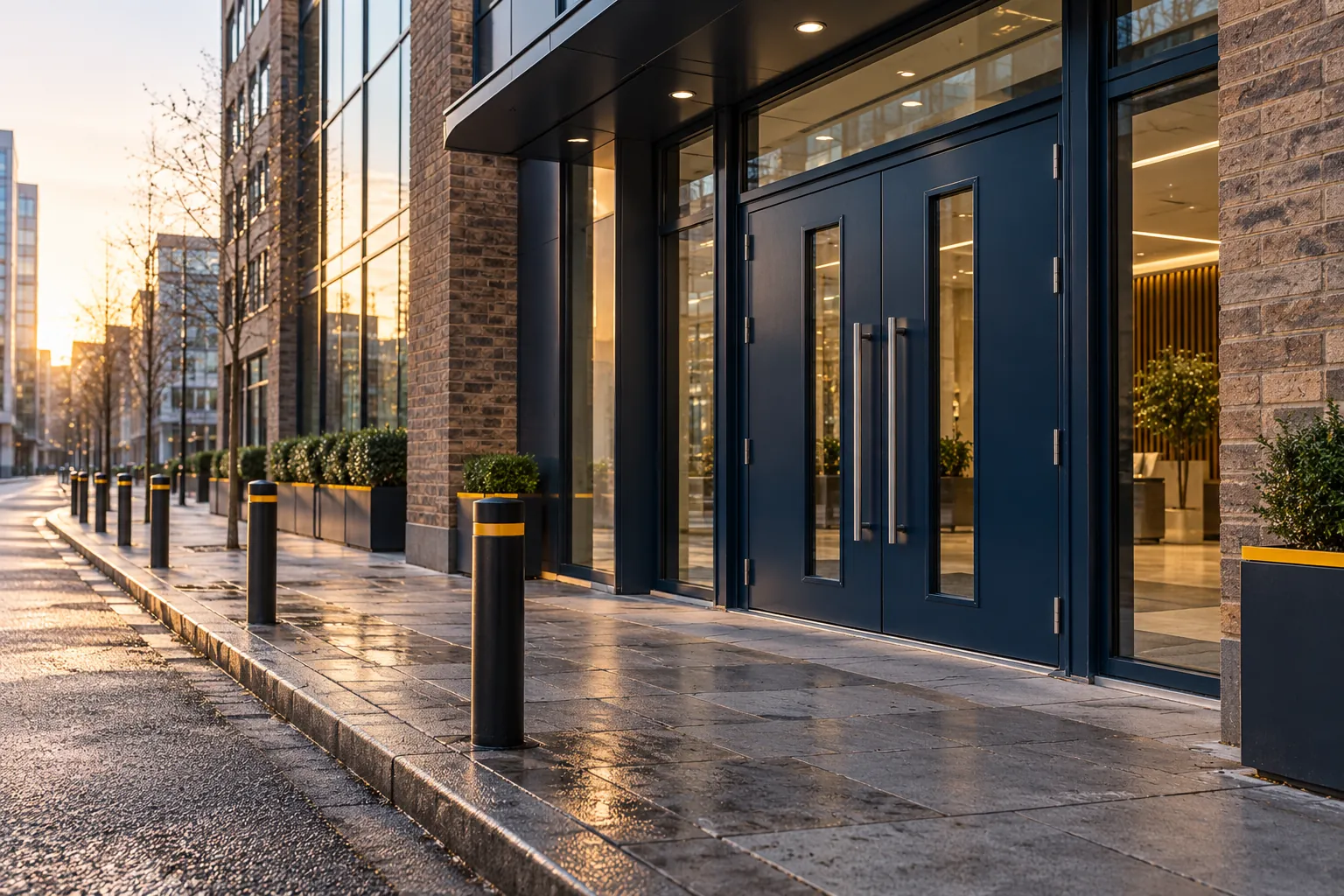
Hostile vehicle mitigation in London keeps a vehicle away from the people it could harm, using bollards, barriers, planters and gates that are tested to stop a vehicle at speed. The line is drawn where the crowd gathers, and the rating follows the vehicle and the speed the site faces. The whole set goes into a specification a facilities team can run and a contractor can price. London buyers ask for mitigation where crowds stand beside a road open to traffic.
Wembley, the Emirates and the Tottenham Hotspur Stadium need mitigation for crowds that arrive in waves on match days, King’s Cross, Waterloo and London Bridge need it for concourses that spill onto pavements at peak times, and Borough Market and Covent Garden need it for streets where shoppers walk beside delivery vans. Oxford Street needs it for pavements that take thousands of shoppers an hour, Parliament Square and Whitehall need it for squares where people gather beside roads that carry buses and coaches, and Canary Wharf and the City need it for lobbies and plazas that sit at the foot of towers.
ArxBridge supplies hostile vehicle mitigation for London stadiums, stations and markets, with each site walked first and each line rated to the vehicle and the speed the site faces. Before anything is ordered, the buyer agrees the vehicle, the speed and the rating. For the wider London picture, the physical security in London page is the place to start, and the matching bollard range is on the security bollards page.
London sites that need hostile vehicle mitigation
Stadiums make the clearest case, at Wembley, the Emirates and the Tottenham Hotspur Stadium. The crowd arrives in waves, the roads around the ground stay open to buses and coaches, and the line must stop a vehicle without stopping the crowd. A rising bollard suits a road that needs access for coaches before the match and a closed line during it, while a fixed bollard suits a pavement that never needs vehicle access. The choosing HVM bollards guide explains how the rating and the operation are matched to the site.
Stations and markets make the second case. King’s Cross, Waterloo, London Bridge, Borough Market and Covent Garden all need a line where the crowd stands. The concourse spills onto the pavement, the market street mixes shoppers with delivery vans, and the line must be drawn where the crowd stands, not where the road ends. A planter suits a market street that wants the line to look like street furniture, while a barrier suits a station forecourt that needs a gate for service vehicles. The HVM standards guide explains the ratings and the tests behind them.
Shopping streets and government squares make the third case, on Oxford Street, in Parliament Square and along Whitehall. Each one takes crowds beside roads that carry heavy traffic, each one needs a line that holds a vehicle at speed, and each one needs the line to leave room for pedestrians, wheelchairs and pushchairs. The Martyn’s Law enhanced tier measures guide covers the physical measures a large venue is asked to put in place.
What a London mitigation line usually covers
Each row pairs a London site with its vehicle risk and the set up that risk calls for.
| Site in London | Vehicle risk it faces | Mitigation and rating | Extra help |
|---|---|---|---|
| Wembley Stadium | Vehicle at a match day crowd | Rising bollards, ISO 22343-1 | Coach access before the match |
| King’s Cross Station | Vehicle at a concourse spill | Fixed bollards, ISO 22343-1 | Service gate for vans |
| Borough Market | Vehicle in a shopping street | Planters, ISO 22343-1 | Delivery access in the morning |
| Oxford Street | Vehicle beside a busy pavement | Fixed bollards, ISO 22343-1 | Wheelchair gaps in the line |
| Parliament Square | Vehicle beside a gathering place | Fixed bollards, ISO 22343-1 | Bus route kept clear |
How the vehicle rating is chosen in London
The rating starts from the vehicle and the speed the site faces, not from the product. A street that carries buses and coaches needs a higher rating than a lane that takes only vans, and a site where a vehicle can build speed needs a higher rating than a site where the approach is short. On the order, the rating appears as the test for checking the fitted line, with the vehicle mass, the speed and the penetration distance named.
On 25 Oct 2023 the vehicle impact standard changed, because PAS 68:2013 was replaced that day, and ISO 22343-1:2023 is now the standard for new vehicle impact tests. The vehicle impact ratings page matches each rating to its test. The gate schedule repeats LPS 1175 Issue 8.2 (September 2024) issuing of the forced entry class for each gate, so the SR class sits beside the vehicle rating on the same line. Places with a capacity of 800 or more belong to the enhanced tier. Places with capacities from 200 to 799 are in the standard tier. Martyn’s Law sets both tiers, with commencement expected in spring 2027.
A line that stops vehicles must still let people through, so the gaps are drawn for wheelchairs, pushchairs and delivery trolleys, and the gate positions are drawn where service vehicles need them. A rising bollard needs power and drainage at the pit, and a fixed bollard needs foundations that suit the ground below the pavement, so the survey names the ground conditions ahead of ordering.
From survey to fitted line in London
The first visit walks the site from the road to the front door, noting the approach lengths, the crowd flows, the service routes and the ground below the pavement. The specification that follows names the rating for each part of the line, the bollard and barrier types, the gate positions and the finishes, and the design is drawn so a contractor can price the job with no guess.
The foundations are dug and the units are set and tested on site, and the finished line is proved against the written specification before handover. The installation and handover guide covers the handover checks for a rated line.
Send the site drawings to our London lobby Saffron Road, Romford, Essex RM5 3ES. Send now your site plan and the vehicle details, so the survey team brings the right rating tables. Email [email protected] and note the site, the vehicle and the speed you need rated for. The reply, with the rating and the price, arrives inside one working day.
Notes for London buyers
Draw the line where the crowd stands, not where the road ends. A line at the kerb leaves the pavement unguarded, while a line at the crowd leaves the road clear for the traffic that must pass.
Questions about hostile vehicle mitigation in London
Should the bollards be fixed or rising?
It turns on the access the site needs. A road that must open for coaches or deliveries often takes rising bollards, while a pavement that never needs vehicle access often takes fixed bollards. The operation choice is agreed with the buyer at order stage.
Can the line leave gaps for wheelchairs?
Yes. The gaps are drawn for wheelchairs, pushchairs and delivery trolleys, with the spacing set so a vehicle cannot pass while a wheelchair can. The gap positions are named in the specification.
Does mitigation need planning permission?
It can, where the line sits on a public highway or in a conservation area. For a new line, the planning rules get checked before ordering, and the specification records the local rules.
How long does a London mitigation job take?
It turns on the length of the line and the ground below the pavement. A short line often takes weeks from survey to handover, while a long line with rising units takes longer, and the dates are set down in writing at the survey.
Other areas
Hostile vehicle mitigation in other areas
Ready to specify your project?
Free assessment, written specification and test evidence. Reply within one working day.