
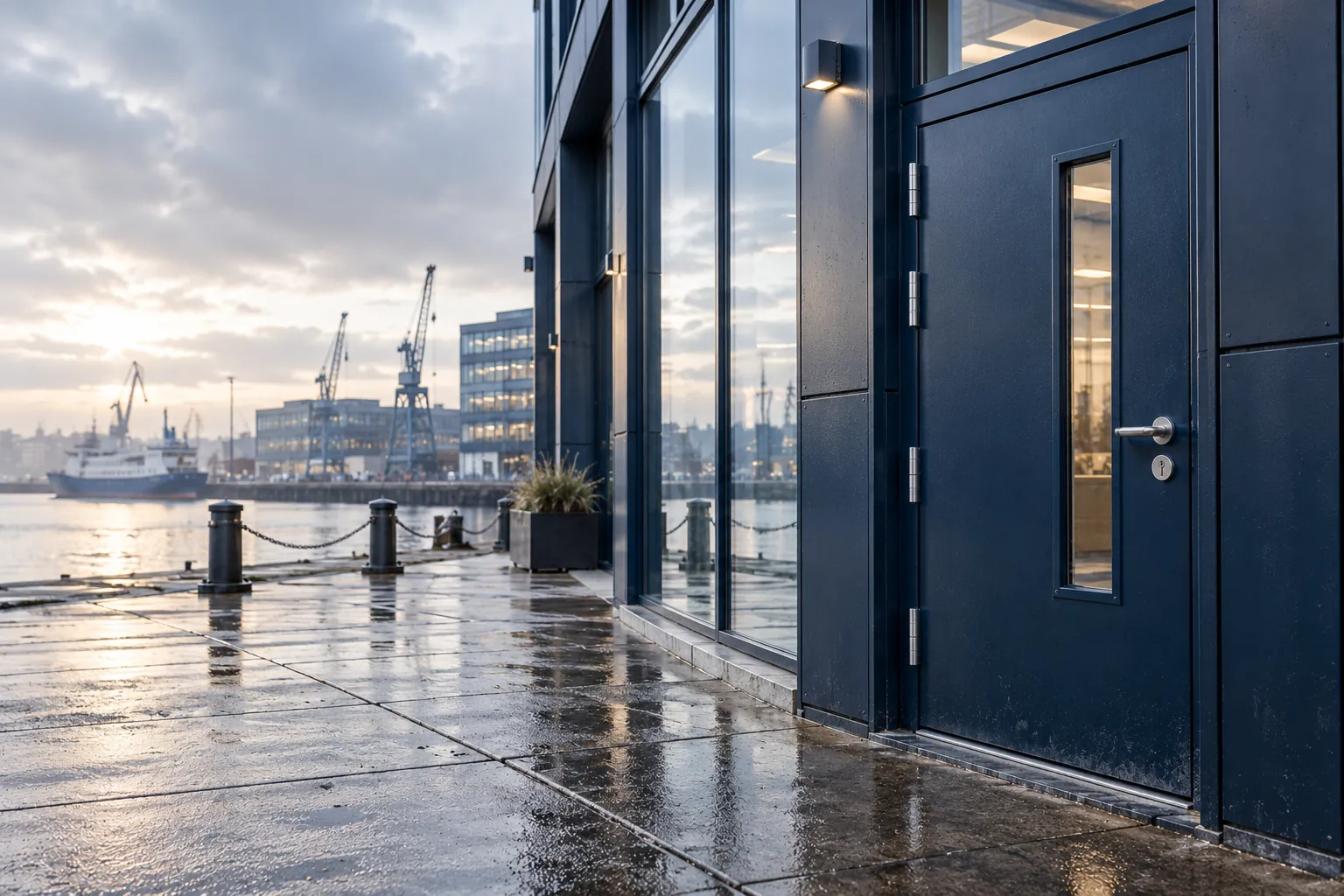
Ballistic · EN 1522 FB2 to FB7
Bullet resistant doors in Southampton
Bullet resistant doors for Southampton docks, cruise terminals, hospitals and campuses, rated to EN 1522 and EN 1063 with matched frames, glazing and locks.
- ✓Third-party test evidence with every product
- ✓Written specification you can issue to tender
- ✓Supplied and installed in Southampton
Get a free quote in Southampton
Rating, written specification and budget range within one working day.
Confidential. No cost, no obligation.
Third-party tested
Evidence with every quote
UK manufactured
Made to your sizes
One accountable team
Specify, supply, install
Confidential handling
Details never shared
Supplied and installed in Southampton
What we supply in Southampton
Southampton is a port city where cruise ships, freight and daily footfall meet at the same quays. The cruise terminals at Ocean and City, together with Mayflower and Queen Elizabeth II, bring large numbers of passengers through the docks, while shoppers and visitors head for Ocean Village and Westquay in the centre. A bullet resistant door in this setting has a plain job: slow a ballistic threat at a controlled entry point, keep staff and visitors moving safely, and hold its rating after years of heavy use.
The rating is the starting point, not the whole answer. A leaf that stops a round still needs a frame, glazing and locks that match it, hinges that carry the weight, and a closer that shuts the leaf every time. The sections below set out the ratings in common use, the places in Southampton where the doors fit, and the checks that keep a fitted door honest. The ballistic rating guide explains how a specifier picks a class before any order is placed.
Ratings that match the risk
EN 1522 and EN 1523 give the FB scale for doors, windows and shutters, from FB1 to FB7, with FSG for shotgun resistance. EN 1063 covers glazing on a BR scale that runs from BR1 through BR7, and adds SG1 plus SG2 for shotgun glazing. The two scales work as a pair: a leaf rated to FB5 means little if the vision panel beside it only holds BR2. UL 752 runs from Level 1 to Level 10 and covers ballistic resistance only, so a UL level by itself gives no measure of forced entry resistance.
The schedule advises LPS 1175 Issue 8.2 (September 2024) accepting SR2 as the baseline where forced entry risk sits beside the ballistic rating. SR2 gives three minutes against a defined tool set, SR1 gives one minute, SR3 gives five minutes and SR4 gives ten minutes. The ballistic ratings page puts the classes side by side for comparison, and the LPS 1175 page gives each SR level in full.
| Standard | Scale | Scope |
|---|---|---|
| EN 1522 and EN 1523 (1999) | FB1 to FB7, plus FSG | Doors, windows and shutters against handguns and rifles |
| EN 1063 (2000) | BR1 to BR7, plus SG1 and SG2 | Glazing against handguns, rifles and shotguns |
| UL 752 | Levels 1 to 10 | Ballistic resistance only |
| LPS 1175 Issue 8.2 | SR1 to SR4 | Forced entry delay from one to ten minutes |
Cost follows the class, the leaf size and the hardware, and the door cost guide walks through the factors that move a quote. The ratings comparison guide shows where forced entry, ballistic and blast ratings overlap and where they part.
Where the doors fit around the port city
The docks set the tone for much of the demand. Cruise terminals handle thousands of passengers on sailing days, and the doors at staff entries, baggage areas and control rooms need to hold a rating while staying easy to use under pressure. Freight gates and port offices face a different mix of risk, with vehicles and goods moving through all day, so the leaf, frame and lock must take repeated cycles without drifting out of adjustment.
In the city centre, Westquay and the streets around it put retail back of house areas, cash offices and service corridors behind the shopfront. A door here must look plain beside a retail fit out, yet hold its class when tested. Ocean Village adds marinas, flats and leisure uses, where a door may guard a plant room or a management office. The Mayflower Theatre draws large evening crowds, so front of house doors see surges of people, while stage door and cash handling areas need tighter control. St Marys Stadium brings match day crowds and the same split between public flow and guarded back of house space.
Southampton General Hospital and the two universities shape the rest of the picture. Hospital doors guard pharmacies, records stores and secure wards, where access control and audit trails matter as much as the leaf itself. Southampton Solent University, alongside the University of Southampton, holds laboratories, data rooms and equipment stores that need a rated door at a single controlled entry, with the rest of each building kept open for students. Southampton Airport adds terminal and airside support buildings where a rated door sits beside other layers of control. For the wider area, the physical security in Southampton page gives the general picture, and the security doors in Southampton page covers the broader range of leaves for the city.
Frames, glazing and hardware that hold the rating
A ballistic leaf is heavy, and the frame carries that weight every day. Steel frames suit most rated work, with the leaf hung on hinges sized to the load. Under BS EN 1935, a grade 13 hinge is tested for 200,000 cycles while carrying a leaf of 120 kg. The next step up, grade 14, goes through the same 200,000 cycle test with a leaf of 160 kg, so the hinge grade should be written into the schedule beside the ballistic class. A closer sized to the leaf keeps the door shut after each use. For closers, BS EN 1154 sets power sizes EN 1 to EN 7: EN 1 suits a 750 mm leaf at 20 kg, while EN 7 suits a 1600 mm leaf at 160 kg. Locks should match the threat level of the leaf, and the access control guide explains how readers, maglocks and audit trails sit beside a rated leaf.
Glazing needs the same care as the leaf. A vision panel in a rated door should carry a BR class that matches the FB class of the leaf, and the bead and fixings should hold the pane under attack. bullet resistant glass in the right class keeps the weak point out of the door, and the frame rebate should be deep enough to hold the pane without flep.
Write the leaf class, the glazing class, the forced entry level and the hinge grade on one line of the schedule. Four numbers on one line stop a supplier from quoting a strong leaf with weak glass or light hinges.
Survey, fitting and aftercare
During a survey, the surveyor records the size of the opening, looks at how the wall is built, and notes the floor level, the services inside the wall and how the door will be used each day. The surveyor should also note the approach, because a leaf that opens onto a narrow corridor needs a different closer setting from one that opens onto a wide concourse. Fitting starts with the frame, set plumb and square, fixed back to sound structure rather than to plaster or lining. The leaf is hung, the gaps are set, and the locks and closer are adjusted so the door shuts from any open position without slamming. The bank doors guide shows how a high use entry is put together, and the same discipline applies at a hospital or a terminal.
Aftercare keeps the rating honest. Hinges are checked for wear, closers are adjusted as the building settles, and seals are replaced when they lose their edge. Samples and drawings can be seen at our annex Saffron Road, Romford, Essex RM5 3ES ask about leaf sizes and finish options during the visit. Write to [email protected] and ask for a survey slot at the Southampton site, and include the opening sizes you already hold. The maintenance service in Southampton covers planned checks after fitting, and the manufacture service in Southampton covers bespoke leaf sizes for openings that fall outside stock sizes.
Frequently asked questions
What rating should a cruise terminal staff door carry?
Many terminal staff doors are specified to FB4 or FB5 with matching BR glazing and an SR2 forced entry level. The rating should follow the threat assessment, not the highest class on the list.
Does the glazing need to match the leaf rating?
Yes. A vision panel should carry a BR class that matches the FB class of the leaf, with beads and fixings that hold the pane. A weaker pane turns the door into a strong leaf with an open window beside the lock.
Can a bullet resistant door also control access?
Yes. Readers, maglocks and audit trails can sit beside a rated leaf, and the lock should be chosen for the same threat level as the leaf. The closer must still shut the leaf every time, or the access control adds little.
How often should a rated door be checked after fitting?
Plan a check at least once a year, and sooner if the door is in heavy daily use at a terminal, a hospital or a stadium. Hinges, closers, seals and latches wear first.
Tell us the sizes of your openings plus the class you want, and our team will put a price together for the leaf, frame and hardware as one package. Get a free quote
Other areas
Bullet resistant doors in other areas
Ready to specify your project?
Free assessment, written specification and test evidence. Reply within one working day.