
Services
Powder coating London
Powder coating in London for steel doors, railings and shopfronts: how to specify the finish, choose colours and plan delivery and installation across the UK.
- ✓Third-party test evidence with every product
- ✓Written specification you can issue to tender
- ✓Supplied and installed in London
Get a free quote in London
Rating, written specification and budget range within one working day.
Confidential. No cost, no obligation.
Third-party tested
Evidence with every quote
UK manufactured
Made to your sizes
One accountable team
Specify, supply, install
Confidential handling
Details never shared
Supplied and installed in London
What we supply in London
Powder coating gives steel doors and metalwork a hard, even colour finish that stands up to weather and daily knocks. For London projects the finish is only part of the decision. Colour specification, surface preparation, delivery access and protection during installation matter as much. Know what to ask for and what to check before you order.
- Hard colour finishBonds to steel and resists chips and scratches
- RAL and BS coloursMatch branding or existing metalwork
- Weather resistantSuited to outdoor doors, railings and gates
- Low solvent finishFewer volatile compounds than wet paint
What powder coating does to steel
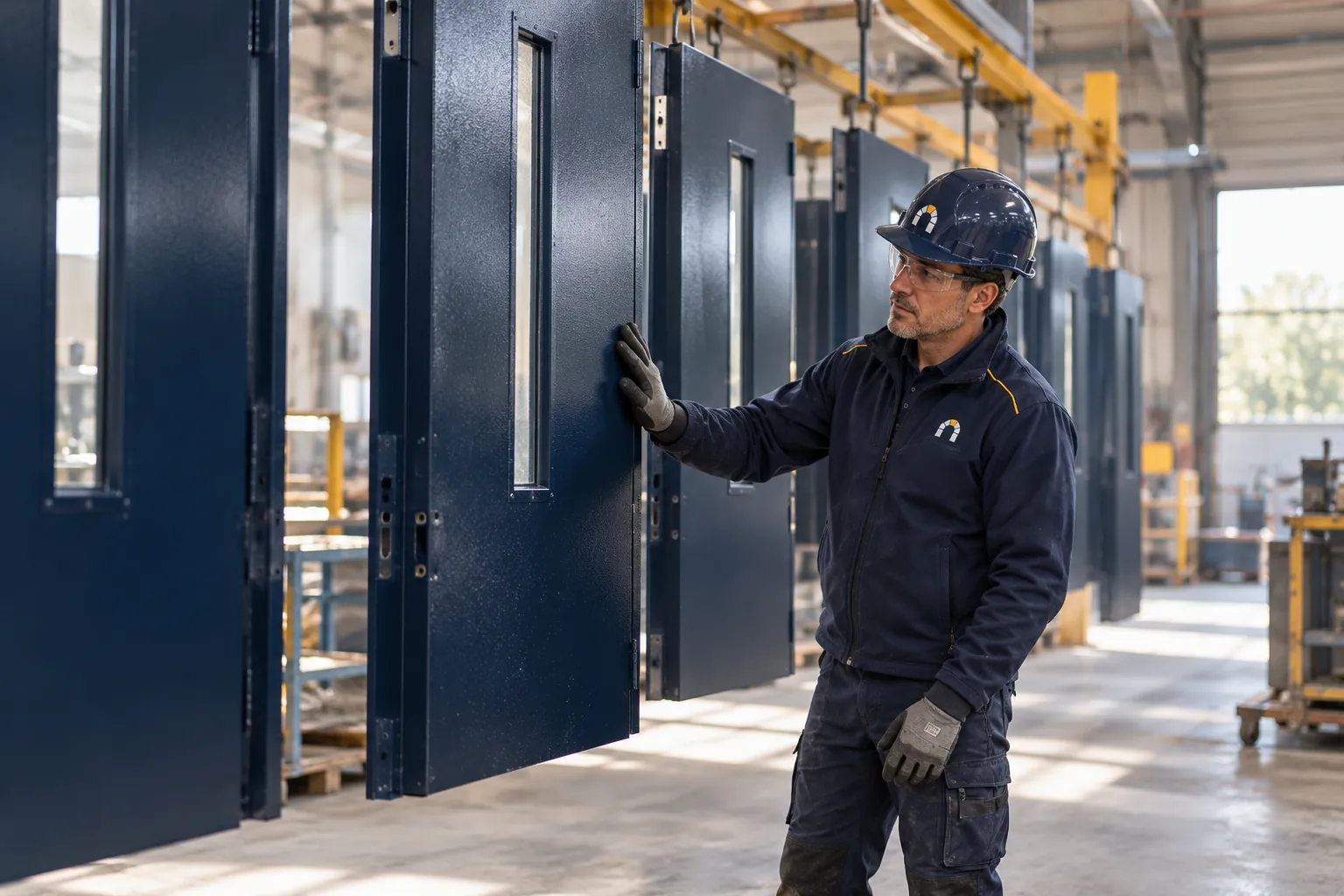
Powder coating starts as a dry powder, not a liquid. The powder is given an electrostatic charge and sprayed onto the steel, where the charge makes it cling evenly to the surface, including edges and corners. The coated part is then cured in an oven. The heat melts the powder so it flows into one continuous skin and sets hard.
The result is a thicker and more even layer than wet paint usually gives. That thickness is what makes powder coating harder wearing. It resists chipping from keys and trolleys, scratching during handling, and the slow corrosion that starts wherever bare steel is exposed to damp air.
Preparation decides how long the finish lasts. Steel must be cleaned of grease and mill scale, usually by shot blasting, then given a primer or zinc undercoat before the colour coat goes on. A good powder over poor preparation will lift and fail early. Our powder coating guide explains each stage of the process in detail.
Typical London uses
London buyers order powder coated metalwork for a short list of recurring jobs. Steel security doors on commercial units and plant rooms are the most common. Railings and balustrades on residential blocks come next, followed by shopfront frames and shutters on high streets, and screens and louvres around rooftop plant.
The city is hard on finishes. Traffic film and airborne grime settle on every horizontal surface, rain is frequent, and street level metalwork takes knocks from deliveries and foot traffic. A finish specified for London should therefore be chosen for cleanability and chip resistance, not colour alone. Darker colours show dust less but show scratches more, which is worth weighing on entrance doors.
Each use brings its own sector pressures. Retail fronts need a finish that still looks sharp after years of daily cleaning. Residential blocks need railings and staircases and balustrades that residents will not damage with prams and bikes. Public spaces need coatings that survive contact with the public and can be touched up without a full strip back.
Choosing colours and finishes
Most powder coating in the UK is ordered against the RAL or BS colour systems. RAL is the common language for architectural metalwork, BS 4800 covers many traditional shades. Ordering by code rather than by name removes the guesswork. Two suppliers reading the same code will aim at the same colour.
Gloss level changes how a colour reads. A matt finish hides minor surface marks and suits contemporary facades. A satin finish is the usual middle ground for doors and frames. A gloss finish looks sharp on a new shopfront but shows every scuff. Textured finishes, often called fine texture, hide fingerprints and small dents better than smooth ones and are worth considering for handrails and push plates.
Always judge from a physical sample, not a screen. Colours shift under different light, and a shade chosen under office lighting can look wrong on a north facing elevation. Ask for a sample panel in the specified colour and gloss, and look at it on site before the order is confirmed. Read the full process notes in our powder coating service page.
What to specify before you order
A short written specification prevents most disputes. State each point below in the order or the enquiry so the coater prices the same job you are picturing.
| Decision | What to state | Why it matters |
|---|---|---|
| Substrate | Steel type, and whether it is galvanised | Preparation and powder choice depend on the base metal |
| Preparation | Degrease, blast and prime sequence agreed | Poor preparation is the main cause of early failure |
| Powder type | Polyester for outdoor exposure | Stands up to sunlight and weather far better indoors |
| Colour | RAL or BS code plus gloss level | Avoids mismatch and sets a clear expectation |
| Masking | Threads, hinges and seals to be masked | Keeps moving parts and fixings working after coating |
The preparation rule. A premium powder on poorly prepared steel fails early. Ask what the preparation sequence is, and get it confirmed in writing before the work starts.
Delivery, access and installation in London
Getting finished metalwork to a London site takes planning. Streets can be narrow, parking is restricted, and large doorsets need handling space that a small yard may not have. Agree the delivery point, the vehicle size and who unloads before the goods leave the factory. A door that cannot be carried to the opening without being dragged across concrete will arrive with its new finish already damaged.
Protect the finish through installation. Keep any protective film on the frame until the last trade has finished around it. Lift rather than slide. Do not use the coated threshold as a step while other work continues. Small chips picked up during fitting should be touched up the same day, before moisture reaches the steel underneath.
Programme the finish around the site, not the other way round. Coated items should arrive as late as the programme allows and be stored upright, off the ground, under cover. If storage on site is unavoidable, keep parts separated with soft packing so they do not rub. Our installation teams plan this sequencing with the main contractor, and buyers in the capital can read how we serve the city on our London page.
How powder coating fits security and fire doors
Security and fire doors are tested as complete doorsets, and the finish is part of that tested assembly. A security door rated to LPS 1175 was attacked as a finished doorset, coating included. A fire and security door or fire rated steel door was fire tested with its seals, ironmongery and finish in place.
That has one practical consequence. Anything done to the door after testing that falls outside the tested design can void the rating. Drilling new holes, cutting for extra hardware, or stripping and recoating on site are the usual risks. If a change is needed, check first whether the certificate covers it. The fire ratings page explains how classifications work, and our guide on keeping an LPS 1175 rating valid sets out what site work is and is not allowed.
Intumescent seals need special care. They must never be painted or coated over, because the coating can stop them expanding in a fire. Mask seals before any touch up work, and tell every trade on site that the seals are not to be decorated.
Looking after the finish
A powder coated finish needs little, but it is not maintenance free. Wash exterior metalwork with mild detergent and water to remove traffic film and salts. Do this more often on street facing elevations and near the coast. Avoid abrasive pads and strong solvents, which dull the surface.
Inspect once a year. Look at edges, bottom rails and anywhere water sits. Touch up chips promptly with a matching repair paint so corrosion cannot spread under the coating. Small areas can be repaired on site. Large areas of damage or fading are usually better stripped and recoated in the factory than patched repeatedly. Keep a record of the RAL or BS code and gloss level with the building maintenance file so future repairs match. Our maintenance service, done by our own team or by our installation partners, covers planned inspection and repair of doors and metalwork.
Is powder coating better than paint for steel doors?
In most cases, yes. Powder coating goes on thicker and more evenly than wet paint, so it resists chips, scratches and corrosion better. Wet paint still has its place for assemblies that cannot take oven heat, or where an unusual custom shade is needed.
Can you powder coat galvanised steel?
Yes, provided the surface is prepared correctly. Galvanised steel needs degreasing and a suitable primer or etch treatment before the powder goes on. Without that step the coating can lift, so ask how the coater prepares galvanised work.
How do I match an existing colour?
Find the RAL or BS code from the original order or a sample chip, and ask for a physical sample panel before production. Screens and printed charts are unreliable. Check the sample in daylight on site.
Will powder coating void my door’s fire or security rating?
Not if the finish is part of the tested doorset design. The risk comes from site alterations: drilling, cutting, or recoating outside what the certificate covers. Ask what the certificate includes and keep the rating label intact.
What should I ask about lead time?
Ask early and treat it as a question, not a promise. Coating slots, colour availability and delivery access all affect the programme. Confirm the timing in writing before you fix site dates around it.
How do I maintain a powder coated finish?
Wash it with mild detergent, inspect edges and bottom rails yearly, and touch up chips promptly. Keep the colour code on file so repairs match. Plan a recoat when touch ups stop blending in.
Get a free quote
Ready to specify your project?
Free assessment, written specification and test evidence. Reply within one working day.