
Fire · EI 30 to EI 120
Fire and security doors
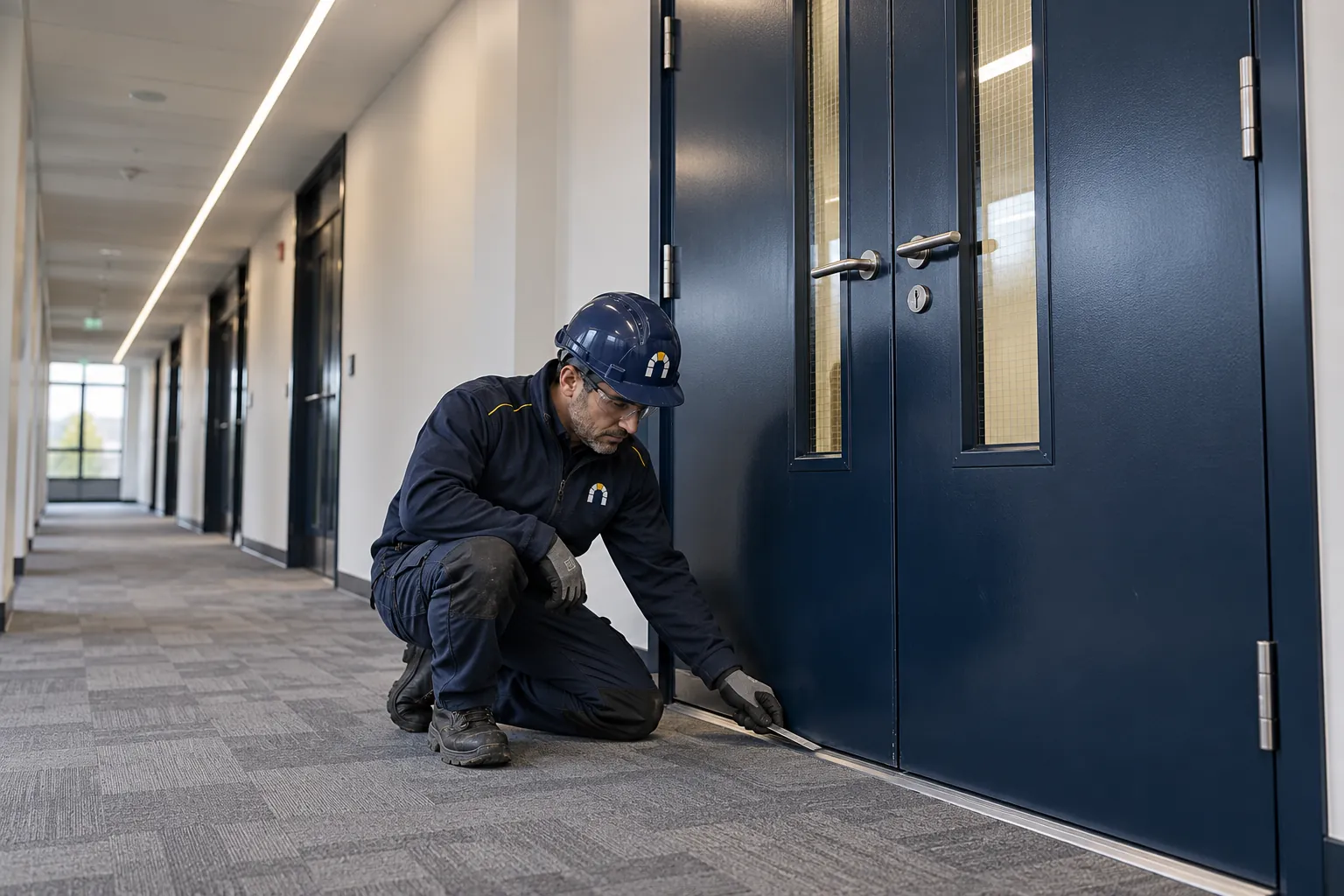
Fire and security doors: one steel doorset with a fire rating and an LPS 1175 forced entry rating. For secure UK areas that are also fire compartments.
- ✓Third-party test evidence with every product
- ✓Written specification you can issue to tender
- ✓Supplied and installed across the UK
Get a free project quote
Rating, written specification and budget range within one working day.
Confidential. No cost, no obligation.
Third-party tested
Evidence with every quote
UK manufactured
Made to your sizes
One accountable team
Specify, supply, install
Confidential handling
Details never shared
Fire and security doors carry a fire classification and an LPS 1175 forced entry rating in a single steel doorset. ArxBridge supplies and installs them across the UK for secure areas that sit inside fire compartments.
- Fire plus LPS 1175Two ratings, one doorset
- EN 1634-1Fire resistance test standard
- SR2 to SR4Common forced entry pairings
- One report per ratingEvidence for each performance
About fire and security doors
Some doors must do two jobs: hold back fire and hold back intruders. A fire and security door is a steel doorset tested for both: EN 1634-1 for fire, LPS 1175 for forced entry. The leaf is a steel shell with an insulating core for the fire rating and reinforced lock and hinge zones for the attack rating; the frame, seals and ironmongery serve both. The Fire range overview sets out the single-rating alternatives.
These doors sit where secure areas meet compartment lines: server rooms, cash handling areas, plant rooms in secure buildings, risers in protected premises. One doorset avoids the old compromise of a fire door that an intruder opens in minutes, or a security door that fails in a fire.
The two ratings are independent tests on the same construction. The specification must name both and require a test report for each; the fire ratings guide and LPS 1175 security ratings explain the two systems.
Picking the rating for fire and security doors
| Fire rating | Security rating | Asked for where |
|---|---|---|
| EI 60 | SR2 (B3) | Secure offices in compartmented buildings |
| EI 60 | SR3 (C5) | Server rooms and cash handling areas |
| EI 90 | SR3 (C5) | High fire load plant in secure sites |
| EI 60 | SR4 (D10) | High-risk secure compartments |
These are common pairings, not fixed products: the fire strategy sets the fire rating and the security consultant sets the LPS 1175 class. Any combination the evidence covers can be specified. Do not assume a doorset carries both ratings because it looks substantial; check both reports.
Two tests, one door. Fire evidence and attack evidence are separate reports. A doorset needs both before it can claim both.
The build behind fire and security doors
The leaf combines the two constructions: an insulating core for EI performance, steel stiffeners and reinforced zones around locks and hinges for attack resistance. Intumescent seals handle fire; multi-point locking handles forced entry. The two systems share the leaf without interfering, because each was designed into the tested build.
The frame is a deep steel section anchored for both loads: it must hold the leaf against fire distortion and against pry attack. Hinges are heavy duty and through-bolted; the lock, keeps and any access control furniture are tested items under both standards.
Finish is powder coat; stainless options suit demanding environments. Vision panels are possible where both test reports allow them, which narrows the options: a panel that suits the fire test may not suit the attack test.
Pairing fire and security doors with other ratings
Blast is the next pairing on threatened sites: a secure compartment door may also sit in the blast line. Blast resistant doors can carry fire and forced entry ratings where one construction has all three test reports.
Ballistic pairings exist where firearms are in the threat: bullet resistant doors to FB4 and above can be built with fire and attack ratings, though the leaf gets heavy and the options narrow. Acoustic performance is a lighter addition, common in healthcare and education secure areas.
Every added rating is a separate test. The specification lists each required performance as its own line with its own evidence requirement; combined claims without combined evidence are not accepted.
Sites that use fire and security doors
Banking and finance branches and offices use them on cash rooms, server rooms and strong rooms that sit inside compartmented floor plates. High-value retail uses them on stock rooms and cash offices.
Data centres fit them to halls and plant rooms where the fire load is high and the asset value higher. Government and defence estates use them across secure compartments.
Where only fire is needed, fire rated steel doors are the simpler answer; where only attack is needed, the security doors range covers it.
Cost and lead time factors for fire and security doors
Two ratings mean two engineering disciplines in one leaf, so these doorsets cost more than single-rating equivalents. Higher combinations, EI 90 with SR4, need the most material and the longest fabrication.
Ironmongery is the long pole: every lock, closer and access control item must be tested under both standards, which narrows the catalogue and can extend lead times. Vision panels, where allowed, add their own evidence checks.
Evidence review takes time: the project team must check two or three test reports per doorset before manufacture. Build that review into the programme rather than discovering it at the factory gate.
How to specify your fire and security doors
- Name both ratings. State the fire classification from the strategy and the LPS 1175 class from the security consultant.
- Schedule the ironmongery. List every item, checked against both test reports.
- Demand both reports. Require EN 1634-1 and LPS 1175 evidence naming the same doorset.
- Require scheme cover. Ask for LPS 1056 or equivalent certification on the fire side.
- Sequence the install. Book installation with frames early, and keep the maintenance plan across both ratings.
Which rating comes first, fire or security?
Neither: the fire strategy and the security consultant set their ratings independently, and the doorset must satisfy both. Start both conversations early, because the combined evidence takes longer to assemble.
Can any fire door be upgraded to a security rating?
No. The attack rating needs reinforced construction designed in from the start. Upgrading means replacing the doorset with one tested for both.
Do the seals work for both fire and security?
Intumescent seals serve fire; the attack rating relies on the leaf, frame and locking. They coexist in the tested build but do different jobs.
What does SR2 (B3) mean on a fire door?
Three minutes against hand tools such as screwdrivers, pliers and hand saws, on top of the fire classification. It suits areas where the attacker is an opportunist rather than an equipped team.
How are combined doors maintained?
One maintenance plan covering both: seals and closers for fire, locks and hinges for security. A failure in either system compromises its rating.
Get a free quote
Related
More in fire rated doors
Ready to specify your project?
Free assessment, written specification and test evidence. Reply within one working day.