
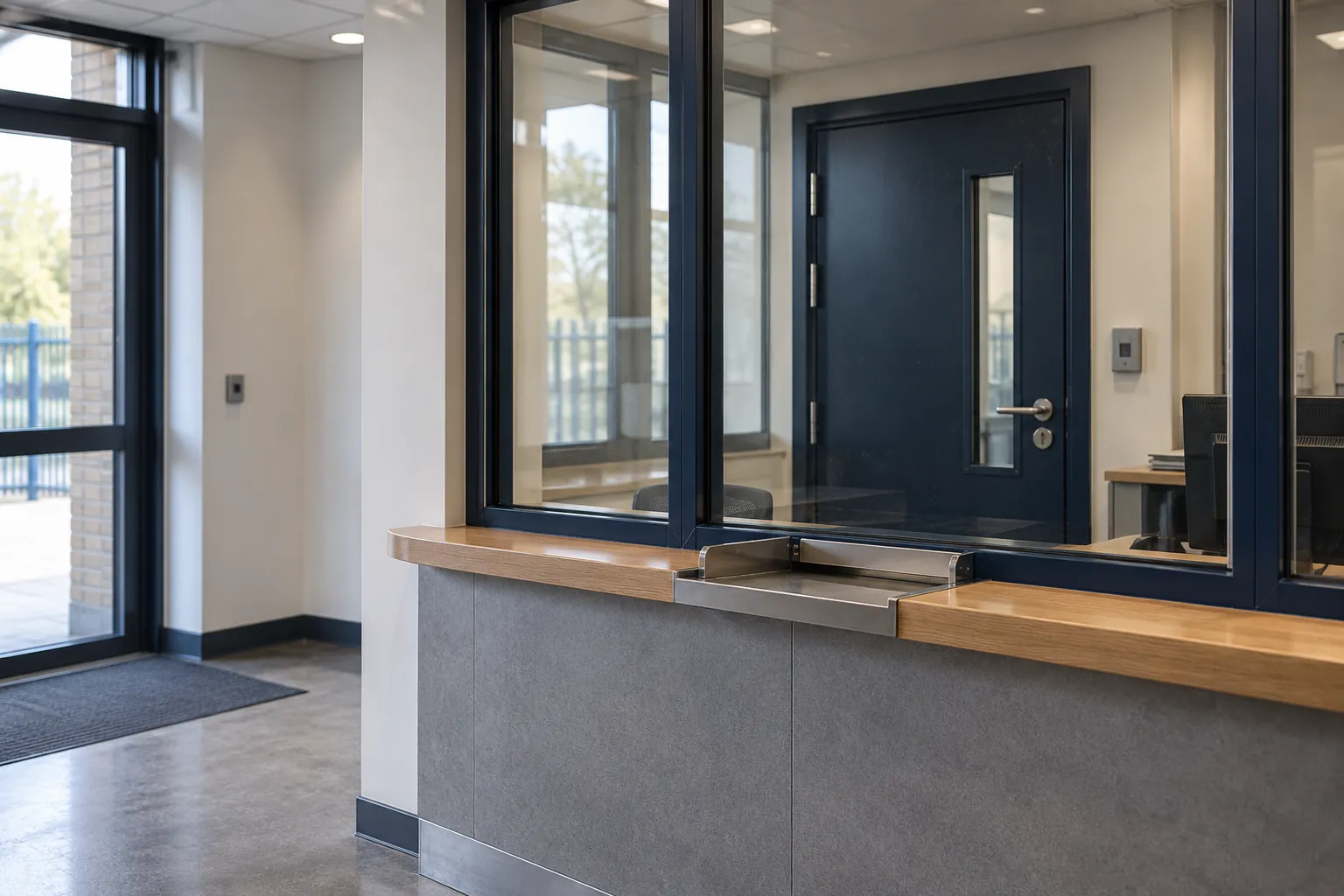
Ballistic · EN 1522 FB2 to FB7
Residential ballistic security
Ballistic protection for high-risk UK homes: rated doors, windows and safe rooms in discreet finishes. Designed and installed confidentially by ArxBridge.
- ✓Third-party test evidence with every product
- ✓Written specification you can issue to tender
- ✓Supplied and installed across the UK
Get a free project quote
Rating, written specification and budget range within one working day.
Confidential. No cost, no obligation.
Third-party tested
Evidence with every quote
UK manufactured
Made to your sizes
One accountable team
Specify, supply, install
Confidential handling
Details never shared
Residential ballistic security protects high-risk homes with rated doors, windows and safe rooms, finished to blend in with the house. Every element is tested to EN 1522. ArxBridge designs and installs it discreetly across the UK.
- FB2 to FB7Classes matched to the threat
- Discreet by designFinishes that blend in
- Safe roomsA protected core within the home
- No-spall interiorsNS glazing and linings
What is residential ballistic security?
It is a layered approach to protecting a home against armed threat: rated doors and windows on the vulnerable openings, and optionally a safe room as a final protected core. The products are the same tested systems we install on commercial projects, detailed and finished for a domestic setting.
This is specialist work for households facing a defined threat: people in public-facing or high-profile roles, and families advised by their security team to harden the home. We work under strict confidentiality from first contact to handover, and unmarked arrangements can be agreed for surveys and installation. The classes are explained in our ballistic ratings guide.
Start with the openings. Doors and windows are the weak points of any house. Rating the vulnerable openings first gives the biggest gain for the budget, before spending on anything else.
Which rating does a home need
The class follows the threat assessment prepared by the household’s security adviser. As a guide:
| Threat level | Class | Application |
|---|---|---|
| Handgun threat | FB2 to FB4 | Entrance doors, ground-floor windows |
| Rifle threat | FB5 to FB7 | Exposed elevations, upper floors |
| Safe room envelope | FB4 to FB7 | Walls, door and any glazing in the room |
Inside the home, always specify no-spall (NS) faces so no fragments leave the inner surface. Most residential projects combine ballistic ratings with forced-entry resistance, because burglary remains the common threat; see residential security doors.
How residential ballistic security works
We start with a confidential survey of the property: construction type, openings, sight lines from public areas, and how the household lives day to day. The design then layers protection: entrance and patio doors first, then ground-floor and overlooked windows, then upper floors where the assessment calls for it.
A safe room gives the household a protected core: a room with a rated door, protected walls and ceiling, ventilation, communications and a clear procedure. It is sized for the household and finished as a normal room, so it does not advertise its purpose.
Finishes are chosen to blend in: powder coat colours to match existing joinery, slim profiles, and glazing that reads as normal glass. From the street, a protected house should look like its neighbours. Installation is phased to keep the home liveable, and installation teams work to agreed hours with dust control.
Combining residential ballistic security with other ratings
Ballistic protection is usually one layer among several. LPS 1175 forced-entry ratings on doors and windows address the burglary threat that most homes actually face; see security windows and security shutters and roller doors. Where the threat picture includes blast, see residential blast protection.
PAS 24 covers enhanced security for residential doors and windows at a lower threat level than LPS 1175; we will say honestly when PAS 24 is enough and when it is not.
Sites that use residential ballistic security
This work sits in the residential and housing sector, from detached houses to apartments. It is also specified for staff accommodation on government and defence estates and for residences linked to banking and finance principals whose roles carry a defined threat.
For individual products see bullet resistant windows and bullet resistant doors, and the full ballistic range.
What affects the cost and lead time of residential ballistic security
Every home is quoted privately after survey. The factors that shape the figure:
- Scope: a few openings against whole-house protection plus a safe room.
- Ballistic class: higher classes mean heavier doors and thicker glazing.
- Finishes: matching existing joinery and interiors takes detailed work.
- Discretion: unmarked vehicles and restricted working hours need planning.
- Existing structure: older or non-standard construction needs more adaptation.
- Consents: listed buildings and conservation areas need approvals first.
- Phasing: keeping the home liveable during the works sets the programme.
How to specify your residential ballistic security
- Threat assessment. Your security adviser defines the threat; we design to it.
- Confidential survey. We survey construction, openings and sight lines; see security consultancy.
- Layered design. We prioritise openings, then the safe room, then the remaining elevations.
- Consents. We support listed building and conservation area applications with drawings.
- Manufacture. Products are built to the tested construction; see manufacture.
- Discreet installation. Phased works to agreed hours, handed over with full records.
Frequently asked questions
Will my home look fortified?
No. Rated doors and windows are finished to match the house, and glazing reads as normal glass. The aim is that nothing about the street elevation advertises the protection.
Can it be added to an existing house?
Yes, in most cases. Rated doors and windows are made to measure for existing openings, and safe rooms are formed within the current layout. The survey will flag any structural limits.
Do I need planning permission?
Like-for-like window and door replacements rarely need it, but listed buildings and conservation areas do. We provide drawings to support applications and will advise before you commit.
What is a safe room?
A room with a rated door, protected walls and ceiling, ventilation and communications, where the household can wait securely. It is finished as a normal room and sized for the household.
How is the protection serviced?
Doors, windows and safe room equipment are inspected on a planned schedule: locks, seals, hinges and communications. We offer this under maintenance and record every visit.
Get a free quote
Related
More in ballistic protection
Ready to specify your project?
Free assessment, written specification and test evidence. Reply within one working day.