
Standards explained
LPS 2081 stealth attack
LPS 2081 explained: the full LPCB stealth attack standard, SRA and SRB ratings, how quiet-tool testing works and where to specify it in the UK.
- ✓Third-party test evidence with every product
- ✓Written specification you can issue to tender
- ✓Supplied and installed across the UK
Get a free project quote
Rating, written specification and budget range within one working day.
Confidential. No cost, no obligation.
Third-party tested
Evidence with every quote
UK manufactured
Made to your sizes
One accountable team
Specify, supply, install
Confidential handling
Details never shared
LPS 2081 is the UK standard for rating resistance to stealth attack. Published by LPCB, it tests building components against quiet hand tools, with ratings SRA at one minute and SRB at three minutes. The SRA and SRB ratings suit places where an attacker must work quietly, such as flats, offices and plant rooms after hours.
- 2 ratingsSRA and SRB
- 1 and 3 minutesDelay against quiet tools
- LPCBThe publisher and test body
- Stealth attackFor intruders who must not be heard
What LPS 2081 is and who publishes it
LPS 2081 is a Loss Prevention Standard published by LPCB, the UK certification body for fire and security products. It rates building components for resistance to stealth attack: entry attempts in which the intruder must not be heard.
There are two ratings. SRA means one minute of resistance; SRB means three minutes. The SR stands for the security rating against stealth, and in both cases the attack is limited to hand tools chosen for quiet operation.
Like LPS 1175, it is a product standard rather than a company accreditation. The rating belongs to the tested product design, and the test evidence names the exact product and its configuration. ArxBridge supplies LPS 2081 rated products with third-party test evidence for each one.
The rating table
| Rating | Attack time | Tool set | Where it is used |
|---|---|---|---|
| SRA | 1 minute | Quiet hand tools | Doors near occupied rooms; lower stealth risk |
| SRB | 3 minutes | Quiet hand tools | Sleeping accommodation; higher stealth risk |
The table is short because the standard is focused: two ratings, one threat. The choice between them comes from the threat assessment, not from the product catalogue.
Stealth is about noise, not just time. An intruder who must stay quiet cannot use disc cutters or sledgehammers. LPS 2081 tests against the quiet tools such an intruder actually has, which is a different challenge from forced entry.
How the test works
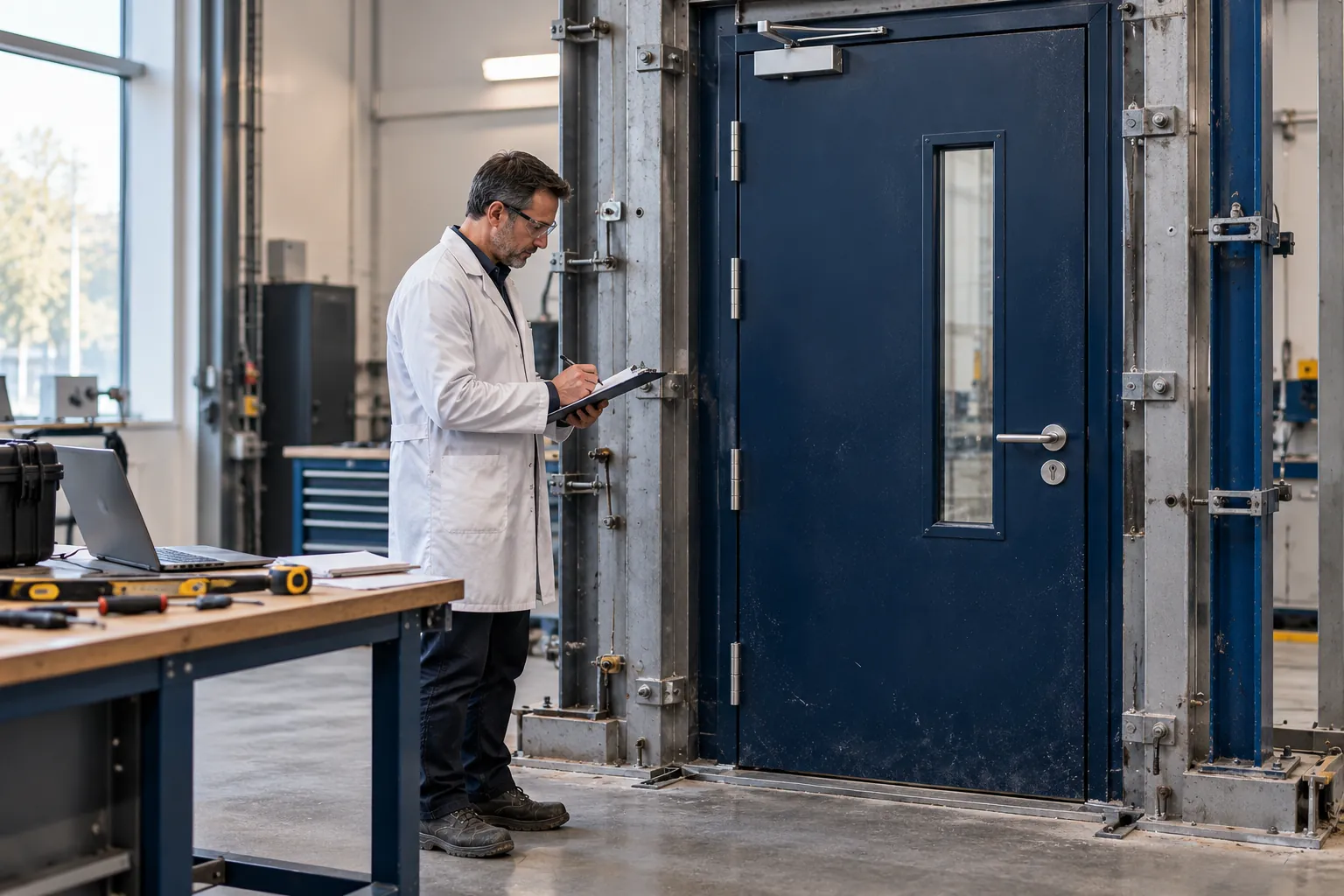
Independent test teams attempt entry using hand tools selected for quiet operation. Noisy powered tools are excluded, because the whole point of the standard is the intruder who cannot afford to be heard. The product must resist for one minute to earn SRA, or three minutes to earn SRB.
As with forced entry testing, the team may attack any part of the assembly: leaf, frame, glazing, locks, hinges and fixings. The rating covers the complete product exactly as tested, and the evidence names the precise configuration.
The times look short next to LPS 1175, but they reflect the nature of the attack. Quiet tools work slowly, and the intruder is constrained throughout by the need not to wake or alert anyone nearby. Three minutes of resistance against an attacker who cannot make noise is a demanding result, and it is measured the same disciplined way as any other LPCB test.
The minutes are attack time under controlled test conditions, not a promise of how long a real attempt lasts. What the rating proves is a measured delay against the specific threat of quiet entry.
How to read a rating
On test evidence the rating appears in forms such as “LPS 2081, Security Rating SRB”. There are no old SR-style alternative names to translate, which makes the reading simpler than LPS 1175.
Check the same three things as with any LPCB rating: the product name on the evidence matches what is being supplied, the configuration and options are within the tested scope, and the evidence comes from an independent test body rather than the manufacturer alone.
A product may hold LPS 2081 alongside LPS 1175. The two ratings are tested separately against different tool sets, and each needs its own evidence. Holding both means the product resists force and stealth, which suits doors that face both threats at different times of day.
Where LPS 2081 is specified
Specify LPS 2081 wherever the realistic attack happens quietly. In residential blocks, flat entrance doors and communal entrances are attacked at night while residents sleep a few metres away; a forced entry rating alone does not describe that threat. In healthcare buildings, ward and department doors face the same pattern, with patients who must not be woken by an attack the specification never considered.
Student accommodation combines both pressures: young residents, high occupancy and doors attacked in the early hours. In banking, cash offices and server rooms attacked out of hours may face quiet entry before they face force. In each case the question for the threat assessment is simple: would the attacker need to stay quiet to succeed? If the answer is yes, LPS 2081 belongs in the specification. Name the rating on the door schedule so the stealth threat is visible to everyone pricing the work.
How LPS 2081 compares with related standards
LPS 1175 rates forced entry, where noisy tools are allowed: category D alone includes sledgehammers, disc cutters and jigsaws. LPS 1175 answers the attacker who does not care about noise. LPS 2081 answers the attacker who must stay silent. Specify LPS 1175 where force is the threat, LPS 2081 where stealth is the threat, and both where a door faces each at different times.
PAS 24 and EN 1627 rate forced entry for residential and European products respectively. Neither tests stealth attack, so neither answers the quiet intruder. Where night-time entry near sleeping people is the realistic threat, LPS 2081 is the standard that was written for it.
LPS 1270 rates security glazing against hand hole, arm hole and body passage. It can sit alongside LPS 2081 on a doorset with glazed panels, with each standard covering its own part of the threat. See the LPS 1270 guide for the glazing detail.
How to specify it
- Identify the stealth threat. Mark the doors near sleeping accommodation, night wards, hotel corridors and any room where an intruder must stay quiet to succeed.
- Choose SRA or SRB. SRA suits lower stealth risk; SRB suits sleeping people and higher-value targets. Let the threat assessment decide, not the budget.
- Name the standard and rating. Write “LPS 2081, Security Rating SRB” in the specification, with no ambiguity about which of the two ratings applies.
- Demand named evidence. Ask for independent test evidence naming the exact product, configuration and rating, as with any LPCB standard.
- Specify quiet operation. A doorset that resists stealth attack but slams every time it closes defeats its own purpose. Include quiet closers and ironmongery that staff and residents will not wedge open.
- Combine with forced entry ratings where needed. A flat entrance door faces stealth at night and force by day. Specify LPS 2081 with an LPS 1175 rating on the same doorset and check the evidence covers both.
Products rated to LPS 2081
LPS 2081 applies most often to doorsets. Swing security doors are available with both LPS 1175 and LPS 2081 ratings for entrances that face force by day and stealth by night. Residential security doors and communal entrance doors carry the rating for flats and blocks where night-time entry is the threat, and security doors more widely can be specified with SRB for plant and service doors near occupied rooms. Security hatches keep service openings at the same stealth rating as the doors around them.
Frequently asked questions
What separates LPS 2081 from LPS 1175?
LPS 2081 covers stealth attack with quiet hand tools; LPS 1175 covers forced entry with tools that can be loud, up to sledgehammers and disc cutters. The two standards address different attackers, and a doorset can carry both ratings when each is evidenced separately.
Why are the LPS 2081 times so short?
Because quiet tools work slowly and the attacker is constrained by the need for silence throughout. One minute against quiet tools is not one easy minute; it is sixty seconds of an attacker who cannot use power, cannot make noise and cannot be heard failing to get in. SRB triples that demand.
Can a doorset hold both LPS 1175 and LPS 2081?
Yes. The two ratings are tested separately against different tool sets, and a product can carry both with independent evidence for each. Dual-rated doorsets suit entrances that face forced attack by day and stealth attack at night, such as residential entrances and ward doors.
Does LPS 2081 apply to windows?
It is most commonly applied to doorsets and access panels. If stealth attack through a window is part of your threat, check the scope of the test evidence for the specific product rather than assuming the rating covers it.
Is SRA enough, or should I specify SRB?
Follow the threat assessment. SRA suits doors near occupied rooms at lower risk; SRB suits sleeping accommodation, healthcare wards and higher-value targets where the consequence of quiet entry is serious. When in doubt, specify the higher rating.
What evidence proves an LPS 2081 rating?
Independent evidence naming the exact product, its configuration and options, and the rating achieved: SRA or SRB. Check the named product matches the supplied doorset, and that any LPS 1175 rating claimed alongside it has its own separate evidence.
Get a free quote
Related
More in security standards explained
Products
One supplier for the whole building envelope
Ready to specify your project?
Free assessment, written specification and test evidence. Reply within one working day.