
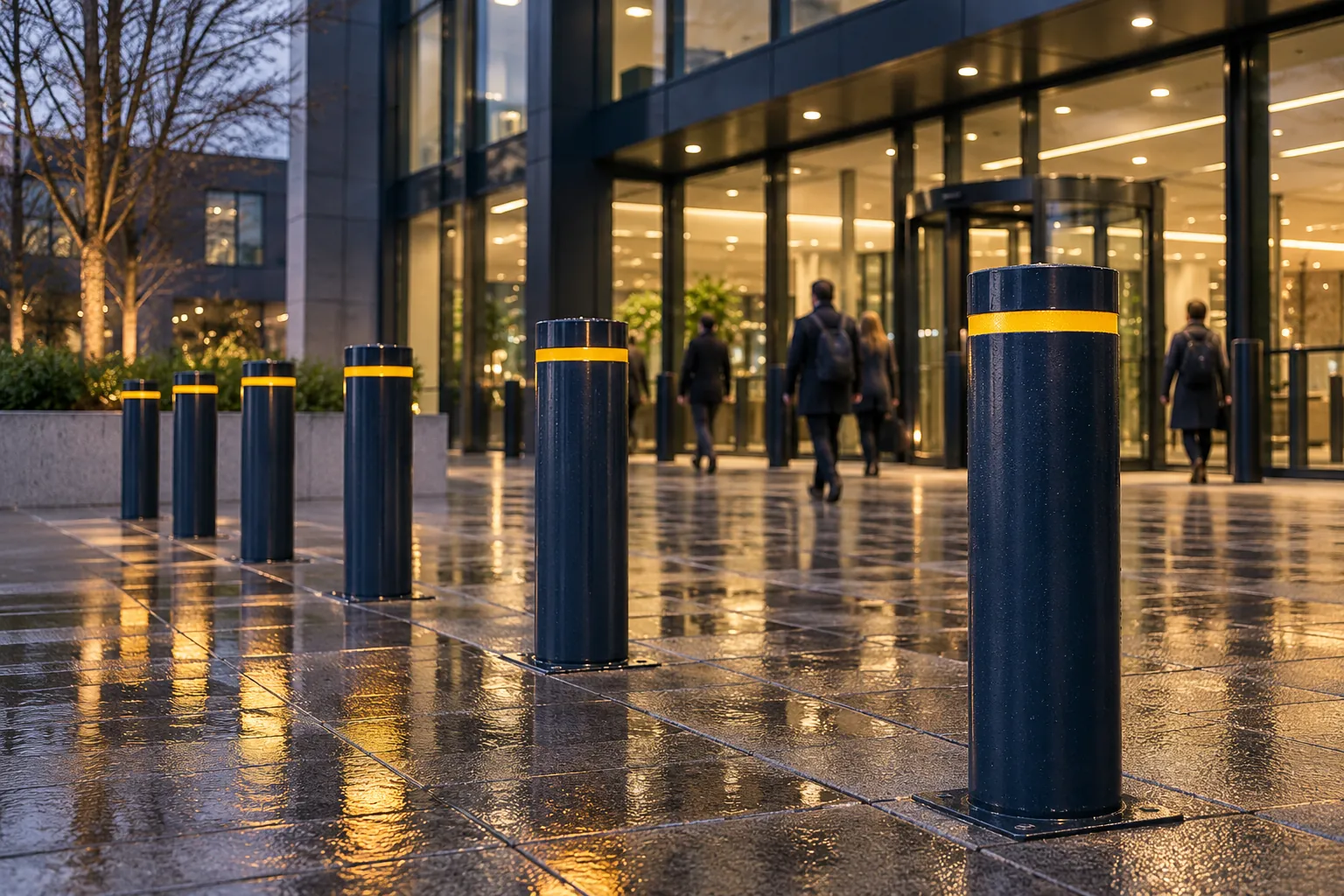
Perimeter and HVM · PAS 68 and IWA 14-1
HVM rated curtain walling
HVM rated curtain walling: glazed facades tested for vehicle impact, with combined blast and security options, supplied and installed across the UK.
- ✓Third-party test evidence with every product
- ✓Written specification you can issue to tender
- ✓Supplied and installed across the UK
Get a free project quote
Rating, written specification and budget range within one working day.
Confidential. No cost, no obligation.
Third-party tested
Evidence with every quote
UK manufactured
Made to your sizes
One accountable team
Specify, supply, install
Confidential handling
Details never shared
HVM rated curtain walling is a glazed facade system tested to resist vehicle impact. It suits ground floors, atria and entrances where glazing sits close to vehicle routes. Architects and facade contractors set the impact rating first, then design the facade around the tested framing and fixings.
- PAS 68 and IWA 14-1Vehicle impact test standards
- Tested as one systemFrame, glass and fixings combined
- Combines with blastISO 16933 options available
- UK installationSupplied and installed on site
What is HVM rated curtain walling
Curtain walling is a non-structural glazed facade hung from the building frame. The HVM rated version is engineered and tested to resist vehicle impact at ground level, for facades that cannot be set back behind a barrier line. It brings the perimeter rating onto the building face itself, as part of a perimeter and HVM strategy.
It suits glazed ground floors, atria, entrance screens and retail frontages on streets where vehicles pass close by. Where the threat assessment also names blast, forced entry or ballistic threats, the system can be specified with combined ratings. The vehicle impact ratings guide explains the test method.
Choosing the right rating for hvm rated curtain walling
Name every threat the facade must face, then ask for test evidence covering each one. A system proven for vehicle impact is not automatically proven for blast: each rating needs its own evidence.
| Requirement | Standard | Notes |
|---|---|---|
| Vehicle impact | PAS 68 or IWA 14-1 | For facades close to vehicle routes |
| Blast | ISO 16933 EXV classes | Where blast is also a threat |
| Forced entry | LPS 1175 | Ground floor attack resistance |
| Ballistic | EN 1522 FB classes | Where firearms are a named threat |
How HVM curtain walling is built
The system uses reinforced mullions and transoms sized for the impact load, glazed with laminated glass that stays in its frame under attack. Structural fixings tie the frame back to the building structure, and the whole assembly, frame, glass and fixings, is tested as one system. Sightlines may run deeper than standard curtain walling, so coordinate the visual design early.
Interfaces need care: head, jamb and sill details must carry the load path into the structure without gaps a vehicle could exploit. Installation sequencing is planned with the main contractor because the rated system cannot be swapped for standard sections to save time on site.
The glass is a laminated build-up chosen for the rating, and the framing depths are set by structural calculation rather than appearance. Sample panels help the architect sign off the visual result before full production begins.
The fixings carry the rating. A strong frame means little if its anchors pull out of the structure. HVM curtain walling is tested with its fixing detail, so build to that detail.
Combining HVM curtain walling with other ratings
Where blast is the governing threat, compare with blast rated curtain walling tested to ISO 16933; some systems carry both ratings with evidence for each. For ballistic threats, ballistic curtain walling covers EN 1522 FB classes. Punched openings in the facade can use security windows rated to LPS 1175, and entrance doors within the screen use security doors.
Where HVM curtain walling is used
High-value retail frontages face streets where vehicles pass within metres of the glass. Transport hubs glaze concourses and entrances beside drop-off roads. Banking and finance branches and public spaces buildings use it where the architecture demands glass at the boundary.
What affects the cost and lead time of hvm rated curtain walling
The facade area and the combination of ratings set the engineering scope. Heavier glass build-ups and deeper sections need stronger structural support and larger fixings. Bespoke profiles take longer than proven systems, and coordination with the structural engineer, the cladding contractor and the programme adds management time. No prices are given here because every facade differs.
How to specify HVM curtain walling
- Define the threats. Vehicle impact plus any blast, attack or ballistic rating.
- Choose the rating combination. Confirm one system can carry them all.
- Coordinate structure. Agree support and fixings with the engineer.
- Specify glass and frame. Lock the build-up before procurement.
- Plan sequencing. Programme the rated zones with the contractor.
- Demand test evidence. Request reports naming each standard and rating.
HVM curtain walling FAQs
Can curtain walling really stop a vehicle?
A tested system can. The frame, glass and fixings are proven together against a defined vehicle at a defined speed. Ask for the test evidence and check the rating matches your threat vehicle.
Can it combine HVM and blast ratings?
Some systems carry both, with separate test evidence for each rating. Never assume one test covers the other: the evidence must name every standard and rating you are relying on.
How is it different from blast rated curtain walling?
The test and the threat differ. HVM systems are tested against vehicle impact to PAS 68 or IWA 14-1; blast systems are tested against explosive pressure to ISO 16933. Compare blast rated curtain walling when blast governs.
Does it look different from normal curtain walling?
Sightlines may be deeper and the glass heavier, but the system is designed to read as curtain walling. Early coordination with the architect keeps the elevation intent while meeting the rating.
What holds it to the building?
Structural fixings designed for the impact load, tied back to the building frame. The tested fixing detail is part of the rating, so site changes to anchors or brackets are not permitted.
Get a free quote
Related
More in perimeter security and hvm
Ready to specify your project?
Free assessment, written specification and test evidence. Reply within one working day.