
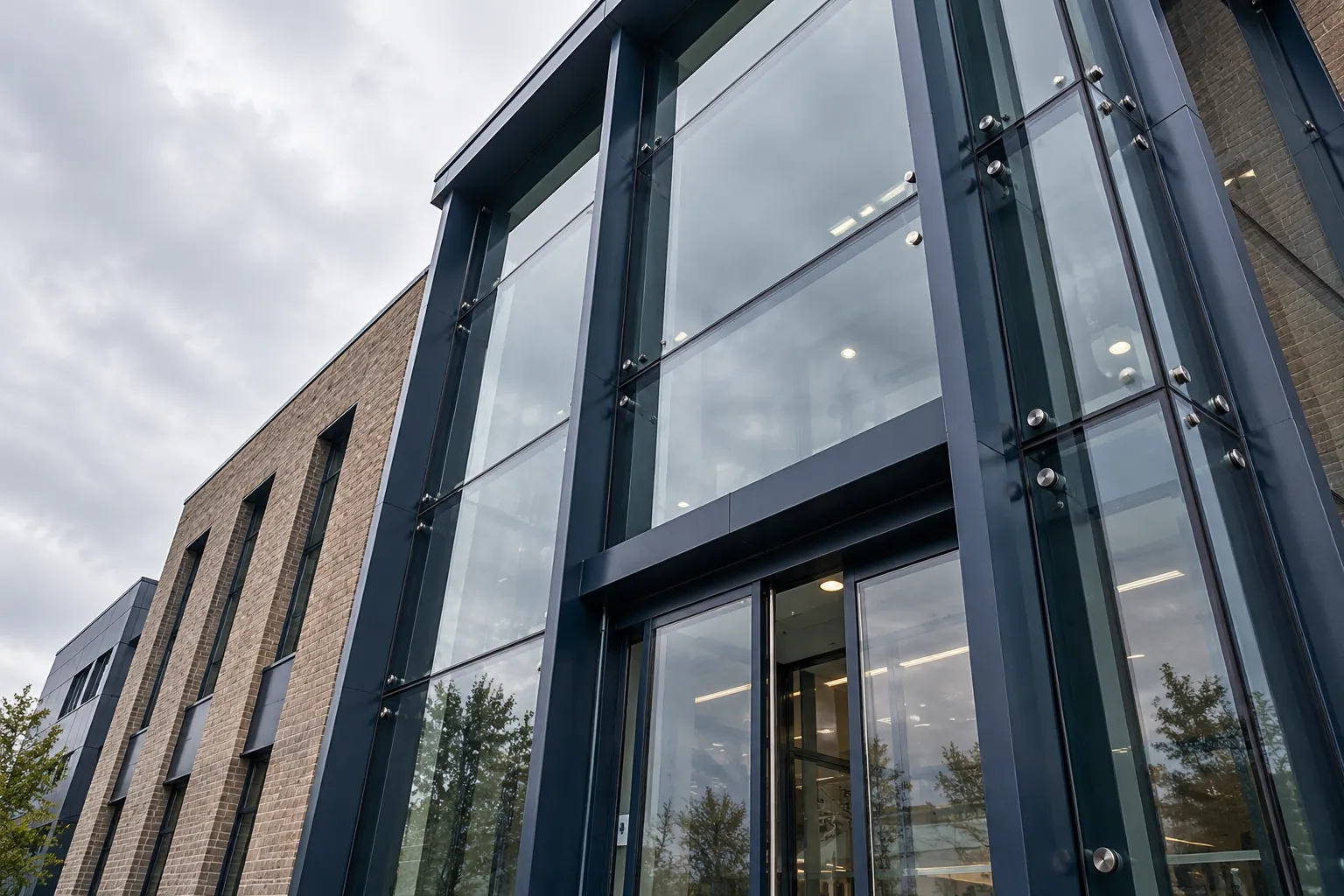
Blast · ISO 16933 EXV45 to EXV10
Blast resistant windows
Blast resistant windows: framed systems tested to ISO 16933 with hazard ratings A to F. Supplied and installed for UK government and commercial sites.
- ✓Third-party test evidence with every product
- ✓Written specification you can issue to tender
- ✓Supplied and installed across the UK
Get a free project quote
Rating, written specification and budget range within one working day.
Confidential. No cost, no obligation.
Third-party tested
Evidence with every quote
UK manufactured
Made to your sizes
One accountable team
Specify, supply, install
Confidential handling
Details never shared
Blast resistant windows are framed window systems tested to hold together under blast loading. ArxBridge supplies and installs them across the UK for offices, control rooms and public buildings where the glazing line faces a vehicle bomb threat.
- EXV45 to EXV10ISO 16933 blast classes
- A to FHazard ratings for fragments
- Laminated glassIn reinforced steel frames
- System testedFrame, glass and fixings as one
Blast resistant windows explained
A blast resistant window is a complete system: laminated glass bonded into a reinforced frame, fixed into the structure to carry the blast load. The glass is the visible part, but the frame and its anchorage do the structural work. When the pressure wave hits, the laminated interlayer holds the broken glass in a sheet, and the frame holds that sheet in the opening. The Blast range overview sets out the related doors, glass and facade products.
These windows go into occupied rooms behind the facade: offices, control rooms, reception areas, meeting rooms. They are specified where people sit close to the glazing line and the threat assessment names a vehicle bomb. The hazard rating, A to F, is the figure that matters most here, because it describes what happens to the occupants when the glass breaks.
A window that carries an EXV class but a poor hazard rating has passed the structural test and failed the human one. Always read the two together; the blast ratings guide explains how.
Which rating do you need for blast resistant windows
| What to specify | What it controls | Guidance |
|---|---|---|
| EXV class, EXV45 to EXV10 | The structural blast load | From the threat assessment: charge size and stand-off |
| Hazard rating A | No break | The best outcome for occupied rooms |
| Hazard ratings B to C | Lower fragment hazard | Preferred where people sit near the glass |
| Hazard ratings D to F | Higher fragment hazard | Accept only with a documented reason |
The threat assessment sets the EXV class from charge size and stand-off. The design team then sets the target hazard rating from who sits where: a control room with operators at desks needs better than a store. Where the budget allows, specify the hazard rating first and the EXV class second, because the hazard rating is what protects people.
People, then glass. Set the target hazard rating from the room use before you argue about EXV classes. The rating that saves lives is the one that controls fragments.
Construction of blast resistant windows
The glass is laminated: two or more panes bonded with a tough interlayer. Under blast load the glass cracks but the interlayer stretches and holds the pieces, turning the pane into a flexible membrane. Thicker laminates and multiple interlayers raise the performance; the exact make-up is whatever the test evidence names.
The frame is a reinforced steel section with a deep glazing rebate. The glass edge is captured and bonded so the membrane cannot pull out of the frame when it deflects. The frame is then fixed into the structural opening with anchors sized for the blast load, and the joint between frame and structure is sealed.
Sealed units for thermal performance can be built around the laminated pane, and solar control or privacy coatings can be added, provided the tested construction allows them. Any change to the glass make-up, the frame or the fixing method needs to be covered by test evidence.
Blast resistant windows with combined ratings
Blast windows often pair with forced entry resistance: a window that survives a blast should also resist a jemmy. LPS 1270 covers attack-rated glazing; LPS 1270 security glazing explains the three-digit rating. Ballistic protection is another common pairing where the threat includes firearms: bullet resistant windows covers FB4 to FB7 systems.
Thermal and acoustic performance ride along in the sealed unit build-up. The security windows range covers the forced entry side for projects that do not need blast.
Each performance needs its own evidence on the same system. A window with three test reports, blast, forced entry and ballistic, is specified by naming all three and requiring all three reports.
Where to use blast resistant windows
Government and defence buildings put them on every occupied elevation inside the stand-off line. Transport hubs use them in control rooms, ticket halls and back offices where staff sit behind glass all day.
Data centres fit them to security control rooms and meeting rooms on the ground floor. Public spaces with glazed pavilions and visitor centres use them where crowds gather near the facade. Where the facade is fully glazed, the system scales up to blast rated curtain walling.
For existing buildings where replacement is not practical, blast protection window film is the retrofit alternative.
What sets the cost and lead time for blast resistant windows
Size is the main driver: larger panes need thicker laminates and heavier frames, and the blast load grows with the area. The EXV class sets the engineering; the hazard rating target sets the glass make-up. Openable casements cost more than fixed lights because the opening mechanism must also survive the test.
The structure around the window matters. A new concrete frame takes the anchors easily. An old masonry facade may need a secondary steel frame to carry the load, and that steelwork sets the programme. Surveys by the design team settle it before manufacture.
Finishes, solar coatings and acoustic upgrades add their own lead time. Order the glass early: laminated blast make-ups are made to order and cannot be cut down on site.
How to specify blast resistant windows
- Set the EXV class. Take it from the threat assessment: charge size and stand-off distance.
- Set the hazard target. Decide the acceptable hazard rating from the room use and occupancy.
- Schedule the windows. List sizes, fixed or openable, and any extra ratings: forced entry, ballistic, fire.
- Demand system evidence. Ask for test reports naming the exact frame, glass make-up and fixing method.
- Detail the structure. Confirm the opening can take the anchor loads, with the installation team involved early.
How should I read a hazard rating?
Read it as a letter from A to F describing the glazing after a blast: whether it stayed whole, whether fragments were thrown and how far they travelled. A is no break and F is a high hazard, and the letter is reported next to the EXV class on each ISO 16933 test.
Can I keep my existing frames and just change the glass?
Only if the new glass in the old frame has been tested as that combination, which is rare. Blast performance belongs to the whole system, so replacement usually means new frames, new glass and new fixings together.
Do blast windows open?
Fixed lights are the norm, because an opening sash is a weak point. Openable blast windows exist where the test evidence covers the opening mechanism, but expect a higher cost and a limited range of sizes.
How do blast windows affect the room?
The laminated glass is thicker and often has a slight tint. Daylight is barely affected, but the frame sections are deeper than standard, so check sightlines and daylight calculations with the architect.
What maintenance do blast windows need?
Check seals and gaskets, clear the drainage channels and inspect ironmongery on openable units, on the maintenance cycle. The laminated glass itself needs nothing beyond normal cleaning.
Get a free quote
Ready to specify your project?
Free assessment, written specification and test evidence. Reply within one working day.