
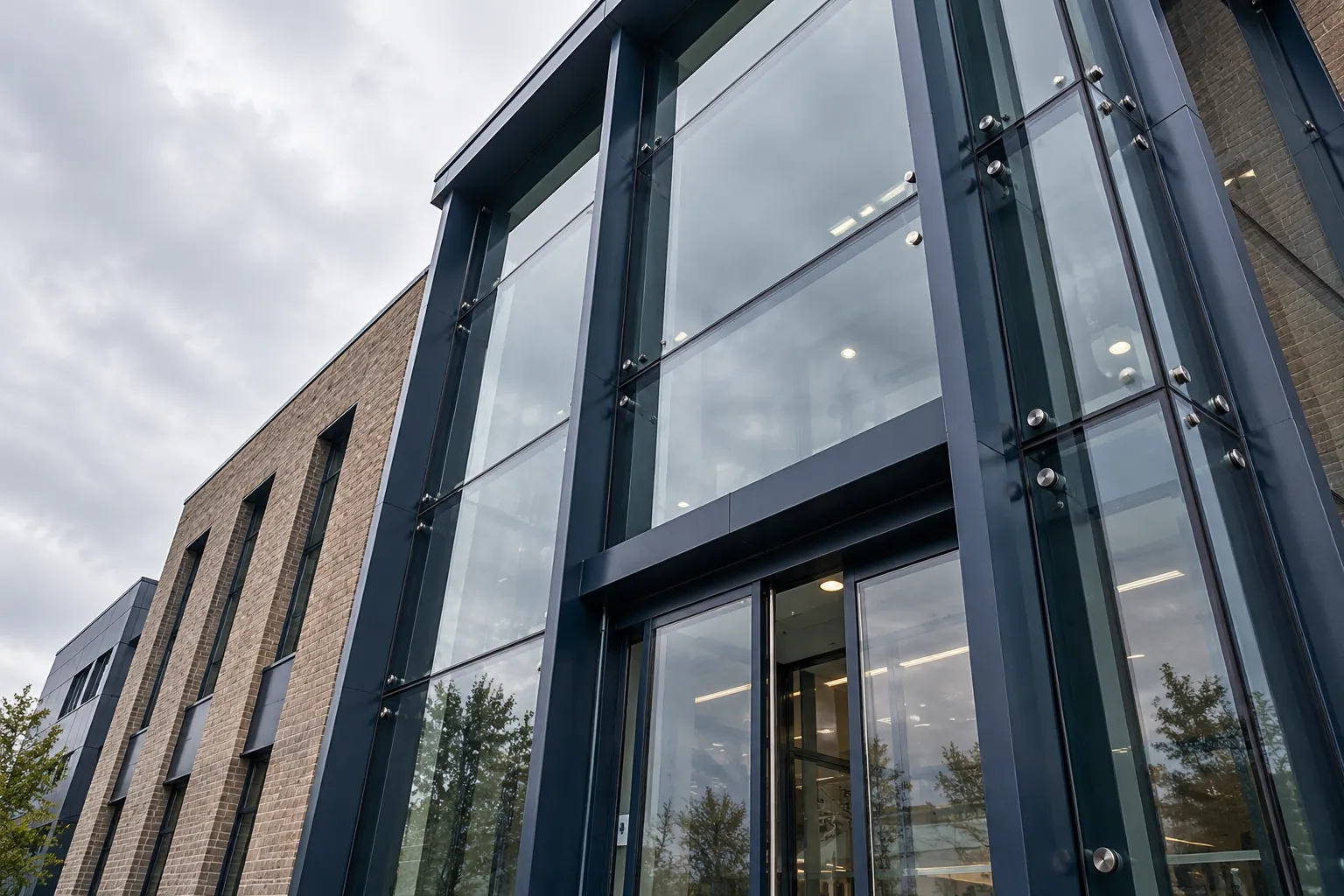
Blast · ISO 16933 EXV45 to EXV10
Blast resistant doors
Blast resistant steel doors tested to ISO 16933, from EXV45 to EXV10. Supplied and installed across the UK for government, defence and high-risk sites.
- ✓Third-party test evidence with every product
- ✓Written specification you can issue to tender
- ✓Supplied and installed across the UK
Get a free project quote
Rating, written specification and budget range within one working day.
Confidential. No cost, no obligation.
Third-party tested
Evidence with every quote
UK manufactured
Made to your sizes
One accountable team
Specify, supply, install
Confidential handling
Details never shared
Blast resistant doors are steel doorsets built to stay shut and stay in one piece when a blast wave hits them. ArxBridge supplies and installs them across the UK for government, defence and commercial sites where a vehicle bomb is a recognised threat.
- EXV45 to EXV10ISO 16933 blast classes
- EPR1 to EPR4European shock tube classes
- EXR1 to EXR5European range test classes
- Single and double leafDoorsets for standard and wide openings
Blast resistant doors explained
A blast resistant door is a complete doorset: leaf, frame, hinges, locks and seals, tested as one assembly. The leaf is a steel shell with a stiffened core, and the frame is tied back into the surrounding structure, because the blast load travels from the leaf through the frame into the wall. See the Blast range overview for the related products.
These doors sit in the building envelope or inside it: main entrances, plant room doors, doors between public and secure zones, specified where the threat assessment names a vehicle bomb or a hand-carried charge. Where forced entry is also a concern, the same doorset can carry an LPS 1175 rating; see fire and security doors for combined ratings and the security doors range for the forced entry classes.
Every doorset is supplied with third-party test evidence naming the EXV class, the hazard rating and the exact construction. If a supplier cannot show the test report for the doorset you are buying, do not specify it.
Which rating for blast resistant doors
| EXV class | Test stand-off | What it means for the site |
|---|---|---|
| EXV45 | 45 m | Generous stand-off, for example a site set back from the road |
| EXV33 | 33 m | Urban sites with a forecourt between road and facade |
| EXV25 | 25 m | City buildings with a normal street frontage |
| EXV19 | 19 m | Tight urban sites with limited stand-off |
| EXV15 | 15 m | High-risk frontages close to vehicle routes |
| EXV12 | 12 m | Severe threat with very little stand-off |
| EXV10 | 10 m | The most severe EXV class |
The EXV class comes from the threat assessment, which a security consultant writes from the charge size and the stand-off the site can achieve. Do not guess it: a class too low leaves people exposed, and one too high wastes budget. The blast ratings guide explains the full class set.
Anchorage decides the result. A blast door is only as good as its fixing to the structure. Confirm the wall can take the load before you order.
Construction of blast resistant doors
The leaf is folded steel sheet over a stiffened core, with internal reinforcement around the lock and hinge zones. Hinges are heavy duty and through-bolted, and locking is multi-point, so the leaf is held at the top, bottom and leading edge as well as at the handle. The blast load then spreads across the whole doorset instead of concentrating at one lock.
The frame is a deep steel section with multiple fixing points, grouted or bolted into the structural opening. The gap between frame and structure is filled so the pressure wave cannot bypass the door, and seals around the leaf limit the passage of blast pressure and, where specified, smoke.
Finish is powder coat in a standard colour range, and vision panels can be fitted where the tested evidence allows them. Any change to the tested construction needs covering test evidence or it voids the rating.
Blast resistant doors with combined ratings
A blast door often needs to do more than resist blast: the same doorset can be tested for forced entry to LPS 1175, fire to EI 30 or EI 60, or ballistic attack to FB4 and above, each a separate test on the same construction.
The most common pairing is blast with forced entry: a door that survives a blast wave is little use if an intruder can then walk through it with hand tools. SR3 and SR4 security doors explain the higher forced entry classes, and fire and security doors covers the fire pairing. Ask for one test report per performance, all naming the same doorset.
Do not assume ratings stack: a door tested to EXV25 and a door tested to SR3 are two different doors unless one report covers both. Name each required rating in the specification and require evidence for each.
Where to use blast resistant doors
Government and defence estates are the largest buyers: ministries, bases and secure compounds where the threat assessment is formal and the stand-off is measured. Data centres fit them to plant rooms and delivery bays, protecting the power and cooling plant.
Transport hubs use them at back-of-house entrances and service corridors, away from crowded concourses. Utilities and energy sites fit them to control buildings and substations, often alongside security bollards that create the stand-off the rating assumes.
Where the opening needs ventilation, the related product is the blast resistant louvred door; where the threat is to glazing, see blast resistant windows.
Cost and lead time for blast resistant doors
The EXV class is the biggest driver: a higher class means a heavier leaf, a deeper frame and more steel in the structure around it. Size matters next, with double leaf and oversized doorsets needing more material and longer fabrication; ironmongery, finish and vision panels add their own time.
Site conditions matter as much as the door: an opening in an old masonry wall may need a new lintel or a structural frame before the door can be fixed, and that work sets the programme. Surveys settle these questions early, which is why the security consultancy and design stages come before manufacture.
Quantity helps: a run of identical doorsets fabricates faster per door than one-offs. Allow time for the project team to check and approve the test evidence before manufacture starts.
How to specify blast resistant doors
- Fix the threat. Get the threat assessment from the security consultant: charge size, stand-off and the EXV class it points to.
- Schedule the openings. List every door, its size, leaf configuration and which other ratings it needs: fire, forced entry, ballistic.
- Demand the evidence. Ask for third-party test reports naming the exact doorset, the EXV class and the hazard rating.
- Check the structure. Confirm the wall or steelwork around each opening can take the blast load from the door.
- Plan the install. Sequence the doors with the installation team so frames go in before finishes close up the openings.
What stand-off distance does my site have?
Measure from the closest point a vehicle can reach to the face of the building. The security consultant uses this distance with the charge size to set the EXV class. Measures such as hostile vehicle mitigation push vehicles further away and can lower the class you need.
Can a blast door also be a fire door?
Yes, if the same doorset has been tested for both: fire to EN 1634-1 and blast to ISO 16933 are separate tests, and the evidence must cover the exact construction. Fire and security doors explains how combined doorsets are specified.
What locking does a blast door use?
Multi-point locking as standard, holding the leaf at several points around the frame. The lock, hinges and keeps are part of the tested assembly and cannot be swapped without voiding the rating.
What maintenance does a blast door need?
Planned checks of hinges, seals, locks and frame fixings on the maintenance cycle. Blast doors are heavy, so hinge wear and seal compression show up first.
How do I check the test evidence?
The report should name the manufacturer, the exact doorset, the EXV class and the hazard rating, from an independent test laboratory. If any of those details are missing, ask for them before you order.
Get a free quote
Ready to specify your project?
Free assessment, written specification and test evidence. Reply within one working day.